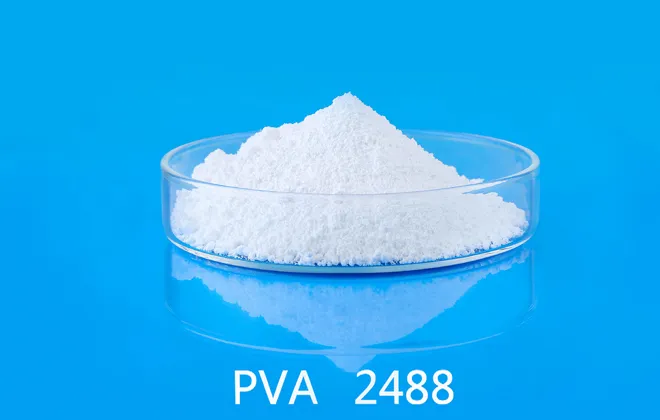
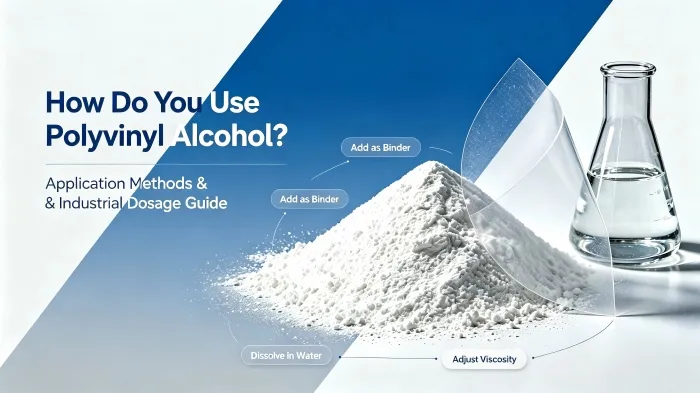
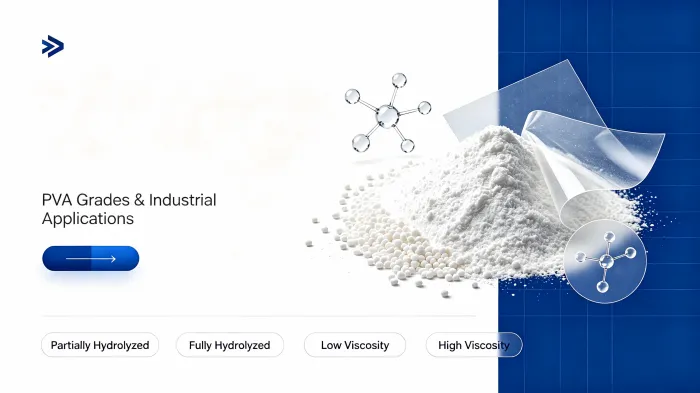
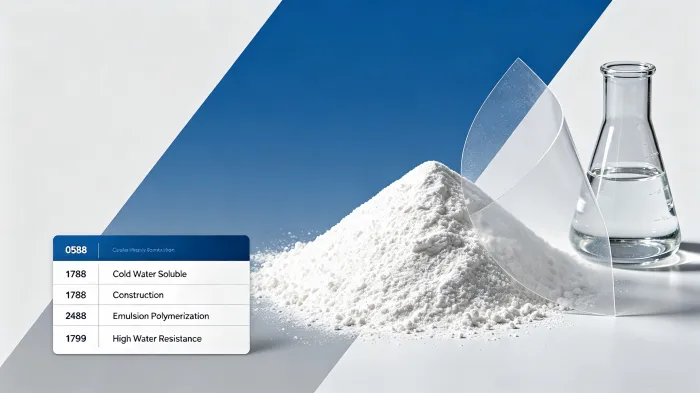
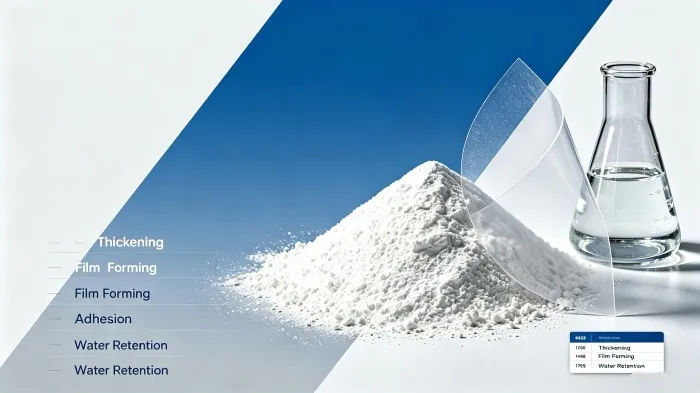
Polyvinyl Alcohol (PVA) is a water-soluble synthetic polymer valued for its excellent film-forming, binding, adhesive, and protective colloid properties. It is widely used in construction materials, adhesives, coatings, textiles, paper, packaging, and ceramics. PVA helps improve strength, flexibility, stability, and processing performance in various industrial formulations and applications.
Item | Specification |
Product Name | Polyvinyl Alcohol (PVA) |
CAS No. | 9002-89-5 |
Chemical Formula | (C₂H₄O)n |
Appearance | White or off-white powder / granules |
Degree of Hydrolysis | 87.0–89.0 mol% / 98.0–99.0 mol% |
Viscosity (4% aqueous solution, 20°C) | 4.0–6.5 mPa·s / 5.0–30.0 mPa·s* |
Volatile Matter | ≤5.0 wt% |
Ash | ≤0.5–1.0 wt% |
pH (4% aqueous solution) | 5.0–7.0 |
Purity | ≥93.0–94.0% |
Water Solubility | Soluble in hot water |
Particle Form | Powder / granular / flake |
Packaging | 20 kg / 25 kg bags or according to customer requirements |
Storage | Store in a cool, dry and well-ventilated place; protect from moisture |


1. Construction Materials: Used as a binder and protective colloid in tile adhesives, mortars, wall putty, gypsum products, and cement-based formulations.
2.Adhesives: Provides strong bonding, film formation, viscosity control, and flexibility in paper, wood, packaging, and general-purpose adhesive formulations.
3.Textile Industry: Used as a sizing agent to improve yarn strength, abrasion resistance, smoothness, and weaving performance during textile manufacturing.
4.Paper Industry: Functions as a surface sizing and coating agent, improving paper strength, printability, smoothness, and resistance to surface damage.
5.Coatings: Forms transparent, flexible films and improves adhesion, stability, and surface properties in water-based coatings and protective formulations.
Packaging: Used in water-soluble films, paper coatings, and adhesive systems, supporting good film strength, flexibility, and processing performance.
6. Ceramics: Acts as a temporary binder and processing aid, improving green strength, shape retention, and handling of ceramic components.
7. Polymer Emulsions: Functions as a protective colloid and stabilizer, helping control particle dispersion, emulsion stability, and viscosity during polymerization.
8. Agriculture: Used in seed coatings and agricultural formulations as a film-forming binder, supporting controlled coating performance and improved handling.
9. 3D Printing: Applied in water-soluble support materials and specialized filament formulations because of its water solubility and film-forming properties.
.webp)