Typical PCE Specification
Parameter | Typical Liquid PCE | Typical Powder PCE |
Product | Polycarboxylate Ether Superplasticizer | PCE Powder |
Appearance | Clear/light yellow to yellowish liquid | White to light-yellow powder |
Chemical Type | Polycarboxylate ether | Polycarboxylate ether |
Solid Content | 40–60% typical | ≥95%, commonly about 98% |
Density | About 1.05–1.13 g/cm³ | About 400–700 kg/m³ bulk density |
pH | Typically about 3–8 | Typically about 7–9 in aqueous solution |
Water Solubility | Completely soluble | Water soluble |
Chloride Content | Grade-dependent; often very low | Typically ≤0.05–0.10% |
Water Reduction | Commonly ≥25% in representative grades | Commonly ≥25% |
Recommended Dosage | Formulation-dependent | Formulation-dependent |
Main Applications | Ready-mix, precast, SCC, high-strength concrete | Dry-mix mortar and concrete |
Storage | Protect from freezing, frost and direct sunlight | Keep dry and prevent caking |
These ranges are representative rather than universal. Published commercial specifications show considerable variation: liquid PCE products can have approximately 20–60% solids, while powder products are commonly around 98% solids.
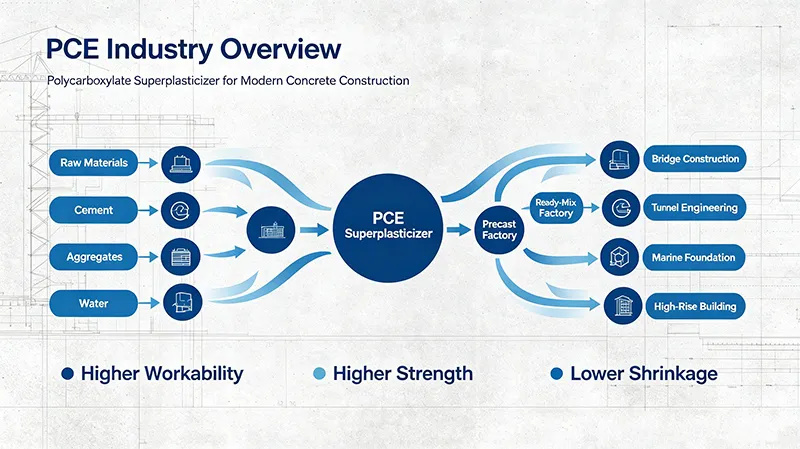
1. Appearance
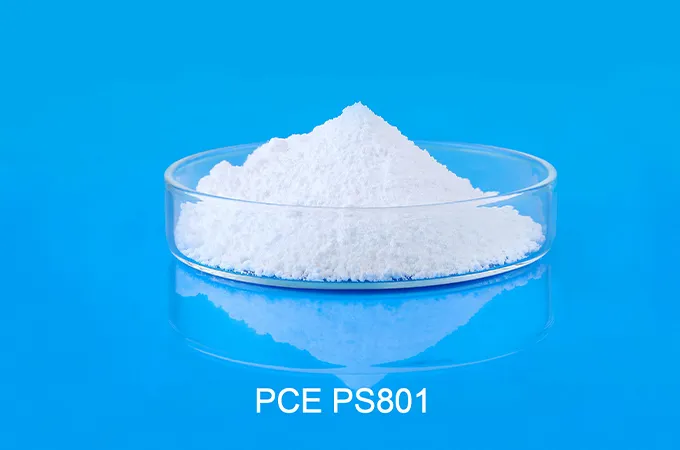
Liquid PCE is commonly supplied as a clear, transparent, light-yellow, or yellowish liquid. Powder PCE is generally supplied as a white or light-colored powder. The exact appearance depends on the polymer and manufacturing process.
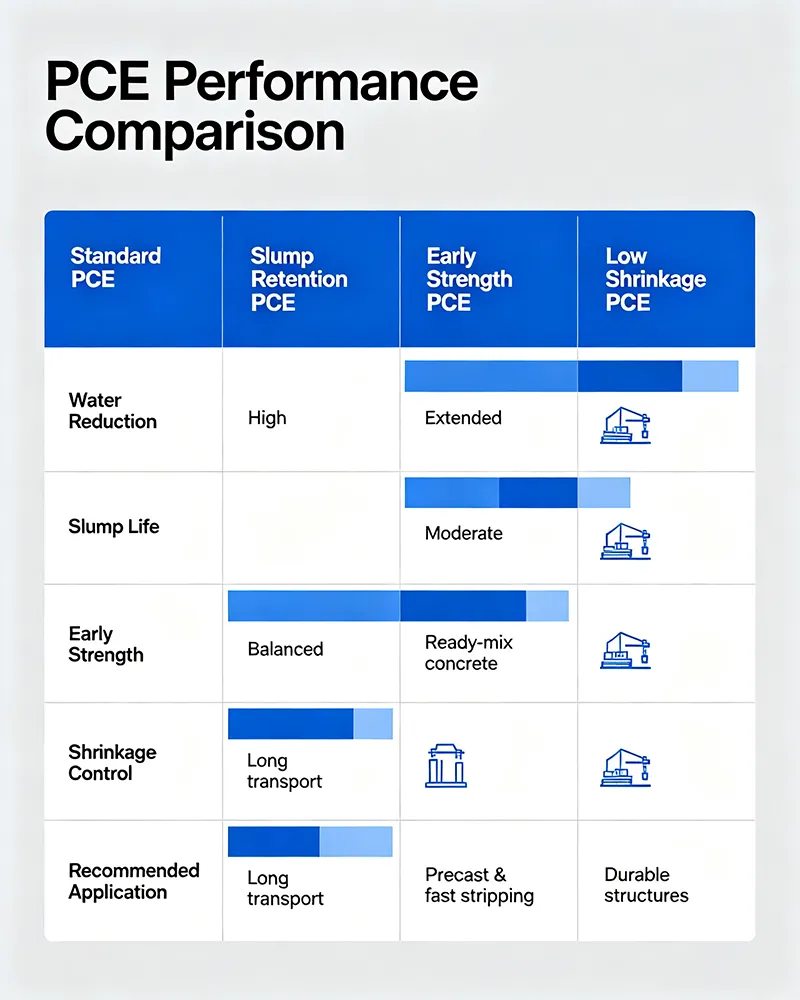
2. Solid Content
Solid content is one of the most important specifications for liquid PCE because it determines the actual active polymer concentration.
Commercial examples include approximately 50 ± 2% and 55 ± 2% solids, while other PCE products may have different concentrations.
When comparing products, dosage should therefore be compared on an active-solids basis, rather than simply comparing the mass of liquid product added.
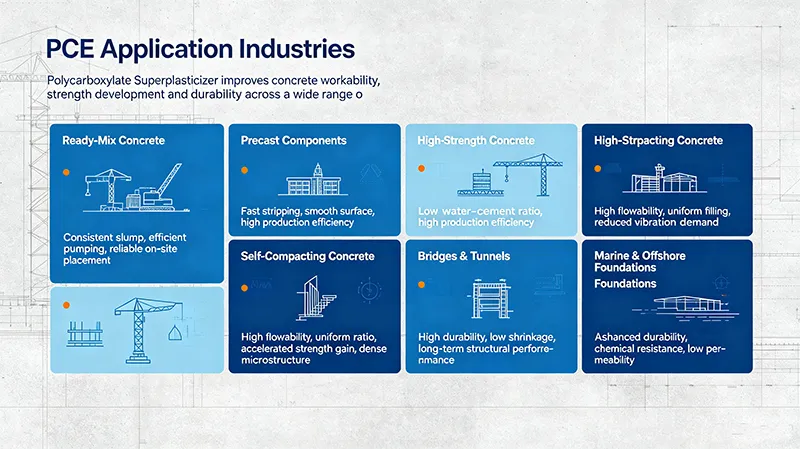
3. Density
Typical liquid PCE density is approximately 1.05–1.13 g/cm³, depending on solids concentration and polymer composition.
For example, a published PCE product specification gives a density of approximately 1.110 ± 0.02 kg/L at 20°C, while another research characterization measured densities around 1.04–1.06 kg/L for lower-solids PCE samples.
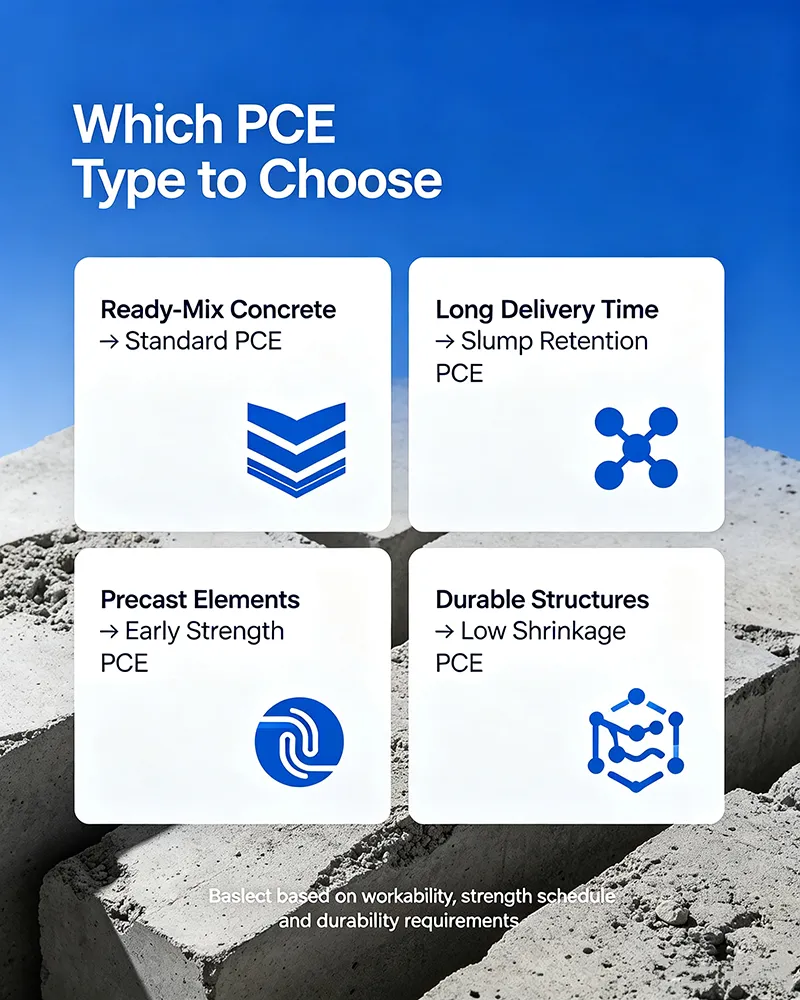
4. pH Value
PCE pH can vary substantially according to the polymer structure and formulation.
Representative commercial products specify pH ranges such as 3–7, while some PCE powders specify pH around 7–9 when measured as an aqueous solution.
Therefore, the supplier's stated testing method should always be considered when comparing pH values.
5. Water-Reducing Rate
Water reduction is a key performance specification of PCE.
Many commercial products specify a water-reduction rate of at least 25%, although actual performance depends on cement type, dosage, aggregate characteristics, water-to-binder ratio, temperature, and other admixtures. Some specialized formulations are designed for higher water reduction or extended slump retention.
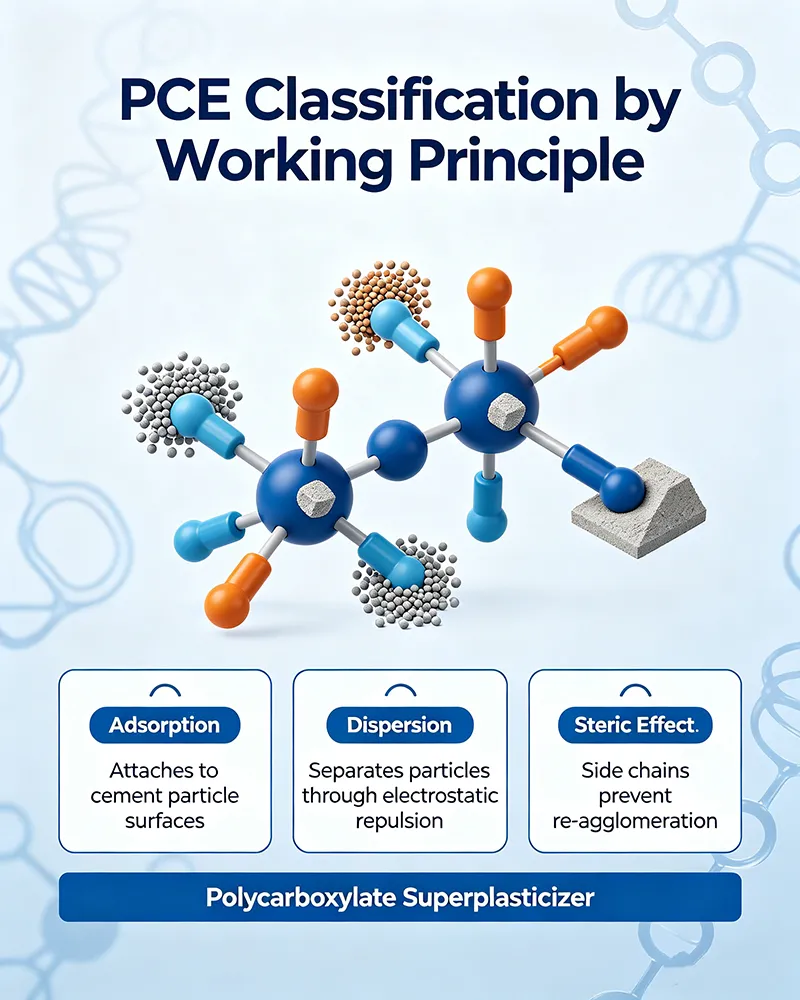
6. Chloride and Alkali Content
For reinforced and prestressed concrete, chloride content is an important consideration.
Low-chloride or chloride-free PCE products are commercially available. Alkali content may also be controlled according to the intended concrete application and applicable standards.
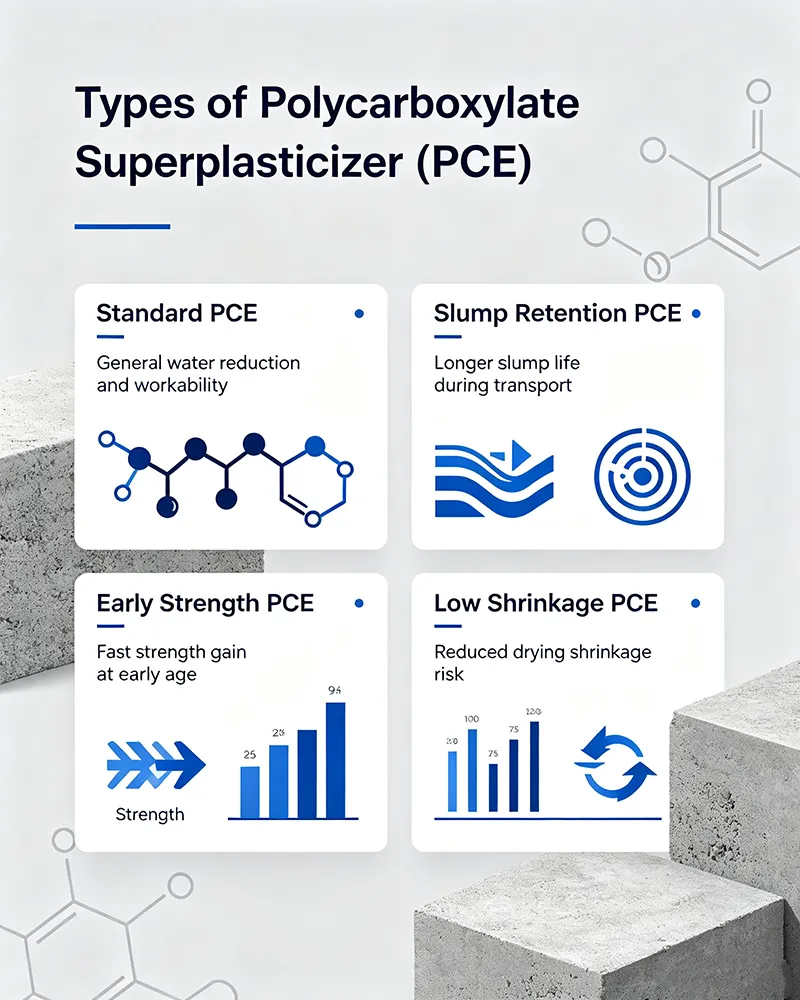
7. Slump Retention
PCE products can be designed for different performance profiles.
Some grades emphasize high initial water reduction, while others are designed for extended slump retention and long-distance transportation. This distinction is particularly important for ready-mix concrete.
8. Typical Dosage
There is no universal PCE dosage. A representative liquid PCE technical data sheet recommends approximately 0.2–0.5% based on cementitious material solids, while powder products may have different recommended dosage ranges.
The optimum dosage should be established through laboratory and field trials using the actual cement, aggregates, supplementary cementitious materials, water, and other admixtures.
PCE Specification by Application
Application | Preferred PCE Characteristic |
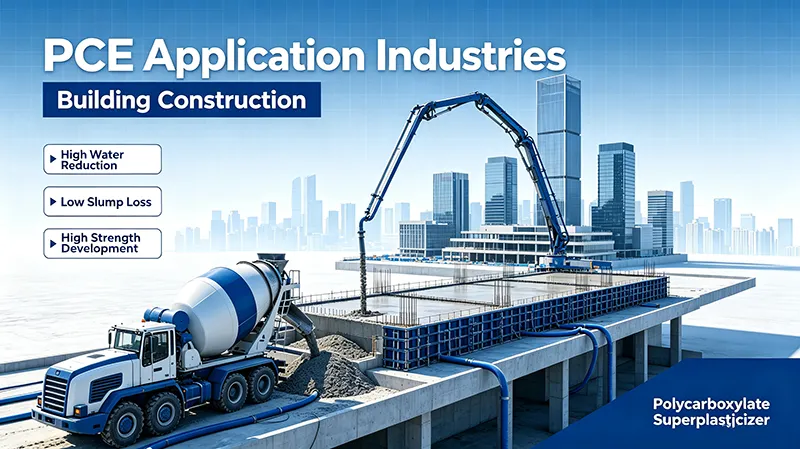
Ready-mix concrete | Slump retention and water reduction |
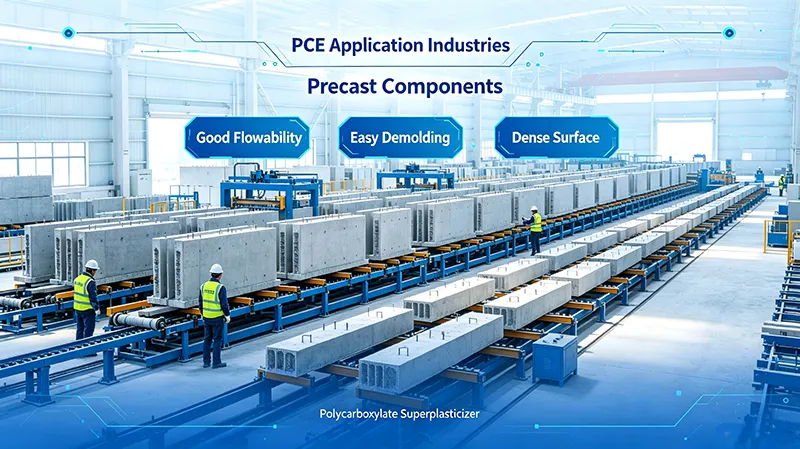
Precast concrete | High water reduction and strength development |
Self-compacting concrete | High fluidity and segregation control |
High-strength concrete | High water reduction |
Pumped concrete | Workability and slump retention |
UHPC | Strong dispersion at very low water/binder ratios |
Dry-mix mortar | Powder form, high dispersibility |
Grouting materials | High flowability and controlled water demand |
Important Quality-Control Tests
Manufacturers and concrete producers should consider testing:
· Appearance
· Solid content
· Density
· pH
· Chloride content
· Alkali content
· Water-reducing rate
· Cement-paste fluidity
· Slump and slump retention
· Setting-time effect
· Air content
· Compressive strength
· Storage stability
PCE performance is strongly influenced by the interaction between the polymer and cement chemistry, so a chemical specification alone cannot fully predict concrete performance. Research on industrial PCEs has demonstrated differences in molecular characteristics and their interaction with different cement systems.
Frequently Asked Questions
1. What is the standard specification of PCE?
There is no single universal specification for all PCE products. Typical specifications cover appearance, solids, density, pH, chloride, water-reduction performance, and slump retention.
2. What is the typical solid content of liquid PCE?
Commercial liquid PCE concentrates commonly contain approximately 40–60% solids, although specific products may fall outside this range.
3. What is the typical solid content of PCE powder?
PCE powder is commonly around 95–98% solids, with some commercial specifications reporting approximately 98 ± 1%.
4. What is the typical PCE water-reduction rate?
Many commercial PCE products specify ≥25% water reduction, but actual performance varies with dosage and concrete formulation.
5. Is PCE liquid better than PCE powder?
Neither is universally better. Liquid PCE is convenient for liquid admixture production, while powder PCE is particularly useful for dry-mix mortar and formulations where transportation and storage of a concentrated dry product are advantageous.
6. What pH should PCE have?
PCE pH varies by grade. Commercial liquid products may specify approximately pH 3–7, while powder products can specify pH around 7–9 for a defined aqueous solution.
7. How much PCE should be added to concrete?
The dosage must be established through trials. It depends on PCE solids, cement chemistry, aggregate characteristics, water content, target slump, temperature, and other admixtures.
8. Can PCE be used in self-compacting concrete?
Yes. PCE is widely used in self-compacting concrete because it can provide high flowability while maintaining a controlled water-to-binder ratio.
9. What is the difference between high-water-reduction PCE and slump-retention PCE?
High-water-reduction grades focus on maximizing dispersion and reducing mixing water, while slump-retention grades are designed to maintain workability for longer periods. Some products are formulated to balance both properties.
10. How should PCE be stored?
Liquid PCE should generally be protected from freezing, frost, excessive heat, and direct sunlight and stored according to the supplier's TDS. Commercial products commonly specify controlled storage temperatures and shelf lives around 12 months under appropriate conditions.
PCE specifications should be evaluated from two perspectives: chemical/physical quality and actual concrete performance. Solid content, density, pH, chloride, appearance, and water-reduction rate provide important quality-control information, while slump retention, setting behavior, compatibility, and strength development determine suitability for a specific concrete formulation.
For purchasing and production, the supplier's current TDS, SDS, applicable standards, and laboratory test results should be used as the final specification rather than relying on generic PCE ranges.


 English
 日本語
日本語 français
 Deutsch
 Español
 العربية
 Türkçe
 italiano
 русский
 português
 Nederland

 TDS Polycarboxylate Superplasticizer (PCE )