Defoamer(A106) Specification
A typical defoamer specification may include appearance, active content, viscosity, density, pH value, ionic character, dispersibility, and storage stability. These parameters help formulators determine compatibility and dosage for specific systems.
Parameter | Typical Specification |
Appearance | White to light-yellow liquid/emulsion |
Active Content | 10–100% |
Viscosity | 100–5,000 mPa·s |
pH Value | 5.0–9.0 |
Density | 0.80–1.10 g/cm³ |
Ionic Character | Nonionic |
Dispersibility | Easily dispersible in water |
Foam Control | Excellent |
Storage Stability | ≥ 6–12 months |
Application Temperature | 5–50°C |
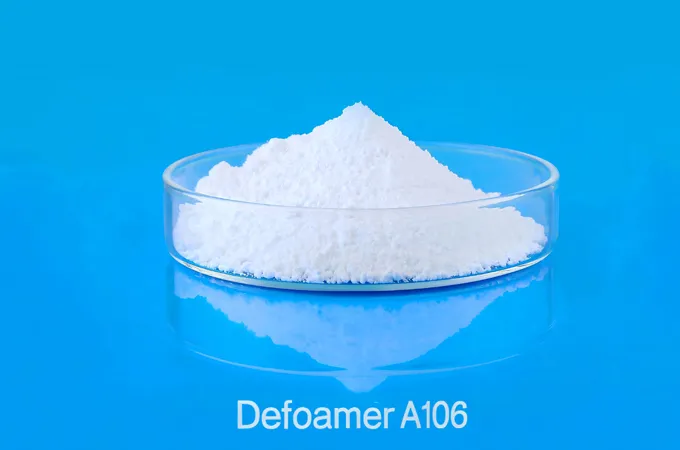
Appearance is normally evaluated visually to ensure that the product is uniform and free from abnormal separation or foreign particles. Water-based defoamers are often supplied as white or off-white emulsions, while certain concentrated products may appear transparent, translucent, or slightly yellow.
Active content indicates the concentration of effective foam-control components. Higher active-content products may require lower dosage, but the optimum level should always be determined through formulation testing.
Viscosity influences handling, pumping, dispersion, and incorporation into the final formulation. The appropriate viscosity depends on whether the defoamer is intended for liquid coatings, adhesives, construction chemicals, detergents, or other industrial systems.
Density and pH are also important for quality control and compatibility. A defoamer should remain stable under the formulation's processing conditions without negatively affecting viscosity, adhesion, surface appearance, or other key properties.
For construction applications such as dry-mix mortar, tile adhesive, self-leveling compounds, gypsum products, and cement-based formulations, the defoamer should provide effective air-release and foam suppression while maintaining good workability and surface quality.
Ultimately, there is no single universal specification for all defoamers. The best specification depends on the intended application, formulation chemistry, processing temperature, mixing conditions, and required foam-control efficiency. Manufacturers should conduct laboratory trials before determining the final dosage and product grade.
Applications of Defoamer
Defoamers are widely used in industrial formulations to control unwanted foam, improve processing efficiency, and enhance final product quality. Their applications cover construction, coatings, adhesives, chemicals, detergents, paper, and wastewater treatment.
Construction Materials: In cement-based products, dry-mix mortar, tile adhesives, self-leveling compounds, grouts, and gypsum formulations, defoamers help reduce entrained air and surface bubbles. This can improve density, workability, surface appearance, and mechanical performance.
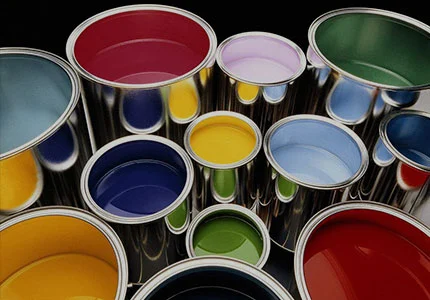
Paints and Coatings: Defoamers are commonly added to water-based paints, architectural coatings, and industrial coatings to prevent foam during manufacturing, mixing, pumping, and application. They help minimize pinholes, craters, and other surface defects.
Adhesives and Sealants: Foam can interfere with mixing, filling, and application. Defoamers help maintain smooth processing and consistent adhesive films while supporting good bonding performance.
Detergents and Cleaning Products: Defoamers control excessive foam in industrial cleaners, laundry formulations, dishwashing systems, and cleaning processes where uncontrolled foam can reduce equipment efficiency and complicate production.
Paper and Pulp Processing: Foam control is important during pulping, bleaching, coating, and wastewater treatment. Defoamers help maintain stable processing conditions and improve production efficiency.
Chemical and Industrial Processes: Many chemical formulations generate foam during agitation, heating, pumping, or filtration. Defoamers provide rapid foam knockdown and long-lasting foam control.
Wastewater Treatment: Defoamers can reduce problematic foam in treatment systems caused by surfactants, organic materials, and biological activity, helping maintain smoother plant operation.
The appropriate defoamer should be selected according to the formulation, temperature, pH, processing conditions, and required foam-control performance. Proper dosage and dispersion are essential to achieve effective foam control without affecting product stability or appearance.


 English
 日本語
日本語 français
 Deutsch
 Español
 العربية
 Türkçe
 italiano
 русский
 português
 Nederland

 MSDS DEFOAMER