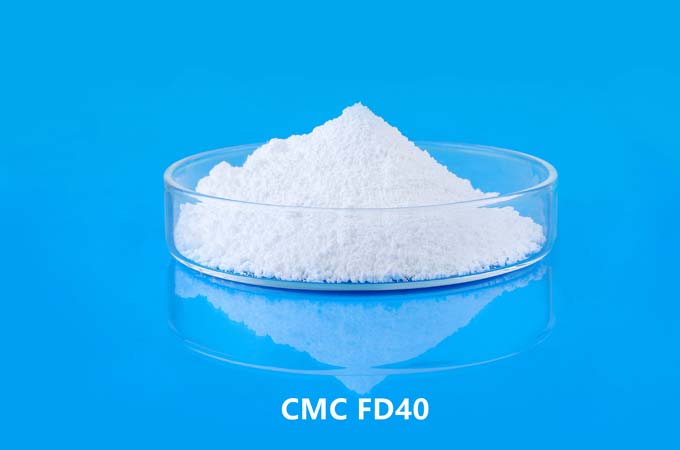
The pharmaceutical industry continues to demand safer, more stable, and higher-performing excipients that can improve drug delivery systems while maintaining product quality. Among the many functional pharmaceutical excipients available today, Carboxymethyl Cellulose (CMC) has become an important ingredient because of its excellent thickening, stabilizing, binding, film-forming, and water-retention properties.
CMC Carboxymethyl Cellulose, commonly known as CMC cellulose gum, is a chemically modified cellulose derivative produced by introducing carboxymethyl groups into natural cellulose. Depending on its purity, viscosity, degree of substitution, and processing quality, CMC can be used in various pharmaceutical applications.
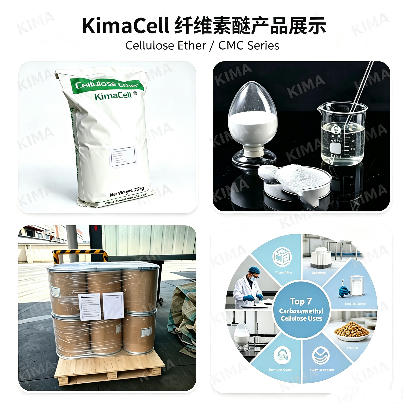
Modern pharmaceutical manufacturers use CMC to improve:
· Formulation stability
· Drug uniformity
· Tablet performance
· Suspension stability
· Controlled release behavior
· Patient acceptance
CMC is available in different grades, including:
· Pharmaceutical-grade CMC
· Sodium Carboxymethyl Cellulose (CMC-Na)
· CMC Low-viscosity
· CMC Medium-viscosity
· CMC High-viscosity
Understanding Carboxymethyl Cellulose (CMC)
1.1 What Is CMC?
CMC Carboxymethyl Cellulose is a water-soluble cellulose ether derived from natural cellulose fibers.
The manufacturing process involves:
1. Cellulose purification
2. Alkalization treatment
3. Etherification reaction
4. Neutralization
5. Purification and drying
The result is a functional polymer with excellent water compatibility.
Table 1: Basic Information About Pharmaceutical CMC
Item | Description |
Chemical name | Sodium Carboxymethyl Cellulose |
Common name | Cellulose Gum |
Source | Natural cellulose |
Appearance | White powder |
Solubility | Soluble in water |
Main function | Thickener, stabilizer, binder |
Why CMC Is Important in Pharmaceuticals
Pharmaceutical products require extremely high standards for:
· Purity
· Stability
· Safety
· Consistency
CMC helps manufacturers solve many formulation challenges.
Main Pharmaceutical Benefits
2.1 Improved Stability
CMC stabilizes formulations by controlling viscosity and preventing separation.
Benefits:
· Prevents sedimentation
· Maintains uniform drug distribution
· Improves shelf life
2.2 Better Consistency
CMC provides controlled viscosity, ensuring every dose contains the same amount of active ingredients.
This is especially important for:
· Oral suspensions
· Liquid medicines
· Topical formulations
2.3 Enhanced Performance
CMC improves:
· Drug release behavior
· Tablet integrity
· Patient experience
Table 2: Main Functions of CMC in Pharmaceuticals
Function | Benefit |
Thickening | Controls viscosity |
Stabilization | Prevents separation |
Binding | Improves tablet strength |
Film formation | Protects surfaces |
Water retention | Maintains moisture |
Application of CMC in Oral Liquid Formulations
Oral liquid medicines often contain insoluble active ingredients that require stabilization.
Examples:
· Antibiotic suspensions
· Cough syrups
· Nutritional liquids
CMC helps maintain uniform distribution.
3.1 Suspension Stabilizer
Without a stabilizer:
· Particles settle quickly
· Dose accuracy decreases
CMC increases liquid viscosity and slows sedimentation.
3.2 Rheology Control
CMC provides controlled flow behavior:
· Easy pouring
· Good mouthfeel
· Stable storage
Table 3: CMC Benefits in Oral Suspensions
Challenge | CMC Solution |
Particle settling | Improves suspension stability |
Uneven dosing | Maintains uniform distribution |
Poor texture | Improves viscosity |
Short shelf life | Enhances stability |
CMC in Tablet Manufacturing
Tablets require excipients that improve:
· Compression
· Mechanical strength
· Disintegration
CMC plays multiple roles.
4.1 Tablet Binder
CMC improves particle adhesion during compression.
Benefits:
· Stronger tablets
· Reduced powder loss
· Improved manufacturing efficiency
4.2 Disintegrant Function
Certain CMC derivatives absorb water and swell, helping tablets break apart after administration.
Table 4: Role of CMC in Tablets
Function | Effect |
Binder | Improves tablet strength |
Disintegrant | Supports tablet breakdown |
Stabilizer | Improves formulation consistency |
Processing aid | Enhances manufacturing |
CMC in Topical Pharmaceutical Products
CMC is widely used in:
· Creams
· Gels
· Ointments
· Skin treatments
5.1 Gel Formation
CMC creates smooth gel structures that improve:
· Application feel
· Product stability
· Moisture retention
5.2 Skin Compatibility
Pharmaceutical-grade CMC is:
· Non-toxic
· Mild
· Biocompatible
Table 5: CMC Applications in Topical Products
Product | CMC Function |
Skin gel | Thickening |
Cream | Stability improvement |
Ointment | Texture control |
Wound care gel | Moisture retention |
CMC in Ophthalmic Products
One of the most important pharmaceutical uses of CMC is in eye care.
CMC is commonly used in artificial tears.
Benefits:
· Improves lubrication
· Increases retention time on the eye surface
· Reduces dryness discomfort
Mechanism
CMC increases solution viscosity, allowing longer contact with the ocular surface.
Factors Affecting Pharmaceutical CMC Performance
The performance of CMC depends on:
· Degree of substitution
· Molecular weight
· Viscosity
· Purity
· Particle size
Table 6: Important CMC Quality Parameters
Parameter | Importance |
Purity | Pharmaceutical safety |
Viscosity | Flow behavior |
Degree of substitution | Solubility |
Moisture content | Stability |
Particle size | Processing performance |
Pharmaceutical Grade CMC Quality Requirements
Pharmaceutical CMC must meet strict standards.
Important tests include:
· Identification testing
· Viscosity measurement
· pH testing
· Purity analysis
· Heavy metal testing
· Microbial testing
Table 7: Common CMC Quality Tests
Test | Purpose |
Viscosity test | Determines thickening ability |
pH test | Checks chemical stability |
Moisture test | Evaluates storage quality |
Microbial test | Ensures safety |
Purity test | Confirms pharmaceutical grade |
FAQ SECTION
Q1: What is CMC in pharmaceuticals?
CMC is a cellulose-derived pharmaceutical excipient used as a thickener, stabilizer, binder, and viscosity modifier.
Q2: Why is CMC used in liquid medicines?
CMC prevents settling of active ingredients and maintains uniform dosage.
Q3: Is pharmaceutical CMC safe?
Yes. Pharmaceutical-grade CMC is widely accepted as a safe excipient when manufactured according to regulatory requirements.
Q4: What is the difference between industrial CMC and pharmaceutical CMC?
Pharmaceutical CMC requires higher purity, stricter quality control, and compliance with pharmacopeia standards.
Q5: Can CMC improve tablet quality?
Yes. CMC can improve tablet binding, strength, and controlled disintegration.


 English
 日本語
日本語 français
 Deutsch
 Español
 العربية
 Türkçe
 italiano
 русский
 português
 Nederland