The coatings industry is experiencing rapid transformation driven by increasing demand for:
Environmentally friendly water-based coatings
Low VOC formulations
Improved coating durability
Better application performance
Stable long-term storage
To meet these requirements, coating manufacturers increasingly rely on advanced functional additives. Among them, HEC Hydroxyethyl Cellulose has become one of the most important water-soluble cellulose ether additives.
HEC is widely used in:
Its primary functions include:
Thickening
Rheology modification
Suspension stabilization
Water retention
Flow control
Film quality improvement
What Is HEC Hydroxyethyl Cellulose?
Basic Definition
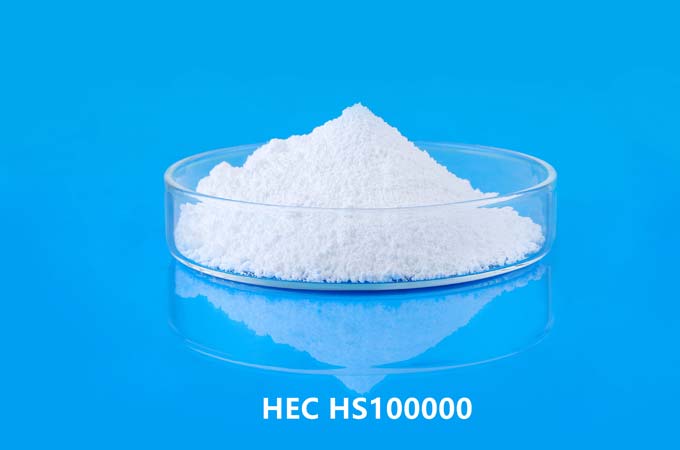
Hydroxyethyl Cellulose (HEC) is a non-ionic cellulose ether produced by chemically modifying natural cellulose with hydroxyethyl groups.
The modification process improves:
Table 1: Basic Information of HEC
Item | Description |
Chemical name | Hydroxyethyl Cellulose |
Abbreviation | HEC |
Chemical type | Non-ionic cellulose ether |
Raw material | Natural cellulose |
Appearance | White powder |
Solubility | Water soluble |
Main function | Thickener and rheology modifier |
Why HEC Is Important in Coatings
Modern coatings are complex systems containing:
Resins
Pigments
Fillers
Surfactants
Solvents/water
Functional additives
Without proper rheology control, coatings may experience:
Sedimentation
Poor brushability
Splashing
Sagging
Uneven film formation
HEC helps solve these problems by controlling the internal structure of coating formulations.
Main Functions of HEC in Coatings
HEC as a Thickening Agent
The most recognized function of HEC is viscosity enhancement.
HEC molecules absorb water and expand, forming a three-dimensional polymer network.
This increases:
Coating viscosity
Stability
Application control
Table 2: Thickening Benefits of HEC
Problem | HEC Solution |
Low viscosity | Increases thickness |
Poor stability | Improves structure |
Pigment settling | Maintains suspension |
Uneven application | Improves flow control |
Rheology Modification
Coatings require balanced rheology:
HEC provides pseudoplastic behavior.
This means:
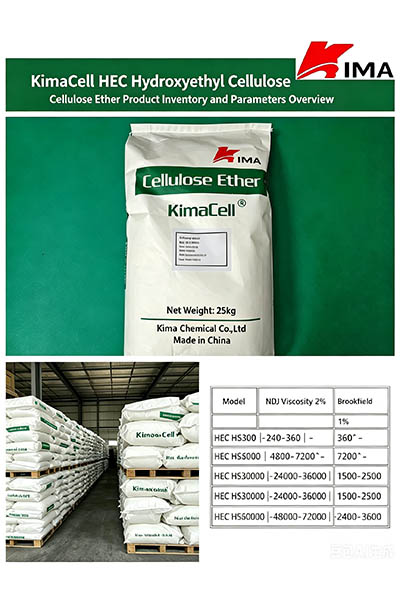
Table 3: Rheological Effects of HEC
Rheological Property | Effect |
Low shear viscosity | Prevents settling |
Medium shear viscosity | Improves leveling |
High shear viscosity | Improves application |
Suspension Stabilization
Pigments and fillers tend to settle during storage.
HEC prevents sedimentation by increasing the viscosity of the liquid phase.
Benefits:
Uniform color
Better storage stability
Reduced separation
HEC in Latex Paint Applications
Latex paint is one of the largest application areas for HEC.
Latex paint systems require:
Good viscosity control
Smooth application
Excellent stability
HEC Advantages in Latex Paint
Improved Brushability
HEC provides:
Smooth spreading
Better paint feel
Reduced dripping
Improved Storage Stability
HEC helps maintain:
Uniform viscosity
Pigment dispersion
Long shelf life
Table 4: HEC Performance in Latex Paint
Requirement | HEC Contribution |
Thickening | Controls viscosity |
Suspension | Prevents settling |
Application | Improves brush feel |
Stability | Extends storage life |
HEC in Water-Based Industrial Coatings
Water-based industrial coatings require additives that provide performance without increasing VOC emissions.
HEC supports:
Applications:
Metal coatings
Wood coatings
Protective coatings
Architectural coatings
Mechanism of HEC Thickening
HEC thickening occurs through several mechanisms:
Hydration
HEC absorbs water and expands.
Molecular Chain Interaction
Expanded polymer chains interact with water molecules.
Network Formation
A three-dimensional structure forms, increasing viscosity.
Table 5: Factors Affecting HEC Viscosity
Factor | Influence |
Molecular weight | Higher MW increases viscosity |
Concentration | Higher concentration increases viscosity |
Temperature | Higher temperature reduces viscosity |
pH | Affects stability |
HEC Selection for Different Coating Systems
Choosing the correct HEC grade is essential.
Important factors:
Viscosity grade
Particle size
Substitution level
Dissolution speed
Table 6: HEC Grade Selection Guide
Application | Recommended HEC Property |
Latex paint | Medium/high viscosity |
Spray coating | Lower viscosity |
Thick decorative coating | High viscosity |
Industrial coating | Controlled rheology |
HEC Compared with Other Cellulose Ethers
HEC vs HPMC vs CMC
Property | HEC | HPMC | CMC |
Coating application | Excellent | Good | Moderate |
Thickening | Excellent | Excellent | Excellent |
Water retention | Good | Excellent | Good |
Non-ionic stability | Excellent | Excellent | Limited |
Quality Testing of HEC for Coatings
High-quality HEC requires strict evaluation.
Important tests:
Viscosity
Moisture content
Purity
Degree of substitution
Particle size
Dissolution behavior
Table 7: HEC Quality Testing
Test | Purpose |
Viscosity test | Thickening ability |
Moisture test | Storage stability |
pH test | Compatibility |
Dissolution test | Processing performance |
Purity test | Quality control |
FAQ SECTION (Part 1)
Q1: What is HEC in coatings?
HEC is a cellulose ether additive used as a thickener, rheology modifier, and stabilizer in water-based coating systems.
Q2: Why is HEC used in latex paint?
HEC improves:
Viscosity
Stability
Brushability
Pigment suspension
Q3: Does HEC improve coating durability?
Yes. By improving formulation stability and film uniformity, HEC contributes to better coating performance.
Q4: Is HEC environmentally friendly?
HEC is derived from natural cellulose and is widely used in environmentally friendly water-based formulations.
Q5: What is the difference between HEC and HPMC in coatings?
HEC is mainly optimized for liquid coating systems, while HPMC is more commonly used in construction materials and pharmaceutical applications.
Hydroxyethyl Cellulose (HEC) has become a key additive in modern coating technology because it provides excellent:
Thickening performance
Rheology control
Suspension stability
Application improvement
As coating industries continue moving toward water-based and sustainable systems, HEC will remain an essential material for improving product quality and performance.


 English
 日本語
日本語 français
 Deutsch
 Español
 العربية
 Türkçe
 italiano
 русский
 português
 Nederland