Hydroxyethylcellulose (HEC) is a common and important water-soluble polymer thickener and rheology modifier in shampoo formulations. It not only improves the appearance and texture of shampoo, but also enhances the stability and user experience of the formula.
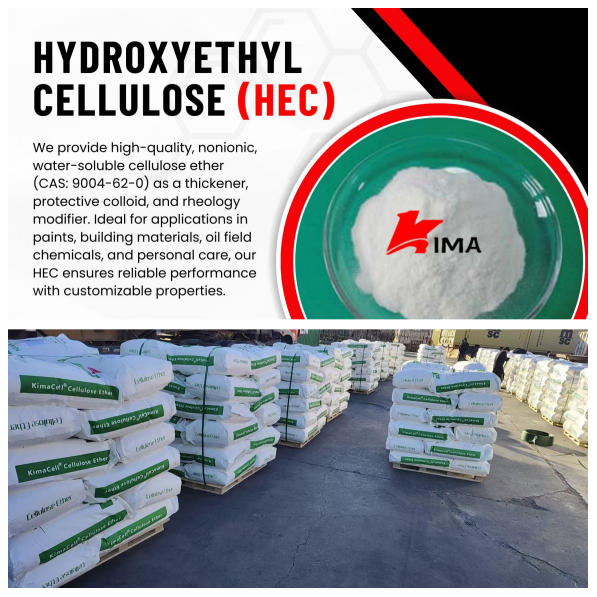
1. The Role of HEC in Shampoo
1.1. Thickening
HEC forms a clear solution in the aqueous phase, significantly increasing the viscosity of the system, ensuring the shampoo has the appropriate fluidity and consistency—neither too thin to flow easily nor too thick to be difficult to disperse.
1.2. Improving Rheological Properties
HEC can adjust the shear-thinning properties of the shampoo, resulting in a higher viscosity in the bottle, enhanced flowability when squeezed, and easier to use.
1.3. Suspension and Stability
In the formulation, HEC helps suspend particles or pearlescent agents, preventing sedimentation and separation, thereby improving the uniformity of the shampoo's appearance and storage stability.
1.4. Mild Properties
HEC is a non-ionic cellulose derivative that does not react strongly with anionic, cationic, or amphoteric surfactants. This makes it highly compatible with formulations and gentle and non-irritating to the scalp.
2. HEC Usage
2.1. Dissolution Steps
Pre-dispersion: Disperse the HEC powder in a small amount of glycerin, propylene glycol, or other non-solvent liquid to effectively prevent clumps from forming when added directly to water.
Dissolution Temperature: Dissolve the HEC powder by stirring at room temperature or slightly elevated (approximately 25–40°C). Avoid high temperatures, as this may affect viscosity.
Stirring Method: Stir at a moderate speed until the HEC is completely dissolved and transparent.
2.2. Order of Addition
HEC solution is generally prepared as part of the aqueous phase, then mixed with other ingredients such as surfactants and conditioners. If the formulation contains salt or high electrolyte content, dissolve the HEC first, then gradually add the salt to avoid uneven gelation.
2.3. Dosage Range
HEC is typically added to shampoo at a level of 0.3%–1.0%.
Low dosage (approximately 0.3%): It primarily provides a slight thickening and stabilizing effect.
Medium dosage (approximately 0.5%–0.8%): Suitable for most everyday shampoo formulations, achieving a good balance between consistency and flowability.
High dosage (>1%): It provides a strong thickening effect, but may affect foaming and freshness, so adjustment is required based on desired needs.
3. Precautions
3.1. Avoiding Agglomeration
HEC, in its dry powder form, tends to form a gel shell when exposed to water, making it difficult to dissolve. Therefore, it must be pre-dispersed or slowly and evenly sprinkled into vigorously stirred water.
3.2. Formulation Compatibility
Although HEC has good compatibility, its viscosity decreases in the presence of high salt concentrations or strong acids or bases. Therefore, the pH should be maintained within the appropriate range of 4.5–7.5.
3.3. Effect on Foaming Properties
HEC increases system viscosity while also modulating foam formation and stability. A moderate addition can create finer foam, but excessive amounts may reduce foaming power.
3.4. Storage Stability
After the formulation is finalized, freeze-thaw cycles or accelerated aging tests are required to confirm that HEC does not stratify or settle during long-term storage.

4. Application Advantages
Improving User Experience: Shampoo feels smooth and thick in the hands and hair, enhancing its premium feel.
Enhancing Pearlescent Effect: HEC's suspending properties help maintain an even distribution of the pearlescent agent, giving the shampoo a glossy appearance.
Safety and Environmental Protection: HEC is derived from modified natural cellulose, making it safe and non-toxic, in line with sustainable development trends.
Formulation Flexibility: It can be used synergistically with a variety of surfactant systems (SLES, CAPB, APG, etc.), making it widely applicable to regular shampoos, children's shampoos, and anti-dandruff shampoos.
In shampoo formulations, HEC primarily serves as a thickener, suspending stabilizer, and rheology modifier. Its mildness and good compatibility make it a common additive. Careful attention should be paid to the dissolution method and order of addition to avoid clumping and performance degradation. An appropriate addition level, typically between 0.3% and 1.0%, improves product appearance and texture, enhancing user comfort and storage stability. Therefore, HEC plays a crucial role in modern shampoo formulations, ideal for creating smooth, stable, and high-quality shampoo and conditioner products.


 English
 日本語
日本語 français
 Deutsch
 Español
 العربية
 Türkçe
 italiano
 русский
 português
 Nederland