The construction industry is rapidly moving toward high-performance dry-mix mortar systems. Products such as tile adhesives, external insulation and finishing systems (EIFS), self-leveling compounds, repair mortars, waterproof mortars, and gypsum-based materials increasingly depend on advanced polymer modification technology.
Among these additives, Redispersible Polymer Powder (RDP) has become one of the most important functional materials for improving mortar performance.
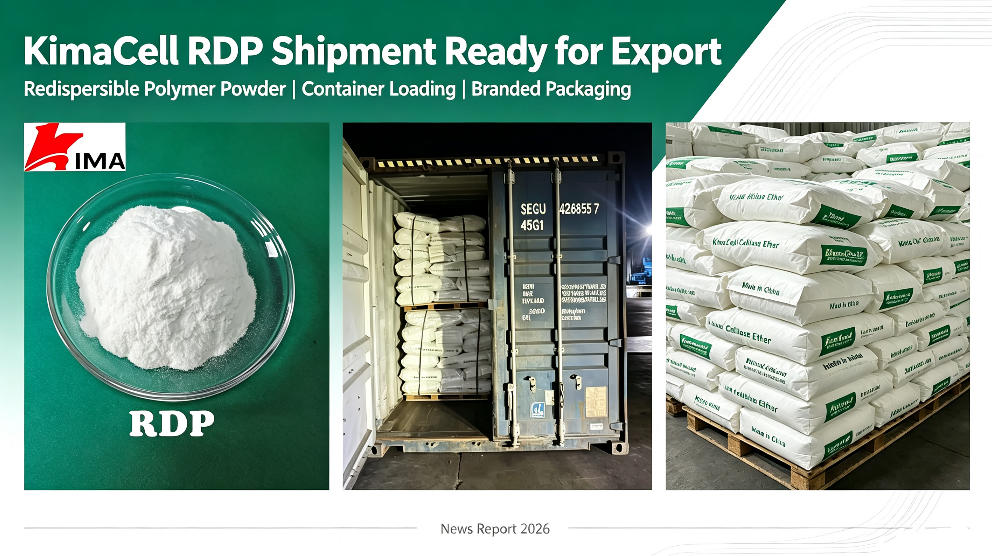
RDP is a free-flowing polymer powder produced by spray-drying polymer emulsions, mainly based on vinyl acetate ethylene (VAE), vinyl acetate versatate (VAc/VeoVA), acrylic polymers, or styrene-acrylic polymers. When mixed with water, RDP particles redisperse into polymer latex particles and form a continuous polymer film during mortar curing.
However, not all RDP products provide the same performance.
A low-quality RDP may look similar to premium products but can cause:
· Poor adhesion strength
· Reduced flexibility
· Cracking problems
· Weak water resistance
· Poor workability
· Powder shedding
· Reduced durability
· Unstable mortar performance
Therefore, understanding how to identify quality RDP is essential for manufacturers, formulators, and end users.
What Is Redispersible Polymer Powder?
Redispersible Polymer Powder is a polymer-based additive designed to modify cementitious and gypsum-based dry mixtures.
During production, liquid polymer dispersion is converted into powder form through spray drying. In a typical redispersible latex powder formulation, protective colloids and additives are usually added to maintain stability and redispersibility.
When RDP contacts water:
1. Powder particles disperse quickly.
2. Polymer particles form a stable latex dispersion.
3. During drying, polymer particles merge.
4. A flexible polymer film forms inside the mortar structure.
This polymer film improves mechanical and physical properties.
Basic Composition of RDP
Component | Function |
Polymer resin | Provides adhesion, flexibility, and film formation |
Protective colloid | Improves storage stability and redispersibility |
Anti-blocking agent | Prevents powder agglomeration |
Residual additives | Controls processing and application performance |
Why Quality Differences Exist Between RDP Products
The market contains many RDP suppliers offering different grades and price levels. Differences in RDP chemical composition, manufacturing technology, and processing conditions can significantly affect product performance. The differences usually come from:
· Polymer chemistry
· Manufacturing technology
· Spray drying conditions
· Polymer solid content
· Protective colloid selection
· Particle size distribution
· Glass transition temperature (Tg)
· Quality control standards
Two RDP powders may have similar appearance but completely different performance in mortar.
Key Indicators for Identifying High-Quality RDP
Professional evaluation of RDP should include physical appearance, chemical properties, and application testing.
Table 1: Main Quality Evaluation Parameters of RDP
Test Parameter | Typical Requirement | Importance |
Appearance | White free-flowing powder | Indicates processing quality |
Polymer content | High solid content | Determines modification efficiency |
Ash content | Controlled level | Indicates inorganic residue |
Moisture content | Low moisture | Improves storage stability |
Particle size | Uniform distribution | Influences dispersion |
Redispersibility | Excellent dispersion in water | Essential for performance |
Minimum film-forming temperature | Suitable range | Determines flexibility |
Glass transition temperature | Application dependent | Controls hardness/flexibility |
pH value | Stable range | Ensures compatibility |
Appearance Inspection: The First Step in Quality Control
Although appearance cannot fully determine RDP quality, it provides useful initial information.
High-quality RDP generally has:
· Uniform white color
· Good powder flowability
· No visible lumps
· Low dust generation
· No abnormal odor
· Good storage stability
Poor-quality RDP may show:
· Yellowish appearance
· Large agglomerates
· Moisture absorption
· Sticky particles
· Uneven powder texture
Table 2: Appearance Comparison Between High and Low Quality RDP
Feature | High-Quality RDP | Low-Quality RDP |
Color | Clean white | Yellow or gray |
Flowability | Excellent | Poor |
Powder structure | Uniform | Irregular |
Lumps | Minimal | Frequent |
Storage behavior | Stable | Easily agglomerates |
Redispersibility Test: The Most Important Quality Indicator
Redispersibility is one of the most important characteristics of RDP.
A high-quality RDP should quickly redisperse in water and recreate a stable polymer dispersion.
Simple Laboratory Test:
Procedure:
1. Add RDP powder into clean water.
2. Stir for several minutes.
3. Observe dispersion behavior.
4. Allow the mixture to stand.
5. Check for sedimentation or floating particles.
Table 3: RDP Redispersibility Evaluation
Performance | Quality Level |
Quickly forms uniform latex dispersion | Excellent |
Slightly slow dispersion but stable | Good |
Partial dispersion with residue | Average |
Large particles remain | Poor |
Polymer Content: The Core Value of RDP
Polymer content directly affects:
· Adhesion strength
· Flexibility
· Crack resistance
· Water resistance
· Durability
Higher polymer efficiency usually means better modification performance.
However, polymer content alone does not guarantee quality. Polymer type and molecular structure are also important.
Table 4: Effect of Polymer Content on Mortar Performance
Polymer Content | Expected Effect |
Low | Weak bonding and poor flexibility |
Medium | Balanced performance |
High | Improved adhesion and durability |
Glass Transition Temperature (Tg): Understanding Flexibility
The glass transition temperature determines polymer behavior.
· Lower Tg → softer and more flexible polymer
· Higher Tg → harder and stronger polymer
Different applications require different Tg values.
Table 5: Suitable RDP Characteristics by Application
Application | Recommended Polymer Property |
Tile adhesive | Strong adhesion + flexibility |
EIFS mortar | High flexibility |
Repair mortar | Crack resistance |
Self-leveling compound | Good flow and strength balance |
Waterproof mortar | Water resistance |
Particle Size Distribution and Dispersion Performance
Particle size affects:
· Mixing behavior
· Dispersion speed
· Film formation
· Final mortar structure
Uniform particle size provides:
· Better mixing
· More consistent performance
· Improved polymer distribution
Ash Content Analysis
Ash content represents inorganic residue after combustion.
Excessive ash may indicate:
· Excess filler addition
· Lower polymer concentration
· Reduced performance efficiency
Table 6: Relationship Between Ash Content and Quality
Ash Content | Possible Interpretation |
Controlled | Normal production quality |
Slightly high | Possible filler addition |
Very high | Low polymer efficiency |
Testing RDP Performance in Real Mortar Applications
Laboratory tests are important, but application testing provides the most reliable evaluation.
Common application tests include:
· Tensile adhesion strength
· Flexural strength
· Compression strength
· Water absorption
· Open time
· Slip resistance
· Crack resistance
Table 7: RDP Performance Tests for Tile Adhesive
Test | What It Evaluates |
Initial adhesion | Early bonding ability |
Water immersion adhesion | Water resistance |
Heat aging adhesion | Temperature stability |
Freeze-thaw resistance | Durability |
Open time test | Construction performance |
How RDP Improves Cement-Based Materials
RDP improves mortar through several mechanisms:
1. Polymer Film Formation
The polymer creates a flexible network inside cement hydration products.
Benefits:
· Higher adhesion
· Improved flexibility
· Reduced cracking
2. Improved Interface Bonding
RDP enhances bonding between:
· Mortar and substrate
· Cement particles
· Aggregate surfaces
3. Reduced Water Penetration
The polymer film reduces capillary channels.
Results:
· Lower water absorption
· Better durability
· Improved weather resistance
Common Problems Caused by Poor Quality RDP
Table 8: Problems and Causes
Problem | Possible Cause |
Tile detachment | Low polymer efficiency |
Mortar cracking | Poor flexibility |
Powder falling | Weak film formation |
Poor mixing | Bad dispersion |
Low water resistance | Incorrect polymer type |
How to Choose a Reliable RDP Supplier
A professional RDP supplier should provide:
· Technical data sheet (TDS)
· Safety data sheet (SDS)
· Quality certificate
· Batch test report
· Application recommendations
· Technical support
Table 9: Supplier Evaluation Checklist
Criteria | Importance |
Production experience | High |
Quality control system | High |
Technical support | High |
Product consistency | High |
Application knowledge | High |
Frequently Asked Questions (FAQ)
FAQ 1: What is the most important quality indicator of RDP?
Redispersibility is one of the most important indicators because it determines whether the polymer can effectively redisperse and form a continuous film inside mortar.
FAQ 2: Can appearance alone determine RDP quality?
No. Appearance is only an initial inspection method. Laboratory testing and mortar performance evaluation are required.
FAQ 3: Why does RDP improve tile adhesive performance?
RDP improves tile adhesive by increasing adhesion strength, flexibility, water resistance, and deformation resistance.
FAQ 4: What type of RDP is commonly used in tile adhesive?
VAE-based RDP is widely used because it provides good adhesion, flexibility, and compatibility with cement systems.
FAQ 5: Does higher RDP dosage always mean better performance?
Not always. Excessive RDP can increase cost and may affect mortar balance. The correct dosage depends on formulation requirements.
FAQ 6: How should RDP be stored?
RDP should be stored:
· In dry conditions
· Away from moisture
· In sealed packaging
· At moderate temperature
FAQ 7: What happens when low-quality RDP is used?
Low-quality RDP can result in:
· Reduced bonding
· Cracking
· Poor durability
· Unstable product quality


 English
 日本語
日本語 français
 Deutsch
 Español
 العربية
 Türkçe
 italiano
 русский
 português
 Nederland