In modern construction, the performance of building materials is directly related to construction efficiency, structural safety, and service life. With the continuous advancement of construction technology and construction requirements, traditional building materials often struggle to meet the combined demands of high strength, ease of application, and durability. Therefore, the application of functional additives is particularly important. Among them, starch ether, as a polymer-modified material, is widely used in mortar, plaster, and dry powder materials, becoming a key component in enhancing the performance of building materials.
1. Improving Workability and Enhanced Material Workability
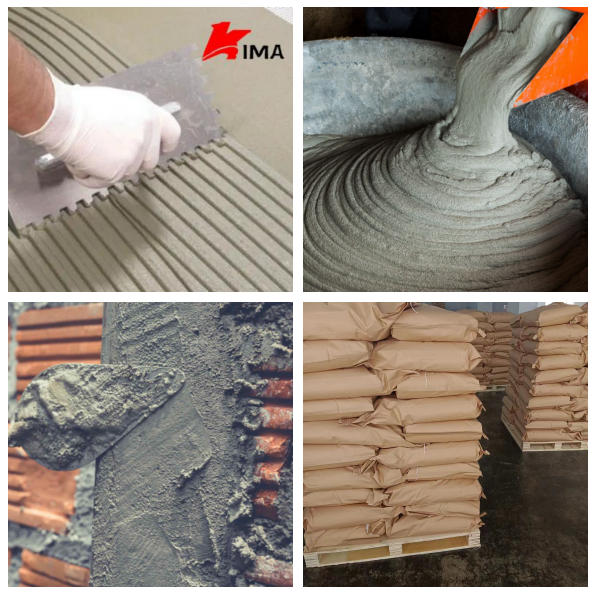
One of the most significant effects of starch ether in building materials is improving workability. Traditional mortar and plaster materials are prone to poor flowability, difficulty in application, and cracking during use. Adding starch ether significantly increases the material's viscosity and water retention, making the mortar easier to spread and smooth during construction while preventing cracking and powdering. Starch ethers bind to water molecules to form a stable network structure, extending the material's workability, allowing construction workers to maintain the material's workability for a longer period of time and improving construction efficiency.
2. Enhances material water retention and ensures cement hydration
The hardening and strength development of cement mortar depends on the cement hydration reaction, and moisture retention is crucial for this hydration reaction. Starch ethers have excellent water absorption and retention capabilities, forming a moisture barrier within the mortar, preventing rapid evaporation during construction and ensuring sufficient cement hydration. This not only increases the mortar's ultimate strength but also improves its durability and reduces cracks caused by excessive drying.
3. Improves Adhesion and Adhesion
Building materials, especially plaster mortars and tile bonding mortars, require excellent adhesion and bonding to ensure a tight bond with the substrate, preventing detachment and hollowing. Starch ethers form a uniform dispersion within the mortar, improving its adhesion and flexibility, enabling it to firmly adhere to various substrate surfaces. They also reduce shrinkage during construction and drying, counteracting minor deformations in the substrate and enhancing overall structural stability.
4. Improves Crack Resistance and Flexibility
Building materials are susceptible to temperature fluctuations, alternating wet and dry conditions, and structural stresses during use, making them prone to cracking. Starch ethers form a flexible network structure, improving the toughness and crack resistance of mortar, thereby effectively reducing the occurrence of cracks. Especially in dry-mix mortar, interior and exterior wall plasters, and flooring materials, starch ethers can significantly improve the crack resistance of the materials, extend their service life, and reduce maintenance costs.
5. Adapting to the Needs of Dry-Mixed Materials and Energy-Saving and Environmentally Friendly Applications
The modern construction industry utilizes a large number of dry-mixed materials, which place higher demands on fluidity, water retention, and workability. Starch ethers rapidly absorb water and swell in dry-mixed materials, improving their consistency and workability. Furthermore, starch ethers are derived from natural starch and, after modification, are non-toxic and harmless, meeting the requirements of green building and environmentally friendly construction. Starch ethers play a significant role in reducing construction energy consumption and improving the environmental performance of materials.
6. Application Prospects and Summary
As the construction industry moves towards high-performance, green, and intelligent development, the application prospects of starch ethers are expanding. Whether used to improve mortar workability, enhance water retention, improve adhesion, or improve crack resistance and flexibility, starch ethers play an irreplaceable role. It not only improves the overall performance of building materials but also meets the efficiency, durability, and environmental protection requirements of modern construction.
The addition of HPS to building materials is an inevitable trend in the development of modern construction projects. By adjusting mortar fluidity, water retention, adhesion, and crack resistance, starch ethers provide a better construction experience and enhance the safety and durability of building structures, making them an indispensable additive for modern building materials.


 English
 日本語
日本語 français
 Deutsch
 Español
 العربية
 Türkçe
 italiano
 русский
 português
 Nederland