In modern building materials systems, the use of high-performance additives has become a key means of improving construction performance and material durability. Among these, redispersible polymer powder (RDP) and hydroxypropyl methylcellulose (HPMC), two common functional additives, are often used in combination. Their synergistic effect not only improves the overall performance of materials such as mortar, putty, and tile adhesive, but also provides effective support for building energy conservation and sustainable development.
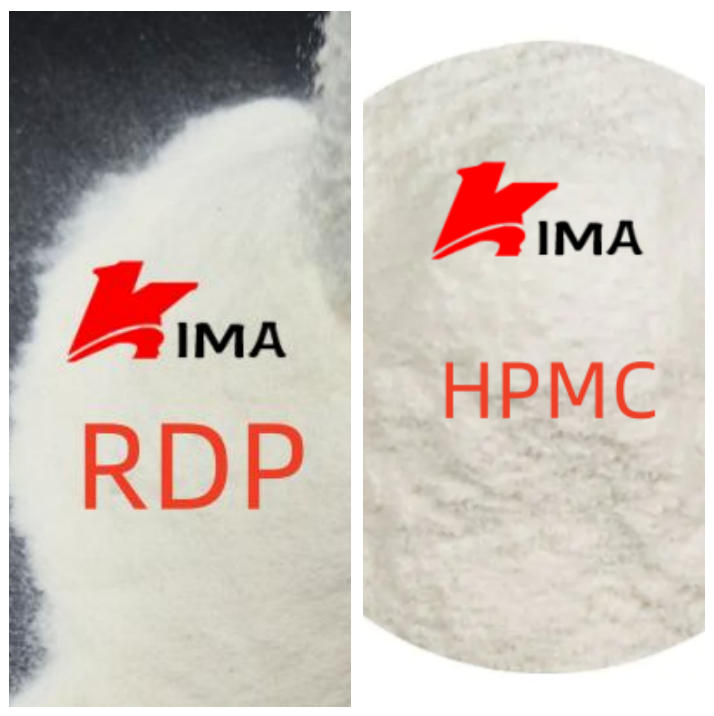
1. Characteristics of RDP
RDP is a polymer powder produced through a spray drying process. Upon contact with water, it redisperses into an emulsion with excellent film-forming properties and adhesion. In mortars and adhesives, it significantly enhances bond strength with the substrate while improving flexibility and impact resistance. The resulting polymer film possesses a certain degree of hydrophobicity, which also enhances the material's penetration resistance and weather resistance. Therefore, RDP is widely used in tile adhesives, insulation system screed mortars, self-leveling mortars, and exterior wall putties.
2. Functional Value of HPMC
As a cellulose ether additive, HPMC primarily serves to thicken, retain moisture, and improve workability. In cement- or gypsum-based materials, HPMC can slow water evaporation, ensuring full hydration of the binder, thereby increasing mortar strength. Furthermore, its excellent rheological properties improve the workability of mortar and putty, reducing sagging and enhancing application uniformity. For thin-layer construction materials, HPMC's water retention and dispersing properties are particularly important, preventing shrinkage, cracking, and powdering.
3. Synergistic Mechanism of RDP and HPMC
In building material systems, RDP and HPMC do not function in isolation; rather, they interact to create a synergistic effect:
Optimized Workability: HPMC provides water retention and fluidity, ensuring that the mortar retains little water during application, facilitating smoothing and spreading. RDP enhances adhesion and flexibility, ensuring the mortar adheres securely to the substrate surface. The combination of these two ensures both smooth application and strong adhesion.
Improved Mechanical Properties: RDP's film-forming properties improve the mortar's flexibility and crack resistance, while HPMC ensures a thorough hydration reaction and increases structural density. This synergistic effect creates an optimal balance between strength and toughness, making the material particularly suitable for exterior wall insulation systems and tile adhesives.
Enhanced Durability: HPMC slows water loss, while RDP's film-forming properties enhance hydrophobicity. Together, they effectively resist damage from freeze-thaw cycles, rainwater erosion, and temperature fluctuations, extending the lifespan of building materials.
Advantages in Thin-Beam Applications: In thin-beam systems such as tile adhesives and exterior wall putty, HPMC maintains a moist application environment, preventing excessive water absorption by the substrate. RDP's film-forming properties enhance interfacial bonding, preventing thin-beam material from peeling and cracking.
4. Typical Application Cases
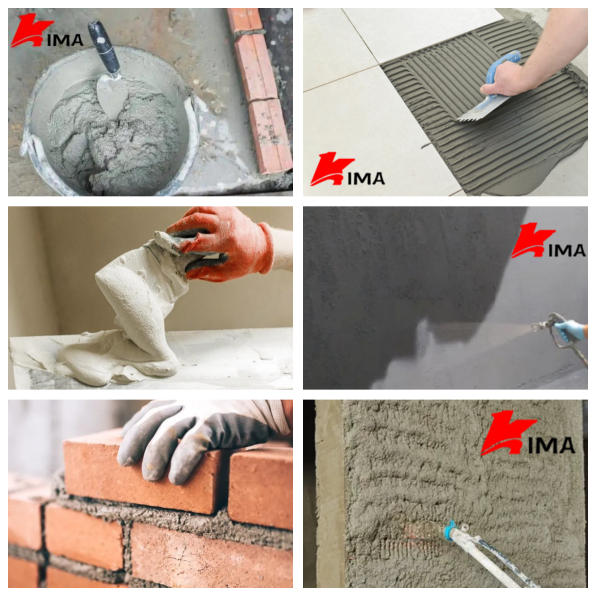
Tile Adhesives: HPMC ensures smooth application and open time, while RDP significantly enhances bond strength and water resistance, ensuring long-term adhesion of tiles in wet areas or on exterior walls.
Exterior wall insulation system plaster mortar: HPMC ensures excellent construction compatibility between the mortar and insulation board, while RDP enhances crack resistance and weather resistance, effectively resisting thermal stress.
Putty powder: HPMC makes putty powder smooth and smooth, making it easy to apply; RDP improves the adhesion and abrasion resistance of the putty layer, making the surface more solid and durable.
The synergistic effect of architectural-grade RDP and HPMC is a classic example of optimizing building material performance. The former focuses on improving bond strength, flexibility, and durability, while the latter plays a vital role in workability, water retention, and dispersibility. This organic combination not only solves practical construction problems but also promotes the development of green building materials. With the increasing demand in the construction industry for high-performance, long-lasting, energy-saving, and environmentally friendly materials, the synergistic application of RDP and HPMC will present a broad future.


 English
 日本語
日本語 français
 Deutsch
 Español
 العربية
 Türkçe
 italiano
 русский
 português
 Nederland