Rheology Modification, Sag Control, and Application Workability in Architectural and Industrial Coatings
Hydroxyethyl cellulose (HEC) plays a central role in rheology modification within both architectural and industrial coating systems, primarily due to its strong water solubility, thickening efficiency, and shear-dependent viscosity behavior. In waterborne formulations, HEC enhances low-shear viscosity, which directly contributes to improved sag resistance and film build during brush or roller application. At higher shear rates—such as when spraying or mixing—the viscosity decreases, enabling smoother processing, better atomization, and reduced coating spatter. This shear-thinning profile improves handling characteristics without compromising final film stability.
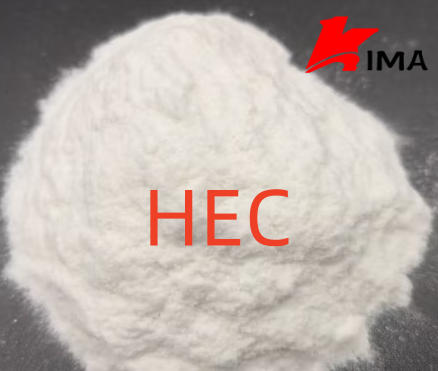
Beyond sag control, HEC contributes to extended open time and more uniform pigment distribution during application. By stabilizing dispersed particles, including titanium dioxide and functional fillers, it reduces pigment float, flooding, and settling, resulting in more consistent color and surface appearance. Its ability to control water retention is also valuable in porous substrate conditions, helping prevent premature drying and improving leveling. In industrial coatings, where precision film formation and process consistency are critical, HEC assists in balancing viscosity across temperature fluctuations and production environments.
Formulators also value HEC for its robust compatibility with a wide variety of latex resins, coalescing agents, and associative thickeners, allowing tailored rheology profiles that support performance differentiation across gloss, semi-gloss, matte, and high-build systems.
Film Uniformity, Stabilization of Pigments and Fillers, and Improved Color Development
Hydroxyethyl cellulose (HEC) significantly enhances film uniformity and pigment stabilization in waterborne coating systems by moderating dispersion behavior and maintaining suspension stability throughout application and drying. As a non-ionic thickener, HEC promotes balanced viscosity that slows pigment sedimentation and reduces phase separation, ensuring a more homogeneous formulation. This prevents visual defects such as streaking, color inconsistency, and surface mottling—issues that commonly arise in coatings with poor dispersive control.
HEC also improves the structural arrangement of pigments and fillers during film formation. By optimizing flow and leveling, the coating spreads more uniformly across substrates, minimizing brush and roller marks while enhancing hiding power. In color-critical applications, such as decorative architectural paints or industrial protective finishes, this results in more predictable color development and higher tinting strength. The stabilization of titanium dioxide and inorganic fillers further improves opacity and brightness, contributing to glossy or satin finishes without compromising mechanical integrity.
HEC supports formulation robustness during storage by preventing pigment settling and hard caking. Its synergy with dispersants, surfactants, and resin emulsions expands compatibility across waterborne, low-VOC, and eco-friendly coating systems. Overall, HEC multifunctional contributions to film uniformity and pigment stabilization enable coatings with better aesthetics, improved performance, and greater long-term quality consistency.
Compatibility with Waterborne Resin Systems, Solvents, Additives, and Functional Pigments
Hydroxyethyl cellulose (HEC) demonstrates broad compatibility across a wide range of waterborne resin systems, additives, and functional pigments, making it a versatile rheology modifier for modern coatings. As a non-ionic polymer, HEC interacts effectively with acrylic, vinyl acetate, styrene-acrylic, and polyurethane latex emulsions without destabilizing the polymer particles. This enhances formulation flexibility for both architectural and industrial coatings, especially those targeting low-VOC and environmentally compliant systems. Its solubility profile allows incorporation through either dry addition or pre-hydration methods, depending on production requirements and desired thickening kinetics.

In addition to resin compatibility, HEC performs well with common solvents, coalescents, wetting agents, defoamers, and dispersants used to fine-tune paint processing and film formation. Its non-ionic nature minimizes adverse interactions that could lead to flocculation or foaming, helping maintain stability during storage and mixing. Functional pigments—including titanium dioxide, anti-corrosion pigments, and extender fillers—also benefit from HEC stabilizing effect, which reduces settling and enhances tint strength, gloss development, and opacity performance.
HEC integration into low-sheen and high-build coatings further underscores its formulation versatility. Whether used in primers, interior and exterior wall paints, industrial maintenance coatings, or specialty coatings, it supports consistent rheological behavior, pigment stabilization, and application properties. This broad compatibility ultimately enables formulators to optimize aesthetics, performance, and manufacturability while maintaining robust stability across diverse coating chemistries.
Performance Optimization Through Grade Selection, Dosage Adjustment, and Formulation Balancing
Optimizing the performance of hydroxyethyl cellulose (HEC) in coating systems requires careful grade selection, dosage adjustment, and formulation balancing, as each factor influences viscosity, workability, storage stability, and final film appearance. HEC grades vary in molecular weight, viscosity characteristics, substitution level, and dissolution behavior, allowing formulators to target specific rheological profiles and application methods. High-viscosity grades offer strong sag resistance, improved body, and enhanced brushed finish, while medium- or low-viscosity grades facilitate easier spraying and faster dispersion.

Dosage is also a critical variable: insufficient HEC may lead to pigment settling, poor leveling, and weak stability, while excessive amounts can cause over-thickening, poor flow, foaming, and inferior gloss. Optimizing the balance between low-shear and high-shear viscosities ensures proper application performance across multiple techniques, from roller to spray. HEC can also be combined with associative or synthetic thickeners to tailor pseudoplasticity, improve spatter resistance, and refine open time.
Formulation balancing extends beyond rheology modification to include interactions with latex systems, coalescents, wetting agents, dispersants, and antifouling or anticorrosion pigments. Adjusting water retention, pH, and solvent content also influences film formation and stability during storage. When properly optimized, HEC contributes to robust, aesthetically consistent, and application-friendly coatings that satisfy modern performance demands in both architectural and industrial markets.


 English
 日本語
日本語 français
 Deutsch
 Español
 العربية
 Türkçe
 italiano
 русский
 português
 Nederland