Chemical Structure, Substitution Degree, and Water Swelling Behavior of L-HPC
Low-substituted hydroxypropyl cellulose (L-HPC) is a partially etherified cellulose derivative formed by the controlled substitution of cellulose hydroxyl groups with hydroxypropyl units. Unlike fully substituted hydroxypropyl cellulose, L-HPC retains a substantial fraction of native cellulose backbone integrity, giving it a unique balance of hydrophilicity, crystallinity, and structural rigidity. The degree of substitution (DS) for L-HPC typically ranges from 0.1 to 0.3, significantly lower than standard HPC grades, which provides a key differentiating feature in both physicochemical behavior and pharmaceutical functionality. This low substitution preserves intermolecular hydrogen bonding, contributing to an insoluble yet highly swellable matrix when exposed to aqueous environments.
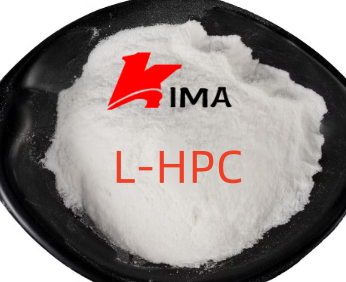
The water-swelling characteristics of L-HPC are central to its performance in tablet disintegration and drug delivery. Upon hydration, the polymer rapidly imbibes water into its fibrous microstructure, generating internal pressure that promotes particle expansion, tablet disintegration, and improved dissolution of active pharmaceutical ingredients (APIs). Because the polymer does not dissolve but instead forms a hydrated gel-like network, the swelling occurs without increasing solution viscosity—an advantageous property for formulations where rapid disintegration is desired without impairing manufacturability.
Substitution degree plays a critical mechanistic role: higher hydroxypropyl content increases flexibility and reduces crystallinity, accelerating hydration kinetics, whereas lower substitution offers stronger fiber strength and controlled swelling. Optimizing this balance enables tailored performance for direct compression, wet granulation, and orally disintegrating tablet (ODT) technologies. Furthermore, L-HPC maintains chemical compatibility with a wide range of APIs and excipients due to its minimal ionic character and low reactivity, preserving stability and moisture tolerance.
The interplay between partial etherification, structural retention, and water-swellability positions L-HPC as a highly functional excipient for modern solid dosage form design—especially where fast disintegration, enhanced patient compliance, and robust processing characteristics are required.
Role of L-HPC as a Super-Disintegrant in Oral Solid Dosage Forms
Low-substituted hydroxypropyl cellulose (L-HPC) is widely recognized as an efficient super-disintegrant in oral solid dosage forms due to its unique combination of rapid water uptake, high swelling capacity, and insoluble fibrous morphology. Unlike soluble cellulose ethers that dissolve and increase viscosity, L-HPC remains insoluble in aqueous systems, allowing it to swell freely without forming thick gels that retard disintegration. This enables tablets to break apart quickly upon contact with gastrointestinal fluids, facilitating faster dissolution and improved bioavailability of active pharmaceutical ingredients (APIs).
The disintegration mechanism of L-HPC integrates two synergistic effects: wicking and swelling pressure. First, the fibrous structure promotes rapid capillary water penetration throughout the tablet matrix, reducing cohesive strength between excipients. Second, as the hydrated polymer fibers expand, internal stress fractures the compact, generating fragmentation and de-aggregation into fine particulates. This dual action is advantageous for direct compression formulations, where high tablet hardness can otherwise hinder disintegration performance.
In high-drug-load or poorly compressible formulations, L-HPC exhibits good functionality as both a filler and a process-aid, often reducing the need for additional binders or lubricants. Its performance remains stable over a broad pH range and is compatible with wet granulation, dry granulation, and direct compression processes. Compared to traditional disintegrants such as starch or crospovidone, L-HPC provides faster onset of water penetration, improved reworkability, and lower sensitivity to tablet hardness or compression force—key considerations for high-throughput pharmaceutical manufacturing.
The role of L-HPC as a super-disintegrant aligns with the growing demand for patient-centric dosage forms, including chewable, fast-disintegrating, and orally disintegrating tablets (ODTs). Its ability to balance manufacturability, stability, and performance makes it a strategic excipient for modern formulation design, especially in the context of enhanced bioavailability and improved swallowing convenience.
Compatibility with APIs, Excipients, and Wet Granulation Processes
Low-substituted hydroxypropyl cellulose (L-HPC) demonstrates broad compatibility with active pharmaceutical ingredients (APIs) and common excipients, making it a versatile functional material in oral solid dosage formulations. Its partial etherification and nonionic structure minimize chemical reactivity, reducing the likelihood of drug–excipient interactions such as acid–base reactions, ionic complexation, or oxidative degradation. This stability is particularly beneficial for moisture-sensitive APIs and those formulated via wet granulation, where exposure to aqueous media can accelerate undesirable transformations.
The fibrous morphology of L-HPC enables uniform blending with diluents, binders, lubricants, and disintegrants, maintaining good powder flow and compressibility across a wide range of formulation ratios. Its compatibility with filler excipients such as microcrystalline cellulose (MCC), lactose, mannitol, and dicalcium phosphate allows formulators to fine-tune tablet hardness, friability, and dissolution behavior without compromising disintegration performance. Additionally, L-HPC co-performs well with super-disintegrants like crospovidone or croscarmellose sodium, enabling synergistic effects in high-performance orally disintegrating tablets (ODTs) or fast-release systems.
In wet granulation, L-HPC exhibits stability toward processing solvents (typically water or hydroalcoholic systems) and retains its swelling functionality after drying, ensuring reliable disintegration in the final dosage form. Its ability to absorb water during granulation without dissolving helps create cohesive yet porous granules, improving compaction properties while preventing overwetting or excessive agglomeration. As a process aid, it can also enhance granule strength and reduce variability during scale-up and high-shear processing.
For APIs with poor compressibility or high dose loads, L-HPC can serve as both a disintegrant and filler, supporting direct compression and improving mechanical robustness. Overall, the broad compatibility profile of L-HPC reduces formulation constraints, enhances manufacturability, and ensures consistent performance across multiple processing technologies and drug classes, reinforcing its value in modern solid dosage development.
Emerging Applications in Direct Compression, Orally Disintegrating Tablets, and Novel Drug Delivery Systems
As for low-substituted hydroxypropyl cellulose uses, low-substituted hydroxypropyl cellulose (L-HPC) has gained significant attention in modern pharmaceutical development due to its multifunctional properties, particularly in direct compression, orally disintegrating tablets (ODTs), and innovative drug delivery systems. Its combination of high swelling capacity, insolubility in water, and fibrous structure makes it an ideal excipient for formulations that require rapid disintegration without compromising tablet strength or manufacturability.
In direct compression, L-HPC acts as both a filler and a super-disintegrant, enabling high drug-load tablets to maintain mechanical integrity while ensuring rapid water uptake and fragmentation upon administration. This simplifies production by reducing the need for complex wet granulation steps, lowering manufacturing costs, and minimizing moisture exposure for sensitive APIs. Additionally, L-HPC supports uniform powder flow and compressibility, improving tablet weight uniformity and process reproducibility.
For orally disintegrating tablets, the fast hydration and expansion of L-HPC fibers allow tablets to disintegrate in seconds in the mouth without the need for water, enhancing patient compliance, particularly for pediatric and geriatric populations. Its compatibility with other excipients and minimal taste impact makes it an excellent choice for chewable and fast-dissolving formulations, where both performance and mouthfeel are critical.
Beyond traditional tablets, L-HPC is being explored in novel drug delivery systems such as multiparticulate granules, controlled-release matrix systems, and mucoadhesive dosage forms. Its swelling behavior can be tailored to modulate drug release profiles, improve bioavailability, and support the development of innovative oral formulations for poorly soluble or low-bioavailability APIs.
The emerging applications of L-HPC reflect its versatility as a high-performance excipient that bridges the gap between manufacturability, patient-centric design, and advanced drug delivery. Its continued adoption in direct compression, ODTs, and cutting-edge dosage forms highlights its strategic role in next-generation pharmaceutical development.


 English
 日本語
日本語 français
 Deutsch
 Español
 العربية
 Türkçe
 italiano
 русский
 português
 Nederland