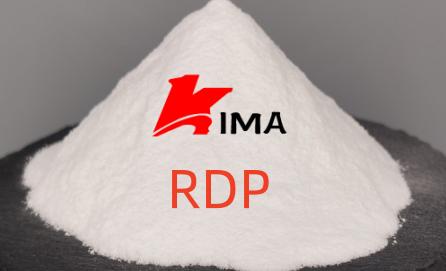
redispersible polymer powder(RDP), as one of the most crucial polymers in dry-mix mortar systems, plays a significant role in enhancing the mortar's impermeability. Impermeability is a crucial indicator of mortar's resistance to water penetration, directly affecting structural durability, surface finish stability, and subsequent maintenance costs. Given the inherent microcracks and capillaries in cement-based materials, the appropriate addition of RDP can significantly improve the mortar's density, elasticity, and interfacial bonding properties, thereby constructing a more reliable impermeable system.
Core Mechanism of RDP in Enhancing Mortar's Impermeability
1.1. Film-Forming Effect Reduces Permeability Channels
After mixing with water, RDP redisperses the latex powder particles, forming a uniform polymer emulsion. During cement hydration and water evaporation, the polymer emulsion gradually forms a film within the mortar, creating a continuous polymer network structure. This polymer film has the following anti-seepage effects:
Blocks capillary pores, reducing interconnected pores;
Seals micro-cracks, reducing the path of water seepage;
Improves the internal density of the mortar, enhancing its anti-seepage grade.
1.2. Improves the interface structure between mortar and substrate
Water seepage in mortar is often related to interfacial micro-cracks and delamination. RDP has good adhesion; after film formation, it can enhance the interfacial bond between the mortar and substrate, making the interface denser and more continuous.
It enhances interfacial adhesion, reducing water seepage along interfacial channels;
Improves resistance to interfacial cracks, especially when the wall substrate absorbs water unevenly.
1.3. Imparts flexibility to mortar, reducing crack formation
Hard and brittle mortar is prone to micro-cracks due to temperature changes, shrinkage, or slight structural deformation, which is one of the root causes of water seepage. The flexible properties of RDP film can effectively improve the ductility of mortar:
Reduces shrinkage cracks;
Increases tensile strength and deformation capacity;
Absorbs stress, preventing micro-cracking.
With fewer cracks, the mortar's impermeability is naturally greatly improved.
1.4. Improving the water retention of mortar and ensuring full cement hydration
An appropriate amount of RDP can significantly improve the water retention of mortar, making the cement hydration reaction more complete, thereby generating more C-S-H gel and making the structure denser.
The more complete the hydration, the stronger the impermeability;
Reducing pores and microcracks caused by insufficient hydration.
Impermeability Application Performance of RDP in Different Mortar Systems
2.1. Waterproof Mortar
RDP is a key component of flexible waterproof mortars (such as JS and polymer waterproof mortars). Its polymer film can form a "flexible waterproof layer," effectively resisting the risk of cracking caused by water pressure and external deformation.
2.2. Interior and Exterior Wall Plastering Mortar
Adding RDP to the plastering layer can significantly reduce cracks caused by uneven water absorption and temperature changes in the substrate, improve the overall impermeability of the exterior wall system, and reduce the risk of rainwater infiltration.
2.3. Tile Adhesive and Interface Agent
RDP improves adhesion and enhances flexibility, reducing the chain reaction of "hollow spots—cracking—water seepage" behind tiles, making it particularly suitable for humid environments and exterior wall applications.
2.4. Floor Mortar
For basements, bathrooms, kitchens, and other floors frequently exposed to water, adding RDP reduces seepage channels and improves overall durability.
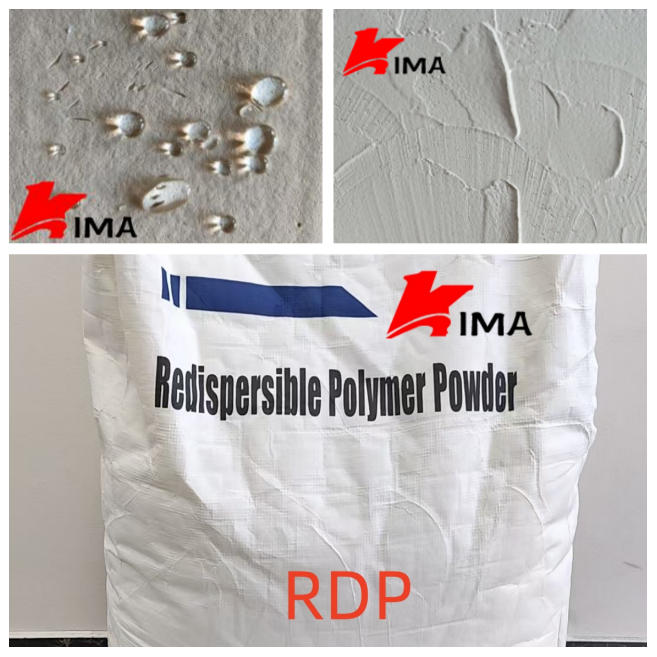
Key Factors Affecting RDP's Water Resistance
3.1. Dosage
The typical RDP dosage is 1%–5% (by mass of cementitious material).
Lowering the recommended ratio weakens film formation and flexibility; excessively high ratios affect mortar strength and cost, and should be optimized based on the system.
3.2. Type and Glass Transition Temperature (Tg)
RDP with a lower Tg is more flexible and suitable for waterproofing and crack resistance applications;
RDP with a higher Tg is better suited for enhancing strength and water resistance.
3.3. System Compatibility
Different cement, powder, and thickener systems can affect the dispersion, film formation, and water retention properties of RDP, and should be optimized through experiments.
RDP, through multiple mechanisms such as film formation, flexibility enhancement, interface modification, and optimized hydration, constructs a denser, more flexible, and durable structure for mortar, fundamentally improving its impermeability. Proper selection and scientific proportioning are key to achieving stable impermeability. As an irreplaceable polymer material in modern dry-mix mortar, RDP plays a vital role in improving building durability.


 English
 日本語
日本語 français
 Deutsch
 Español
 العربية
 Türkçe
 italiano
 русский
 português
 Nederland