Hydroxypropyl methylcellulose (HPMC), a stable and widely used cellulose ether, is extensively used in modern building materials, especially demonstrating significant advantages in gypsum-based building material systems. Whether in gypsum-based putty, gypsum plastering mortar, self-leveling gypsum, or lightweight gypsum board production, HPMC enhances the overall performance and workability of materials through its water-retention, thickening, and workability-improving properties.
Enhancing Water Retention and Promoting Uniform Hydration of Gypsum
1.1. Preventing Cracking Due to Rapid Water Loss
Especially on highly absorbent substrates or in high-temperature construction environments, HPMC ensures that the gypsum system has sufficient time to complete the setting and hardening process.
1.2. Promoting Uniform Growth of Gypsum Crystals
Sufficient moisture allows dihydrate gypsum crystals to interlock in an orderly manner, thereby improving the overall strength and molding quality of the material.
1.3. Reduced Surface Powdering Due to Substrate Water Absorption
HPMC's water-retention properties effectively reduce the water absorption rate of the substrate, improving the material's density.
Therefore, water retention is one of the most crucial functions of HPMC in gypsum-based building materials.
Improved Workability and User Experience
2.1. Enhanced Lubricity and Thixotropy
Gypsum putty or plaster does not drag during application, resulting in a smooth application feel and reduced labor intensity.
2.2. Improved Workability
It is less prone to bleeding and segregation, ensuring smooth and uniform application, especially suitable for mechanical spraying systems.
2.3. Enhanced Anti-Sagging Properties
At appropriate viscosities, HPMC can significantly improve the anti-sagging ability of putty or plaster materials, ensuring that thick coats do not drip.
Excellent workability not only improves construction quality but also increases construction efficiency, which is the core reason for the widespread use of HPMC in gypsum-based building materials.
Adjusting Setting Time and Open Time
3.1. Appropriately Delaying Setting Time
This provides sufficient working time for large-area construction, preventing waste caused by excessively rapid hardening of the material.
3.2. Extending Open Time
This allows the material to maintain good adhesion after application, facilitating multiple adjustments and repairs, and improving the final product's appearance.
3.3. Enhancing Construction Stability
This effectively adapts to different temperature and humidity environments, improving the flexibility of process transitions.
Appropriate setting time adjustment makes gypsum building materials more "easy to use and controllable."
Enhancing Film-Forming Properties and Surface Quality
HPMC forms a certain polymer film in gypsum-based materials, contributing to improved surface properties:
A smoother and more delicate surface, facilitating subsequent coating
Improved shrinkage resistance, reducing cracking
Enhanced the strength and durability of the finished product
Especially noticeable in the production of gypsum putty and gypsum board.
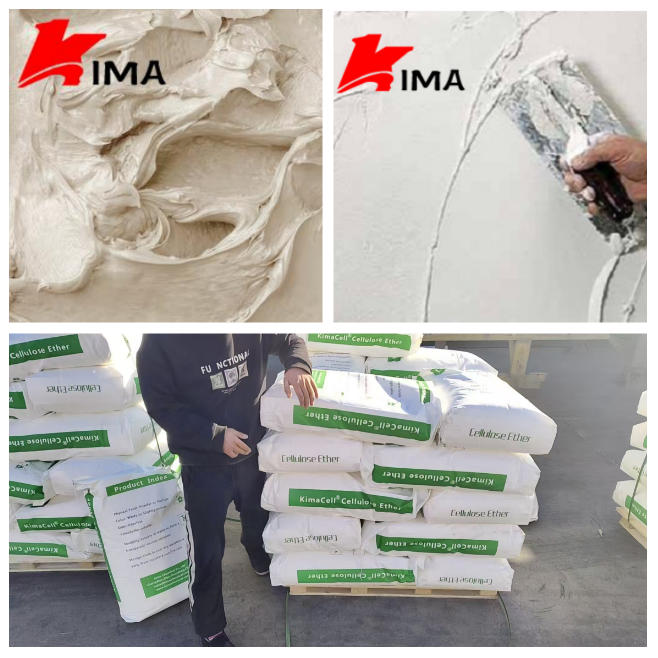
Application Performance in Different Gypsum Building Materials
5.1. Gypsum Putty
Improves workability and water retention
Prevents powdering and dusting
Forms a smooth and fine coating base
5.2. Gypsum Plastering Mortar
Provides thick coating without sagging
Enhances adhesion and workability
Reduces cracking and shrinkage
5.3. Self-Leveling Gypsum
Regulates flowability
Controls bleeding
Improves pumpability
5.4. Lightweight Gypsum Board
Retains water and promotes uniform curing
Increases board strength
Improves molding efficiency
The role of HPMC in gypsum-based building materials can be summarized in four core aspects: water retention, thickening, improved workability, and regulation of setting time. Through the synergistic improvement of these properties, HPMC significantly enhances the stability of gypsum materials, the construction experience, and the quality of the final product, making it an indispensable and important additive in modern gypsum building material systems.


 English
 日本語
日本語 français
 Deutsch
 Español
 العربية
 Türkçe
 italiano
 русский
 português
 Nederland