Redispersible Polymer Powder (RDP), as one of the most important polymer additives in modern building materials, is widely used in mortar, putty, tile adhesive, self-leveling compound, and cement-based waterproof coatings. Its core characteristic is its ability to redisperse into a stable emulsion upon contact with water, thus forming a flexible and continuous polymer film within inorganic cementitious material systems, significantly improving the material's adhesion, flexibility, and overall durability. With increasing demands for building performance, the multifunctional advantages of RDP are becoming increasingly prominent.
Improved Bond Strength – Enhanced Substrate Adaptability
RDP forms an interpenetrating network with the inorganic cementitious structure during cement hydration, significantly increasing the adhesion between mortar or putty and the substrate. Whether on smooth concrete, old walls, or highly absorbent brick surfaces and gypsum board substrates, adding an appropriate amount of RDP results in more stable adhesion, reducing problems such as hollowing and detachment. Especially in tile adhesives and insulation board bonding mortars, RDP is a key additive determining the bonding grade (e.g., C1, C2).
Improved Flexibility and Crack Resistance
After hardening, RDP forms a flexible polymer film that effectively disperses stress, significantly improving the tensile and flexural strength of mortars or putties. For applications with strict requirements for deformation adaptability, such as exterior wall insulation systems, crack-resistant mortars, flexible putties, and self-leveling floors, RDP helps the system resist stress caused by substrate shrinkage and thermal expansion and contraction, reducing the risk of cracking.
Enhanced Water Retention and Workability
In dry-mix mortar systems, RDP has a certain thickening and film-forming moisturizing effect, which can improve the water retention capacity to a certain extent, allowing the construction material to maintain a suitable open time and workability even on high-temperature or highly absorbent substrates. Specifically, this manifests as: more stable mortar flowability; smoother application; and more controllable initial drying speed.
RDP has a synergistic effect with cellulose ethers (such as HPMC and MHEC), jointly improving the application experience and film quality.
Improved Water Resistance and Weather Resistance
After film formation, RDP creates a dense, continuous organic phase, significantly reducing porosity in hardened mortar, minimizing water intrusion, and improving impermeability. In cement-based waterproof coatings, tile adhesives, and exterior wall putties, RDP effectively enhances the system's water resistance, freeze-thaw resistance, and long-term weather resistance, enabling materials to maintain stable performance in complex environments such as outdoor rain, UV radiation, and thermal cycling.
Enhanced Compatibility with Special Substrates
For substrates where conventional cement mortars struggle to adhere well, such as EPS/XPS insulation boards, wood panels, metal sheets, old tiles, and smooth concrete surfaces, the polymer film provided by RDP significantly improves interfacial wettability and adhesion, making the application of mortar systems on special substrates possible. Furthermore, in gypsum-based materials and polymer-modified mortars, RDP also provides necessary flexibility and bonding reinforcement.
Improved Abrasion Resistance and Strength Stability
RDP enhances flexibility while also improving pressure resistance and abrasion resistance, especially in products with high mechanical performance requirements such as self-leveling floors and cement repair mortars. The polymer film formation improves surface abrasion resistance, ensuring the floor remains structurally stable under long-term loads, preventing sanding and powdering.
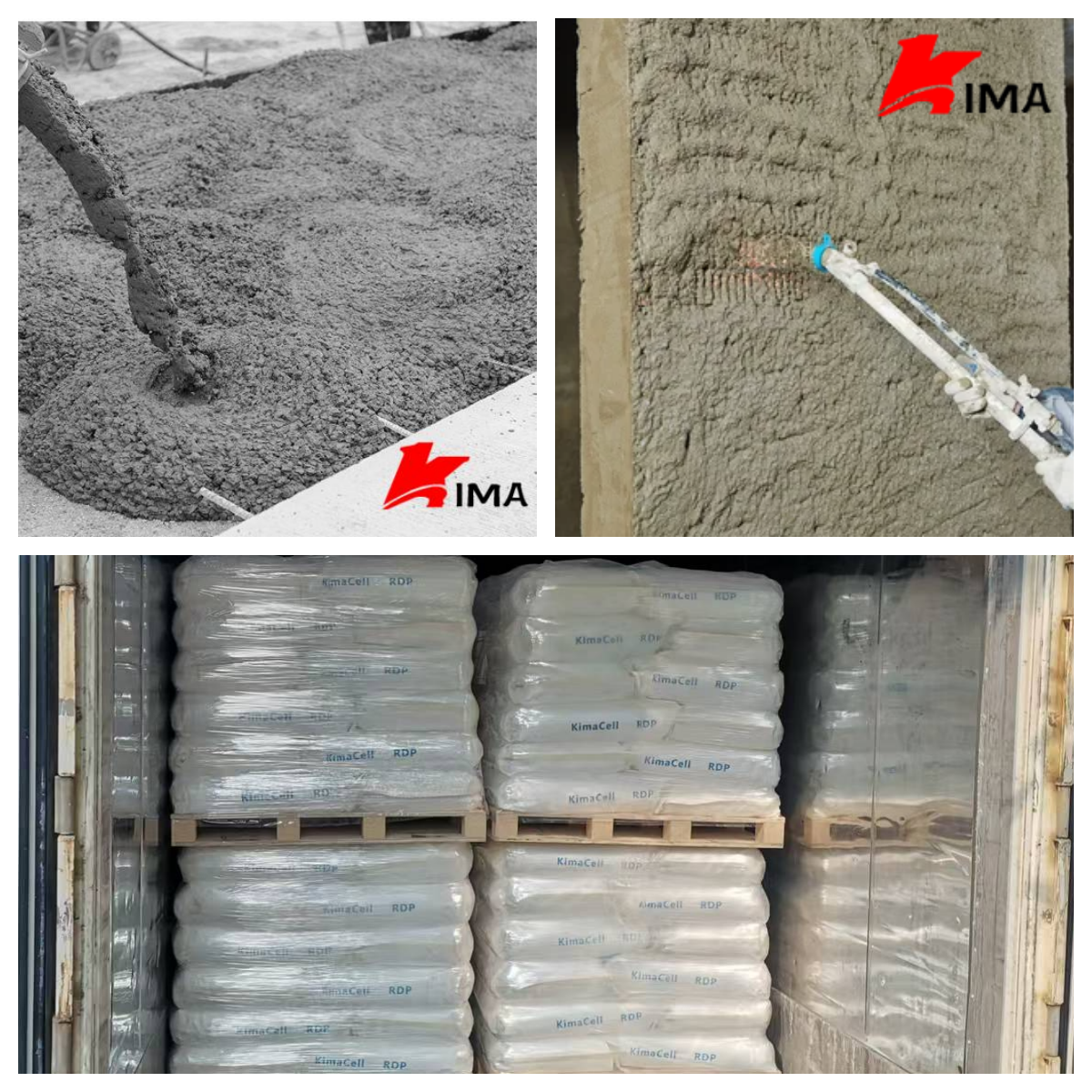
Expanded Application Areas of Building Materials
As building materials develop towards greener, lighter, and higher-performance directions, the functions of RDP are continuously expanding, including:
Low-VOC environmentally friendly building coatings and mortar systems
High-water-retention, fast-hardening repair mortars
High-temperature resistant polymer mortars
Flexible reinforcement materials and thin-layer repair materials
It can be used in conjunction with various additives to meet the high-performance and customized needs of special mortars.
RDP is an indispensable multifunctional polymer additive in modern building material formulation systems. Its advantages are not only reflected in the significant improvement of basic properties such as adhesion, flexibility, water retention, and crack resistance, but also in making mortar and putty systems more stable and reliable in terms of weather resistance, workability, and material compatibility. As building construction standards continue to improve, the application scope of RDP will continue to expand in the fields of innovative mortars, green buildings, and high-performance materials.


 English
 日本語
日本語 français
 Deutsch
 Español
 العربية
 Türkçe
 italiano
 русский
 português
 Nederland