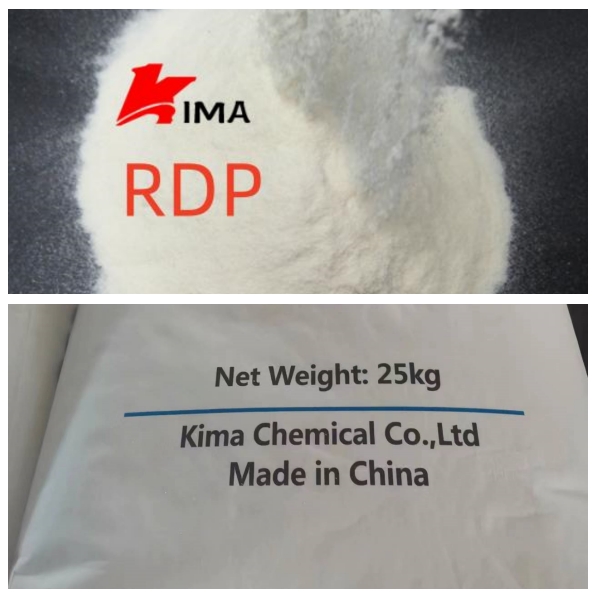
Redispersible polymer powder (RDP) is a polymer material that converts an emulsion into a powdered form through a spray drying process. Once added to a dry-mix mortar system, it can be redispersed into a stable emulsion by water, thereby imparting superior properties to the mortar. It is widely used in building materials, particularly in tile adhesives, exterior wall insulation systems, repair mortars, and self-leveling mortars.
1. Mechanism of Action
In a mortar system, RDP particles rapidly disperse into an emulsion upon contact with water. They then tightly bind to cement hydration products and inorganic aggregates, forming an organic-inorganic composite structure. Once the polymer film forms, it forms a continuous polymer film within the mortar and on the aggregate surface, providing adhesion, flexibility, and crack resistance. This film structure not only enhances the mortar's adhesion to various substrates but also improves its mechanical properties and durability.
2. Key Performance Improvements
Improved Bond Strength: RDP significantly enhances the adhesion of mortar to substrates such as concrete, masonry, and gypsum board, maintaining strong adhesion even on substrates with low water absorption or smooth surfaces.
Improved Flexibility: The film-forming polymer exhibits a certain degree of elasticity, which relieves stress between the base and top layers caused by thermal expansion and contraction, reducing the risk of cracking.
Enhanced Water Resistance: RDP forms a dense organic film in the mortar, reducing water penetration and improving water resistance and durability.
Improved Freeze-Thaw Resistance: The flexibility and water resistance of the polymer film help resist structural damage caused by water freezing and expansion during freeze-thaw cycles.
Improved Workability: Mortars incorporating RDP exhibit improved workability, water retention, and sag resistance, facilitating application.
3. Typical Applications
Tile Adhesives: RDP improves the adhesion and water resistance of tile adhesives, making it particularly suitable for attaching large-format tiles and tiles with low water absorption.
External Insulation Systems (EIFS): Adding RDP to insulation mortar improves adhesion to the insulation board and base layer, while also enhancing weathering and impact resistance.
Anti-Crack Mortar: RDP enhances the mortar's flexibility and crack resistance, making it suitable for exterior wall plastering and leveling layers.
Self-Leveling Mortar: Improves the adhesion and wear resistance of self-leveling mortar, reducing shrinkage cracks.
Repair Mortar: Strengthens the bond between the repair layer and the existing substrate, extending the lifespan of the repair.
4. Dosage and Precautions
The RDP addition rate to mortar is generally 1% to 5% of the cement mass, depending on the application and performance requirements. Using too little RDP will not achieve the desired performance improvement, while using too much RDP may increase costs and affect the mortar's early strength. During construction, avoid prolonged exposure to high temperature and high humidity to prevent a decrease in film formation. RDP should also be appropriately combined with other additives, such as cellulose ethers and water reducers, to maximize its overall performance.
The application of RDP in mortar system can not only significantly enhance adhesion, flexibility and durability, but also improve construction performance, meet the demand of modern construction for high-performance and long-life materials, and is an indispensable and important organic modified component in dry-mix mortar formula.


 English
 日本語
日本語 français
 Deutsch
 Español
 العربية
 Türkçe
 italiano
 русский
 português
 Nederland