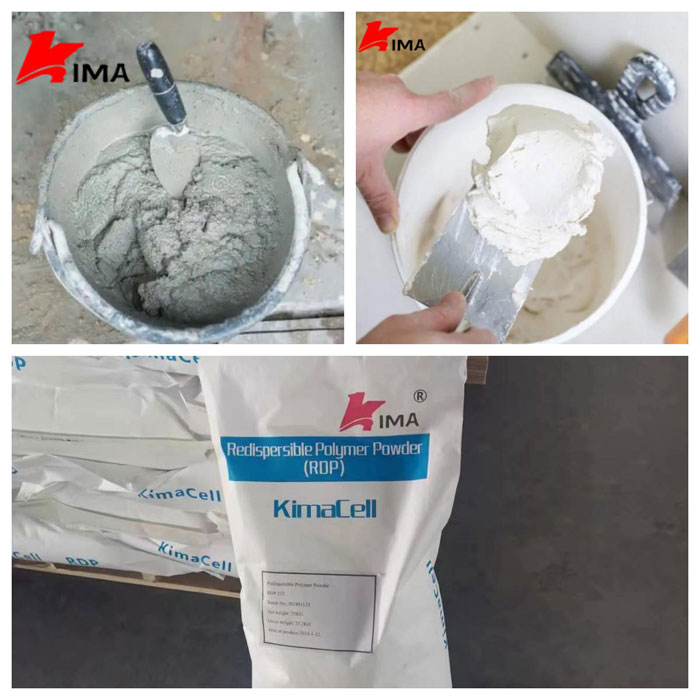
Redispersible polymer powder (RDP) is a type of polymer material that rapidly disperses in water and reforms into a stable emulsion. It is widely used in building mortars, tile adhesives, exterior wall insulation systems, self-leveling flooring, and other fields. Its primary function is to improve the mortar's adhesion, flexibility, water resistance, and workability.
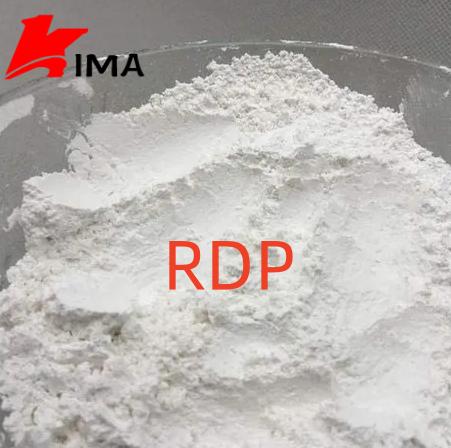
Ethylene-vinyl acetate copolymer (VAE) type
VAE is the most common and widely used type of RDP. It is formed by the polymerization of vinyl acetate (VAc) and ethylene (E) as the primary monomers. It exhibits excellent adhesion, flexibility, and water resistance, making it suitable for formulations such as tile adhesives, insulation mortars, and putty powders. Depending on the ethylene content, RDPs can be categorized as either more flexible or more rigid. The more flexible ones are suitable for exterior wall insulation systems, while the more rigid ones are suitable for applications requiring high adhesion, such as tile adhesives.
Ethylene-Vinyl Acetate-Vinyl Pivalate (VeoVa) Type
The introduction of VeoVa monomers to VAE significantly improves water resistance, alkali resistance, and weather resistance, making it suitable for building materials exposed outdoors. VeoVa RDP is widely used in exterior wall plasters, weather-resistant putties, and high-end tile adhesives. It features dense film formation, UV resistance, and resistance to powdering.
Styrene-Butadiene Copolymer (SB) Type
SB RDP is made from the polymerization of styrene (St) and butadiene (Bd). It offers high flexibility and impact resistance, as well as good water resistance. It is commonly used in building materials requiring crack and impact resistance, such as waterproof mortars, flexible plaster mortars, and elastic coatings. However, SB RDP's weather resistance is inferior to that of VAE-VeoVa, so careful formulation maintenance is required for long-term outdoor use.
Acrylic Type
Acrylic RDPs offer excellent weathering, UV resistance, and color retention, making them particularly suitable for applications such as high-end exterior decorative mortars and colored waterproof mortars. They also possess high flexibility and adhesion, maintaining stable performance even in extreme climates. However, due to their high production costs, they are often used in applications requiring extremely high performance.
Ethylene-Vinyl Acetate-Acrylate Copolymer (VAE/Acrylic) Type
This type of RDP combines the adhesion of VAE with the weathering resistance of acrylics, offering flexibility, water resistance, and aging resistance. It is suitable for exterior wall insulation systems, tile adhesives, and waterproof mortars. Its balanced performance makes it a popular mid- to high-end RDP for exterior wall insulation systems.
Special Function RDP
In addition to standard types, there are also RDP varieties developed for specialized needs, such as:
Low Film Forming Temperature (Low MFFT): Suitable for low-temperature construction environments, ensuring the mortar forms a film even at temperatures around 5°C. High-heat-resistant type: For use in high-temperature environments or in areas exposed to long-term heat, improving thermal stability.
Ultra-flexible type: Significantly improves mortar deformation resistance and is suitable for systems requiring extremely high crack resistance.
RDP are primarily classified based on the polymer matrix. Common types include VAE, VeoVa, SB, acrylate, VAE/Acrylic, and various special-function types. Selection should be based on a comprehensive consideration of the construction environment, substrate material, desired performance, and cost. For example, VAE is a good choice for standard indoor tile adhesives, VAE-VeoVa for outdoor thermal insulation mortars, and acrylic for high-end decorative mortars. Choosing the right RDP type can significantly improve the overall performance and durability of the mortar system.


 English
 日本語
日本語 français
 Deutsch
 Español
 العربية
 Türkçe
 italiano
 русский
 português
 Nederland