Methylcellulose (MC) and hydroxypropyl methylcellulose (HPMC) are both cellulose ether derivatives. Both are chemically modified natural cellulose and possess excellent solubility, film-forming properties, and thickening properties. They are widely used in industries such as construction, medicine, food, and cosmetics. However, due to differences in the substituent groups, their performance and applications differ significantly.
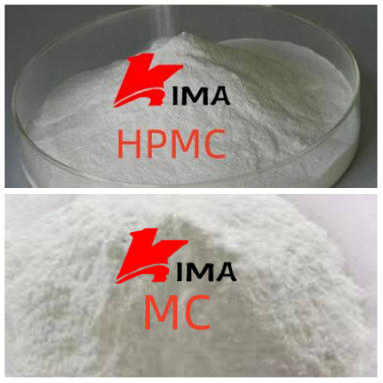
1. Chemical Structure Differences
MC: The hydroxyl (–OH) groups on the cellulose molecule are replaced by methoxy (–OCH₃) groups, with the primary substituent being a methyl group.
HPMC: In addition to the methyl substitution, hydroxypropyl (–CH₂CHOHCH₃) groups are also introduced, resulting in a combination of methyl and hydroxypropyl substitutions.
This difference in substitution pattern makes HPMC more hydrophilic and more soluble than MC.
2. Solubility and Solution Properties
2.1. MC:
It is soluble in cold water but tends to precipitate in hot water. The solution has good clarity but is significantly affected by temperature.
The solution viscosity decreases with increasing temperature, making it prone to gel formation.
2.2. HPMC:
It is soluble in cold water and some organic solvents, making it more soluble.
It has better solution stability than MC and is more salt and enzyme resistant.
The resulting solution not only has a better thickening effect but also excellent film-forming and water-retention properties.
3. Thermogelling Properties
MC: It exhibits pronounced thermogelling properties, forming an insoluble gel when the temperature rises within a certain range.
HPMC: It also exhibits thermogelling properties, but its gelling temperature is higher, and this can be improved by adjusting the degree of substitution.
HPMC is more stable in temperature-sensitive applications.
4. Functional Differences
MC: It primarily provides thickening, film-forming, and stabilizing properties, but its water-retention performance is relatively average.
HPMC: In addition to the functions of MC, it also has enhanced water-retention, emulsification, dispersing, and bonding properties, making it more versatile.
5. Application Comparison
5.1. Building Materials
MC: Early on, it was primarily used for thickening and water retention in mortars and paints.
HPMC: It has become a mainstream additive in construction chemicals such as tile adhesives, putty powders, and gypsum-based self-leveling materials due to its superior workability.
5.2. Pharmaceutical Industry
MC: It is used as a film-forming agent, adhesive, and sustained-release material in tablets.
HPMC: It has a wider application as a capsule shell material, controlled-release tablet matrix, and thickener, and is also vegetarian and halal compliant.
5.3. Food Industry
MC: It is used in ice cream and pasta products to improve taste and stabilize structure.
HPMC: Due to its improved stability and safety, it is widely used as a fat substitute or emulsifier in low-fat foods and baked goods.
5.4. Daily Chemicals and Cosmetics
MC: It is used as a thickener to impart viscosity to products.
HPMC: It is more popular and can be used in shampoos, lotions, and skincare products to improve rheological properties and enhance moisturizing effects.

6. Price and Market Status
MC: Simple structure and low cost, but its applications are gradually becoming limited.
HPMC: Better performance, relatively high price, but has largely replaced MC in the construction and pharmaceutical sectors.
Both MC and HPMC are cellulose derivatives, but HPMC, through the introduction of a hydroxypropyl group, has a more comprehensive range of properties, including enhanced solubility, water retention, and stability, making it more widely used in modern industry. While MC is inexpensive and still has applications in some less demanding applications, the overall trend is that HPMC is gradually replacing MC and becoming the mainstream cellulose ether product in the construction chemicals and pharmaceutical industries.


 English
 日本語
日本語 français
 Deutsch
 Español
 العربية
 Türkçe
 italiano
 русский
 português
 Nederland