Hydroxypropyl Methylcellulose (HPMC) is a non-ionic cellulose ether widely used across industries such as construction, food, cosmetics, and pharmaceuticals. Its most valued functions include water retention, film-forming, stabilization, and especially thickening. Many users wonder how to effectively thicken HPMC solutions, since viscosity plays a crucial role in application performance—whether in cement mortars, paints, tablets, or personal care formulations.
1. Understanding the Thickening Mechanism of HPMC
Thickening with HPMC is primarily due to hydration and entanglement of polymer chains in water. When dissolved, HPMC molecules swell and form hydrogen bonds with water. At sufficient concentration, these polymer chains overlap and entangle, creating resistance to flow. This structural network increases solution viscosity and provides the “thickening” effect.
Hydration: HPMC particles absorb water, swell, and eventually disperse into individual chains.
Chain entanglement: Longer polymer chains interlock with each other, slowing down movement and increasing resistance.
Hydrogen bonding: Hydroxyl groups on HPMC interact with water molecules, enhancing viscosity and stability.
Thus, thickening efficiency depends on polymer properties (molecular weight, substitution degree) and external factors (temperature, concentration, pH, and salts).
2. Factors That Influence Thickening
2.1.Viscosity Grade
HPMC is produced in different viscosity grades (e.g., 5 cps to 200,000 cps at 2% solution). Higher viscosity grades are based on longer polymer chains and naturally produce stronger thickening at lower concentrations. Choosing the right grade is the first step.
Low viscosity grades (≤ 15,000 cps): Good for applications needing easy workability, such as spraying or tablet binding.
Medium viscosity grades (15,000–75,000 cps): Balanced thickening and water retention, suitable for mortars or adhesives.
High viscosity grades (> 75,000 cps): Maximum thickening, ideal for pastes, creams, or gels.
2.2.Concentration
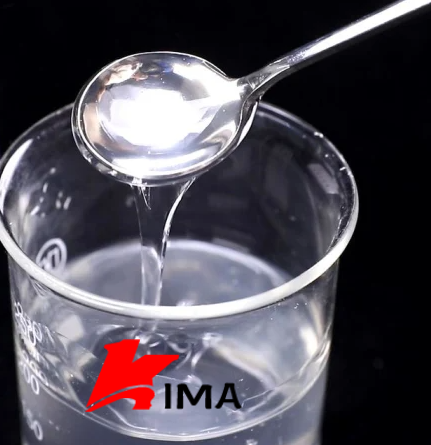
Viscosity is directly proportional to concentration. A 1% solution may feel like thin syrup, but a 3% solution of the same HPMC could form a gel. However, beyond a certain concentration, dispersion becomes difficult, and clumping may occur.
2.3.Temperature
HPMC exhibits thermogelling behavior. At low temperature, HPMC dissolves and thickens. At higher temperature, water structure around hydrophobic groups breaks, and the solution gels. Thus, thickening is temperature-sensitive. Dissolving in cold water first ensures maximum viscosity.
2.4.pH and Salts
HPMC is stable across a wide pH range (3–11). However, high salt concentrations or extreme pH may reduce hydration and lower viscosity. For optimal thickening, neutral or slightly alkaline conditions are preferred.
2.5.Additives
The presence of other polymers (e.g., starch, xanthan gum, PVA) can synergistically enhance viscosity. Conversely, solvents or surfactants may reduce it by interfering with hydrogen bonding.
3. Practical Steps to Thicken HPMC
To achieve maximum thickening, it is not only about using more HPMC but also about correct preparation and handling.
Step 1: Choose the Right Grade
Select HPMC with the viscosity range suitable for your application.
For cement mortar, medium-to-high viscosity grades (50,000–75,000 cps) are common.
For cosmetics like lotions or shampoos, lower viscosity (5,000–40,000 cps) is used for smooth texture.
Step 2: Proper Dispersion
HPMC must be dispersed correctly to prevent clumping (commonly called "fish eyes"). Recommended methods:
Slurry method: Pre-mix HPMC powder in a non-solvent medium such as glycerin, glycol, or part of the formulation containing dry powders. Then add water under stirring.
Hot water method: Disperse HPMC in hot water (~80–90 °C) where it does not dissolve. Then cool down while stirring; the polymer dissolves and hydrates.
Direct cold water dispersion: Sprinkle HPMC slowly into cold water with vigorous stirring. Some instant-dissolving grades are designed for this method.
Step 3: Control Concentration
For desired viscosity, adjust concentration:
0.1–0.5%: Light thickening (e.g., liquid detergents, eye drops).
0.5–2.0%: Moderate thickening (e.g., mortars, adhesives, shampoos).
2.0–4.0%: High thickening (e.g., gels, creams, tile adhesives).
Step 4: Optimize Temperature
Dissolve at low temperature (10–25 °C) to maximize thickening. Avoid excessive heat before hydration is complete.
Step 5: Modify Formulation Environment
Maintain near-neutral pH.
Avoid excessive salts or strong acids/bases.
If stronger thickening is needed, combine with co-thickeners such as xanthan gum, guar gum, or carbomers. These can create synergistic viscosity.
4. Methods to Enhance Thickening Effect
Increase Polymer Chain Length: Use higher viscosity grade HPMC.
Raise Concentration: Within solubility limits, more HPMC equals more viscosity.
Blend Polymers: Combine with starch ethers, guar gum, or associative thickeners for synergistic effect.
Salt Adjustment: Minimize electrolytes in the system, as they hinder hydration.
Temperature Control: Keep solution cool during dissolution for maximum viscosity.
Pre-Swelling: Let HPMC fully hydrate before final use to ensure thickening develops completely.
5. Industrial Applications of Thickened HPMC
Construction Materials: In cement and gypsum mortars, HPMC thickens the mix, preventing segregation, improving adhesion, and enhancing workability.
Paints & Coatings: HPMC thickens latex paints, stabilizes pigments, and improves brushability.
Pharmaceuticals: Used in oral suspensions, eye drops, and gel bases for controlled viscosity.
Cosmetics: Provides smooth texture in creams, lotions, shampoos, and gels.
Food Industry: As a thickener and stabilizer in sauces, bakery fillings, and frozen desserts.
6. Troubleshooting Common Problems
Clumping during mixing: Caused by poor dispersion. Use slurry or hot water method.
Low viscosity achieved: Possible reasons include incorrect grade, incomplete hydration, presence of salts, or high temperature.
Viscosity loss over time: May be due to microbial degradation; adding preservatives can help.
Over-thickening: Dilute the system with water or reduce concentration.
Thickening HPMC effectively is not just a matter of adding more powder. It requires understanding the polymer’s hydration and gelling properties, selecting the right grade, dispersing properly, and optimizing environmental conditions. Key tips include:
Use the appropriate viscosity grade for your application.
Disperse correctly using hot water, slurry, or cold-water instant methods.
Control concentration and temperature during dissolution.
Minimize salts and extreme pH to protect viscosity.
For enhanced thickening, consider polymer blends or co-thickeners.


 English
 日本語
日本語 français
 Deutsch
 Español
 العربية
 Türkçe
 italiano
 русский
 português
 Nederland