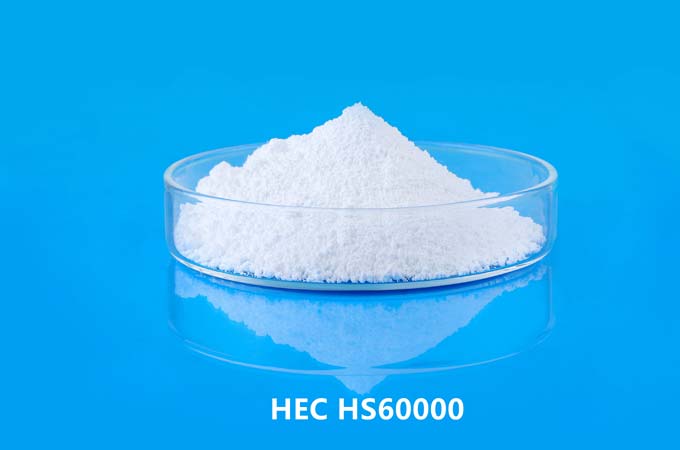
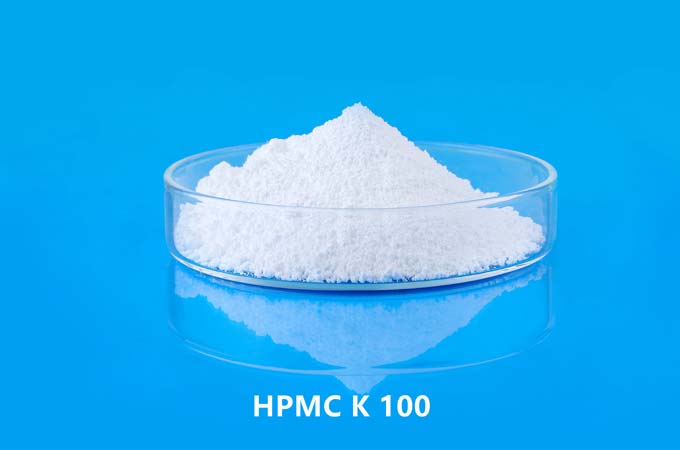
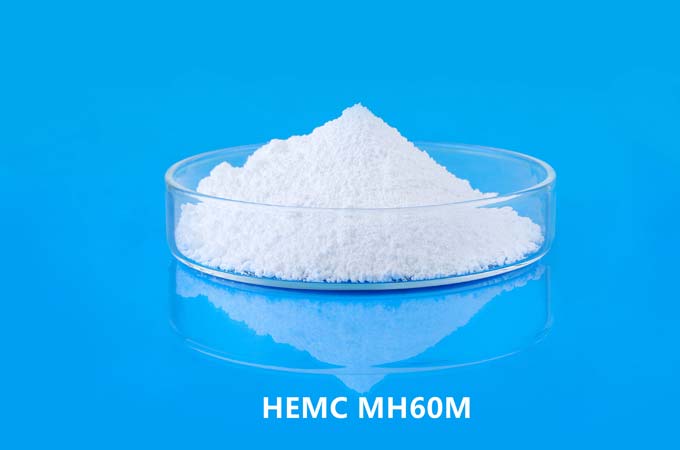
Starch ethers are a class of non-ionic, water-soluble polymers made primarily from natural starch through chemical or physical modification. They are essentially derivatives of starch molecules formed by the introduction of specific ether groups (such as hydroxypropyl or hydroxyethyl) during an etherification reaction. Consequently, they possess solubility, stability, and functional properties distinct from those of natural starch. Starch ethers typically appear as white or light yellow powders, are hygroscopic, possess certain adhesive and film-forming properties, and rapidly swell in water to form stable, viscous solutions.
1. Raw Materials and Preparation Principles
Starch ethers are primarily derived from natural starches such as corn, potato, wheat, and cassava. After drying and pulverizing, these starches react with an etherifying agent (such as propylene oxide or chloroethanol) under alkaline conditions to replace the hydroxyl groups on the starch molecules with ether groups. By adjusting the reaction conditions, the degree of substitution (DS), molecular weight, and branched structure can be controlled, resulting in different product properties. The preparation process may also include auxiliary modification steps such as cross-linking and oxidation to enhance heat resistance, salt tolerance, or stability.
2. Performance Characteristics
Thickening and Water Retention: Starch ethers rapidly swell and develop viscosity in water, effectively increasing the consistency of the solution and forming a water-retaining layer on the surface of porous substrates.
Improving Application Rheology: Adding starch ethers to dry-mix mortar significantly improves flowability and thixotropy, enabling smoother application and reducing bleeding and segregation.
Extending Open Time: Due to their water-retention properties, the evaporation rate of water in the mortar during application is slowed, extending the working time.
Dispersing and Stabilizing: In coatings or adhesives, starch ethers can help evenly disperse solid particles and prevent sedimentation.
Environmentally Friendly and Safe: Starch ethers are derived from natural starch, are biodegradable, non-toxic, and non-irritating, meeting the requirements of green building materials.
3. Main Application Areas
3.1. Construction and Building Materials
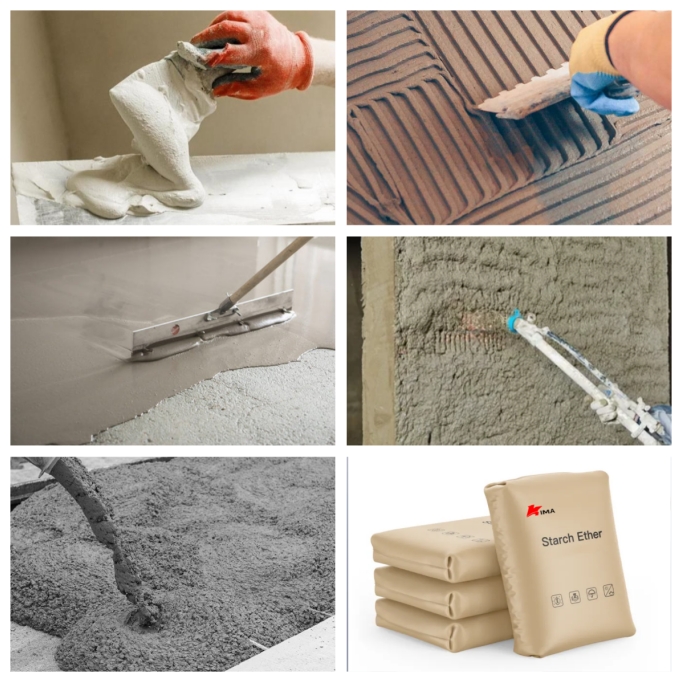
In dry-mix mortar products such as tile adhesives, plaster mortars, self-leveling mortars, and exterior insulation systems (EIFS), starch ethers are used as auxiliary ingredients in combination with cellulose ethers to improve application performance, enhance anti-slip properties, and prevent premature water loss in the mortar.
3.2. Coatings and Adhesives
In water-based coatings, starch ethers can act as thickeners and stabilizers, improving brushability and leveling. In adhesives, they help increase viscosity and improve storage stability.
3.3. Papermaking Industry
They are used as surface sizing agents and sizing agents to improve the smoothness, strength, and printability of paper.
3.4. Daily Chemicals and Pharmaceuticals
In daily chemical products such as detergents and toothpaste, they are used as suspending agents or binders. In pharmaceutical preparations, they can be used as tablet binders and disintegrants.
3.5. Food Industry
Although construction-grade starch ethers cannot be used directly in food, food-grade modified starch ethers (such as hydroxypropyl starch ether) can be used as thickeners, stabilizers, or colloid protectants in food.
4. Differences from Cellulose Ethers
Starch ethers are often used in combination with common cellulose ethers (such as HPMC and MHEC) in building mortars. Cellulose ethers primarily provide water retention and thickening, while starch ethers provide auxiliary optimization by adjusting mortar rheology and workability and reducing sag. Compared with cellulose ethers, starch ether dosages are generally lower (typically 0.01% to 0.05%), but they can significantly improve the workability.
5. Development Trends
With the increasing demand for green building materials and high-performance dry-mix mortars, the functionalization of starch ethers is expanding. For example, new varieties with high substitution levels and strong alkali resistance are being developed, or they are compounded with nanomaterials to enhance adhesion and crack resistance. At the same time, production processes are also evolving towards low-energy and low-pollution methods to meet the requirements of sustainable development.
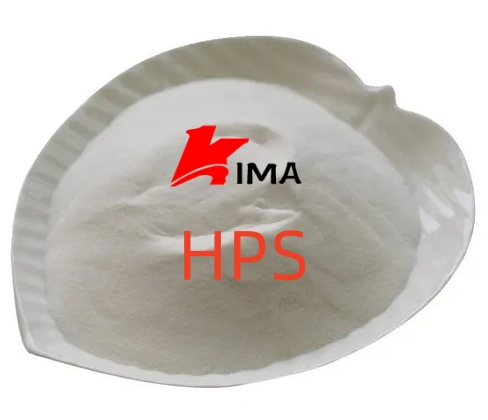
HPS is a multifunctional polymer material derived from natural starch through etherification. It has been shown to thicken, retain moisture, and improve workability, finding widespread application in construction, coatings, papermaking, daily chemicals, and food. Not only does it offer excellent performance, but it also comes from a renewable, environmentally friendly raw material, aligning with current trends in green and functional materials development.


 English
 日本語
日本語 français
 Deutsch
 Español
 العربية
 Türkçe
 italiano
 русский
 português
 Nederland