Sodium carboxymethyl cellulose (CMC) is a common water-soluble polymer and an anionic cellulose ether. It is obtained by chemically modifying natural cellulose and exhibits excellent thickening, water retention, dispersibility, film-forming properties, and a certain degree of stability. Therefore, it is widely used in the food, pharmaceutical, papermaking, ceramics, and oil drilling industries. In the fine chemical industry, particularly in the ink industry, CMC also plays a vital role, ensuring the rheological properties, stability, and printability of ink products.
1. Improving Ink Rheological Properties
Inks require appropriate viscosity and flowability during the printing process. As a water-soluble thickener, CMC can effectively increase the viscosity of water-based ink systems and prevent excessive ink runoff. It also exhibits a certain degree of thixotropy—its viscosity decreases when subjected to shear, facilitating smooth ink transfer during printing. Its viscosity rebounds when static, preventing excessive ink spreading on the substrate surface. This property ensures uniformity and clarity during printing.
2. Improving Ink Stability
Ink formulations often contain pigments, fillers, and various additives, making them prone to instability such as flocculation and sedimentation. As an anionic polymer, CMC provides a certain degree of electrostatic stabilization in aqueous systems and prevents pigment particle sedimentation and aggregation by increasing system viscosity and providing steric hindrance. This not only improves ink storage stability but also ensures uniform color distribution during printing.
3. Enhancing Dispersion
Pigments are a crucial component of inks, and the quality of pigment dispersion directly impacts the ink's tinting strength and color vividness. CMC interacts with the surface of pigment particles within the dispersion system, helping to disperse the pigment and maintain suspension, reducing sedimentation. This effect not only improves the ink's color performance but also enhances the surface smoothness of printed products.
4. Improving Film Formation and Adhesion
After drying, water-based inks must form a continuous, dense film on the substrate to ensure both abrasion resistance and water resistance. CMC acts as an auxiliary film-forming agent during the film-forming process, improving the uniformity and density of the ink film. It also enhances the bond between ink and substrates like paper and textiles, improving the strength and durability of printed products.
5. Environmental and Safety Advantages
With increasingly stringent environmental regulations, the use of water-based inks is increasing. CMC, a natural cellulose derivative, is safe, non-toxic, and biodegradable, aligning with the trend toward green printing. Using CMC in water-based ink systems not only reduces organic solvent consumption but also minimizes harm to the environment and operators.
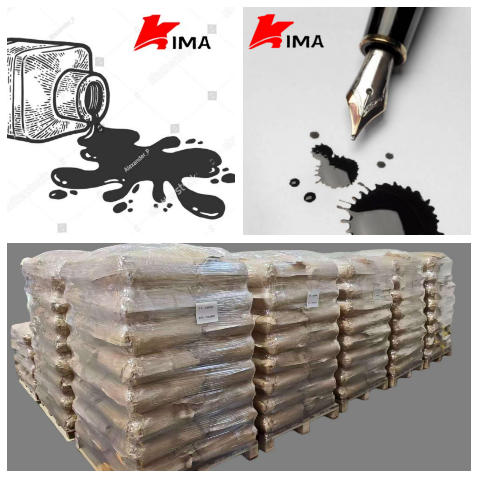
6. Application Examples and Results
In various types of water-based inks, such as gravure, flexographic, and screen printing, CMC usage is generally low, yet its effects are significant. For example, adding an appropriate amount of CMC to water-based gravure inks for packaging printing can significantly improve the ink's viscosity stability and transferability, ensuring sharp, smeared edges and smooth, smooth printed images. In textile printing inks, CMC improves the flow control of the slurry, ensuring clear, evenly colored patterns.
Sodium carboxymethyl cellulose (CMC) is used in inks primarily to improve rheological properties, enhance stability, enhance pigment dispersion, and promote film formation and adhesion. It not only enhances printing quality but also meets environmental protection requirements, making it an indispensable additive in modern water-based inks. With the increasingly prominent trend toward greener and higher-performance printing in the printing industry, the application prospects of CMC are expected to expand even further.


 English
 日本語
日本語 français
 Deutsch
 Español
 العربية
 Türkçe
 italiano
 русский
 português
 Nederland