Carboxymethyl cellulose (CMC) is a water-soluble anionic polymer material obtained by chemical modification of natural cellulose. It possesses excellent water solubility, film-forming properties, thickening properties, and stability. Based on its applications, CMC can be classified into various types, including papermaking grade, food grade, pharmaceutical grade, and industrial grade. Papermaking grade CMC is primarily used in the papermaking industry to improve paper performance and production efficiency, becoming an indispensable additive in modern papermaking processes.
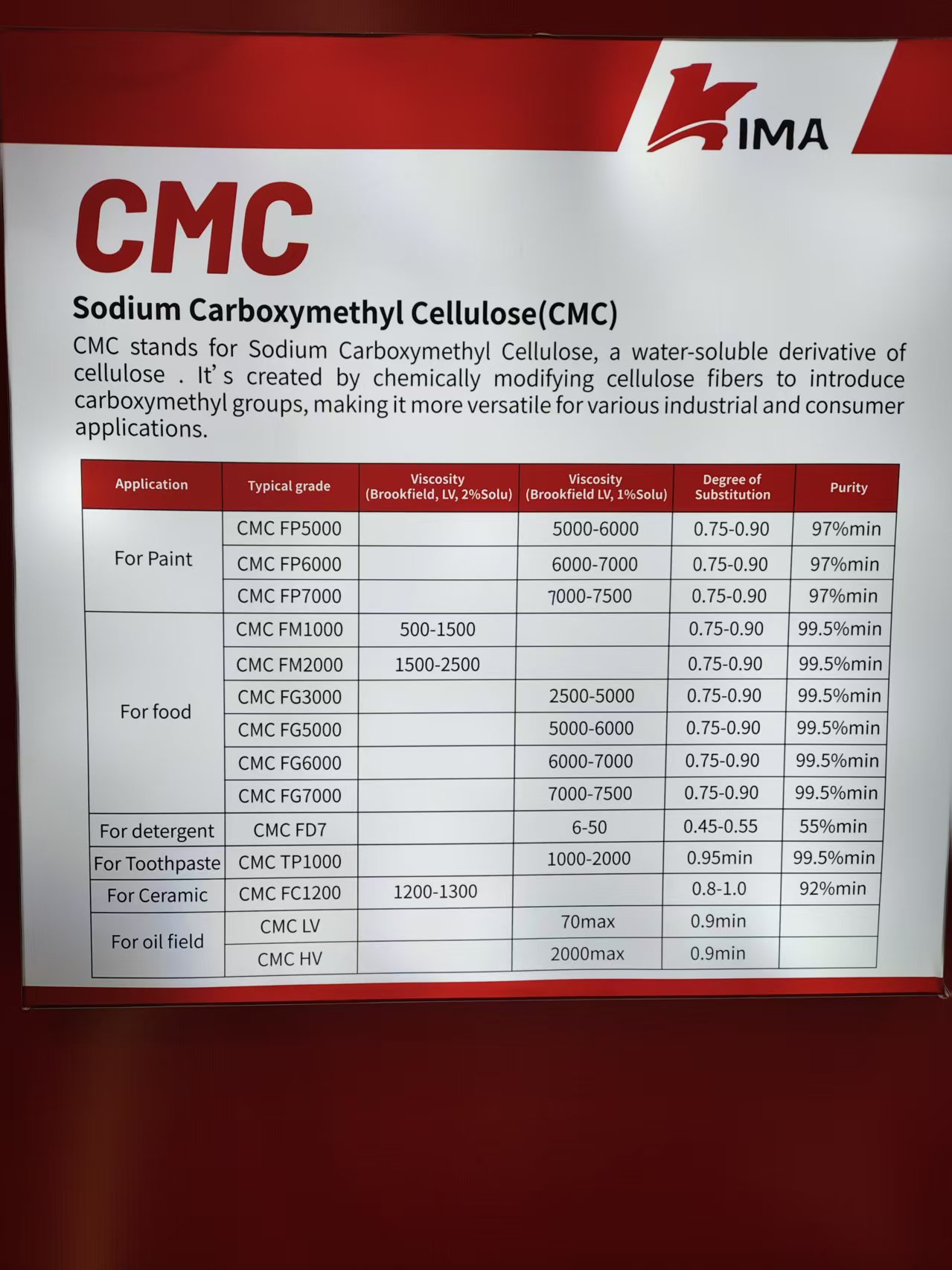
Basic Properties of Papermaking Grade CMC
The basic chemical structure of papermaking grade CMC involves the substitution of hydroxyl groups on the cellulose molecule with carboxymethyl groups, forming a highly hydrophilic polymer. Its main characteristics include:
High water solubility: CMC dissolves rapidly in cold or hot water, forming a uniform, viscous solution.
Good film-forming properties: It forms a continuous film on the paper surface, enhancing the surface strength and smoothness of the paper.
Thickening and stability: The viscosity of the CMC solution increases with increasing concentration and molecular weight, stabilizing the suspension system and preventing pulp flocculation.
Anionic properties: CMC carries a negative charge, allowing it to interact electrostatically with cellulose fibers, mineral fillers, and dyes in the pulp, improving dispersion and uniformity.
Applications of Papermaking Grade CMC in the Papermaking Industry
2.1. Enhancing Paper Strength
CMC forms molecular bridges between paper fibers, increasing the binding force between fibers, thereby improving the wet and dry strength of the paper. Especially in the production of cultural paper, coated paper, and specialty paper, CMC can significantly improve the mechanical properties of the paper, making it less prone to tearing during printing and packaging.
2.2. Improving Paper Surface Properties
CMC forms a thin film on the paper surface, making the paper surface smooth and improving printability and ink adhesion. At the same time, its film-forming properties reduce the water absorption rate of the paper, enhancing its moisture resistance and thus adapting to various printing and coating process requirements.
2.3. Improving Filler Dispersion
In the papermaking process, mineral fillers such as kaolin and calcium carbonate are often used to improve the whiteness, smoothness, and opacity of the paper. CMC, through its anionic properties, binds with filler particles, preventing aggregation and sedimentation, thus achieving uniform dispersion of fillers, improving paper quality, and reducing raw material consumption.
2.4. Optimization of Production Process
CMC acts as a stabilizer and thickener in pulp, reducing flocculation and sedimentation during pulp flow and improving the stability of the paper machine operation. Simultaneously, by adjusting the amount and molecular weight of CMC, the pulp viscosity can be controlled to suit different papermaking equipment and process requirements.
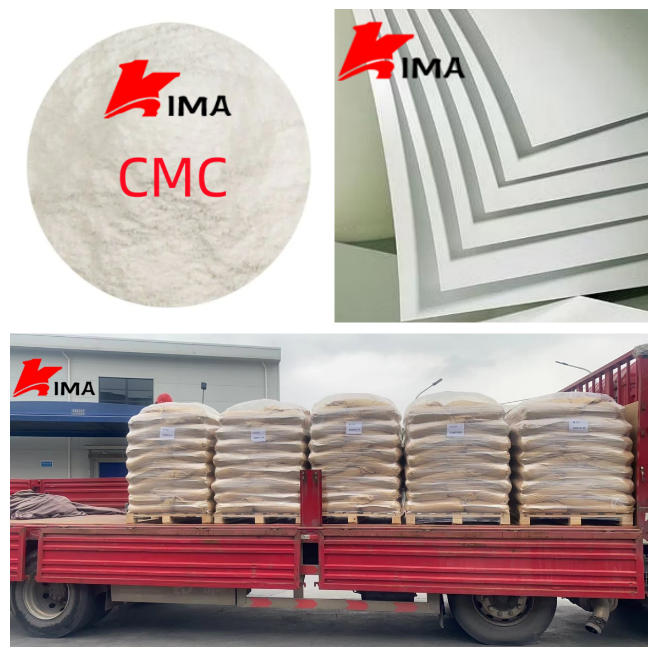
Research and Application Trends of Papermaking Grade CMC
With the increasing demands for environmental protection and high performance in paper production, the development of papermaking grade CMC shows the following trends:
Optimization of high molecular weight and low degree of substitution: Achieving optimal strengthening, dispersion, and film-forming effects by controlling the molecular weight and degree of substitution of CMC.
Development of green and environmentally friendly additives: Developing water-soluble, non-toxic, and biodegradable CMC to reduce environmental pollution in the papermaking process.
Functional modification: Combining with functional groups such as antibacterial, water-resistant, and flame-retardant properties to enhance the application value of paper in special fields.
Multi-purpose integrated application: Using CMC in combination with other additives such as starch and polymers to achieve comprehensive optimization of paper performance, improve production efficiency, and increase product added value.
Papermaking grade CMC plays an important role in the modern papermaking industry due to its unique chemical structure and functional characteristics. It can significantly improve paper strength and surface properties, as well as improve filler dispersion and production process stability. In the future, with the advancement of environmental protection requirements and the trend towards high-performance paper, research on papermaking grade CMC will continue to deepen in the areas of polymer modification, green environmental protection, and multi-functional applications, providing more efficient, environmentally friendly, and intelligent solutions for the papermaking industry.


 English
 日本語
日本語 français
 Deutsch
 Español
 العربية
 Türkçe
 italiano
 русский
 português
 Nederland