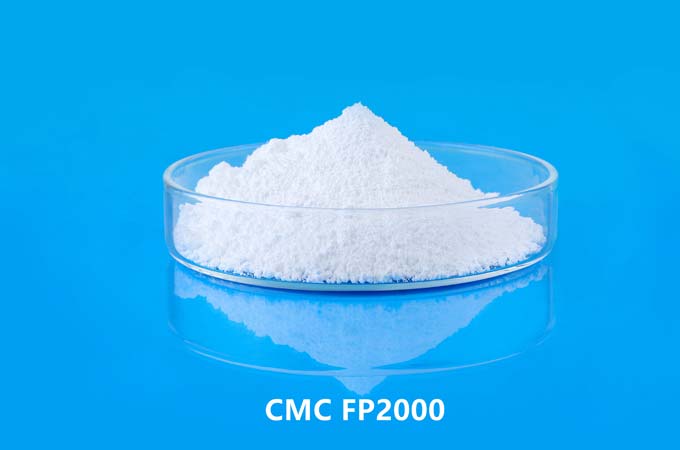
Carboxymethyl cellulose (CMC) is an anionic water-soluble polymer obtained by chemical modification of natural cellulose. It has good water solubility, thickening, film-forming, adhesiveness, emulsification and biocompatibility. Due to its excellent physical and chemical properties and wide applicability, CMC is widely used in many fields such as food, medicine, textiles, petroleum, papermaking, ceramics, daily chemicals, construction, etc., becoming one of the most important cellulose derivatives.

Application in the food industry
CMC is a commonly used food additive. It is usually used as a thickener, stabilizer, water retainer and film former in the food industry. For example:
Dairy products and beverages: In lactic acid beverages, juices, milkshakes and other products, CMC can prevent stratification and precipitation, improve taste and enhance stability.
Frozen food: Adding CMC to ice cream can improve the organizational structure, prevent ice crystal formation, and enhance fineness.
Baked food: CMC can enhance the water retention and adhesion of dough, making the finished product softer and extending the shelf life.
Condiments and sauces: In ketchup and salad dressing, CMC as a thickener can maintain fluidity and prevent water precipitation.
Jelly and candy: Enhance moldability and toughness, improve taste and heat resistance.
CMC is usually labeled as food additive number "E466" in food and is safe when used in a reasonable amount.
Pharmaceutical and cosmetic fields
In the pharmaceutical industry, CMC is used as tablet adhesives, sustained-release carriers, eye drops thickeners, injection suspension stabilizers, etc.
Eye drops: CMC is one of the main ingredients of artificial tears, which can relieve dry eyes and provide lubrication.
Oral medication: As an excipient and sustained-release coating material for tablets, it improves the stability and controlled release of drugs.
Toothpaste: As a thickener and binder, it makes the paste have moderate consistency and is not easy to stratify.
Skin care products: CMC can be used in facial masks, lotions, and cleansers to increase viscosity and provide a moisturizing film feel.
Oil drilling industry
CMC is mainly used in drilling fluids and completion fluids in the oil industry as a filtration reducer and viscosity enhancer.
Stabilize the well wall: CMC can improve the rheological properties of the mud, control water penetration, and prevent well wall collapse.
Reduce filtration loss: Reduce the amount of water that penetrates into the formation from the drilling fluid, which is beneficial to maintaining drilling stability.
Improve lubricity: Enhance the lubrication ability of the mud and reduce drill bit wear.
Textile printing and dyeing industry
CMC is used as a printing and dyeing slurry and finishing agent in the textile industry, with good adhesion, washability and softness.
Printing slurry: CMC is used as a sizing agent for sizing yarns or fabrics to improve the strength and wear resistance of textiles.
Dyeing stabilizer: Control the penetration rate of dyes and improve the clarity of patterns.
Fabric finishing agent: Enhance the softness and wrinkle resistance of fabrics.
Papermaking industry
The main functions of CMC in the papermaking process include improving paper strength, surface sizing and oil resistance.
Improving paper dry and wet strength: Keeping paper at a certain strength under wet conditions.
Surface sizing: Improving printing suitability, reducing burrs, and improving uniform ink distribution.
Oil and water resistance: Used in food packaging paper to enhance oil resistance.
Ceramic industry
In the production of ceramic products, CMC is mainly used as a binder and plasticizer for green bodies and glazes.
Enhancing fluidity: Improving the dispersibility and fluidity of ceramic mud for easy molding.
Improving adhesion: Ensuring that the green body and glaze layer are firmly bonded to prevent falling off during firing.
Controlling drying shrinkage: Avoiding cracking and deformation, and improving the yield rate.

Building materials
CMC is mainly used as a water retainer and binder in dry-mixed mortar, cement, and coatings in the construction industry.
Enhancing water retention: Make cement mortar have a longer operability time and improve construction performance.
Improve anti-sagging: Improve the construction stability of wall paint and tile adhesive.
Anti-cracking: Adding CMC to putty or caulking agent can effectively prevent surface cracking.
Daily chemical products
CMC is widely used in daily necessities such as washing powder, detergent, shampoo, etc.
Suspending agent: Stabilize particle distribution and prevent sedimentation.
Thickener: Improve product feel and usage experience.
Anti-redeposition agent: Prevent stains from re-depositing on clothes during the laundry process.
Carboxymethyl cellulose (CMC) plays an indispensable role in many industrial fields due to its excellent water solubility and versatility. It is not only natural and green, but also has adjustable performance and flexible application. From food, medicine to industry and construction, CMC has become an extremely important functional material in modern industrial production. With the continuous advancement of technology, the application field of CMC will continue to expand, bringing broader market prospects.


 English
 日本語
日本語 français
 Deutsch
 Español
 العربية
 Türkçe
 italiano
 русский
 português
 Nederland