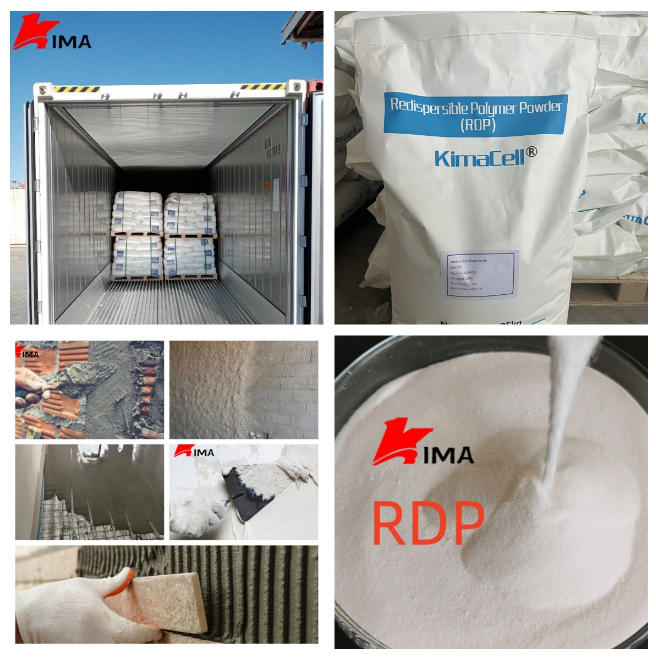
Redispersible polymer powder (RDP) is a key organic modifier in tile adhesive formulations, significantly improving adhesion, flexibility, water resistance, and freeze-thaw resistance. There is no fixed dosage, as it depends on the tile type, substrate characteristics, application environment, and performance requirements. In practice, different redispersible polymer powder types are selected to achieve targeted performance, such as enhanced bonding strength or improved deformability. Within industry standards, RDP usage is generally controlled within a range of 2%–6% (by mass) of the total cementitious adhesive dry powder.
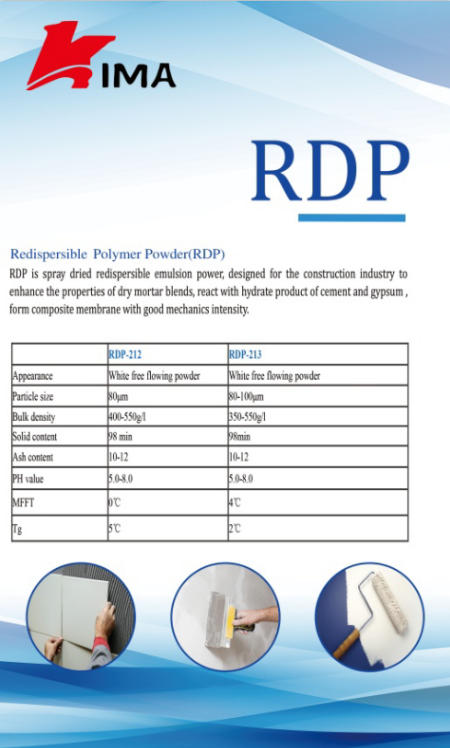
The Main Function of RDP in Tile Adhesives
1.1. Enhanced Bond Strength
Cement mortar is prone to brittleness and shrinkage cracking during the hardening process. RDP forms a flexible polymer film between the hydration products, improving adhesion to the substrate and the back of the tile. RDP's contribution is particularly critical when used with low-water-absorption tiles and large-format tiles.
1.2. Improving Flexibility and Deformability
Ceramic tiles may expand and contract with temperature or deform slightly when laid on a substrate. If the adhesive layer is too rigid, it can easily peel or crack. RDP imparts flexibility and crack resistance to the adhesive, extending the lifespan of the tile system.
1.3. Improving Water and Weather Resistance
Pure cement-based systems are susceptible to performance degradation in prolonged moisture or freeze-thaw conditions. However, the polymer film formed by RDP is hydrophobic and freeze-thaw resistant, making the tile adhesive suitable for high-humidity environments such as outdoor areas, bathrooms, and kitchens.
Typical RDP Dosage Range
Based on industry experience and the European EN12004 standard for tile adhesive grades (C1 standard and C2 high-performance), the RDP dosage follows the following guidelines:
2.1. Standard Tile Adhesive (C1)
Generally requires basic adhesion and is primarily used for small-sized tiles with high water absorption or in general indoor environments. An RDP dosage of approximately 2%–3% is generally sufficient to meet performance requirements.
2.2. High-Performance Tile Adhesive (Type C2)
For large-format tiles, low-absorption tiles (such as porcelain tiles and vitrified tiles), floor heating systems, or exterior wall applications, higher adhesion and flexibility are required. Typical RDP dosages are 3%–6%, with some high-end formulations reaching 8%.
For special applications (such as flexible adhesives and tile bonding for exterior wall insulation systems),
For applications with extremely demanding environments (such as those subject to significant temperature fluctuations, chronic moisture, or minor vibration), the RDP dosage may be increased to 6%–10% to ensure bond durability and crack resistance.
Factors Influencing Dosage Selection
3.1. Tile Type and Size
For small ceramic tiles with high water absorption: use a lower RDP dosage (approximately 2%–3%).
For large-format or low-absorption tiles: use a higher dosage (3%–6%).
3.2. Substrate Condition
For highly absorbent cement mortar substrates: use a moderate dosage. Smooth or dense concrete and old tile surfaces require a higher RDP content to improve adhesion.
3.3. Application Environment
Indoor, dry environments: RDP dosage can be appropriately reduced.
Outdoor, humid, or freezing environments: The dosage should be increased.
3.4. Cost-Performance Balance
RDP is a relatively expensive modifier. While excessive use can improve performance, it also increases production costs. Therefore, it is important to optimize the dosage while meeting standards and customer requirements.
The typical RDP dosage in tile adhesives is 2%–6%. For standard indoor tiles, 2%–3% meets basic requirements. For large-format, low-water-absorption tiles or outdoor high-performance applications, 3%–6% is required, and in extreme conditions, it can be increased to over 8%. Selecting the right RDP chemical and adjusting its dosage not only ensures long-term secure adhesion but also achieves an optimal balance between performance and cost.


 English
 日本語
日本語 français
 Deutsch
 Español
 العربية
 Türkçe
 italiano
 русский
 português
 Nederland