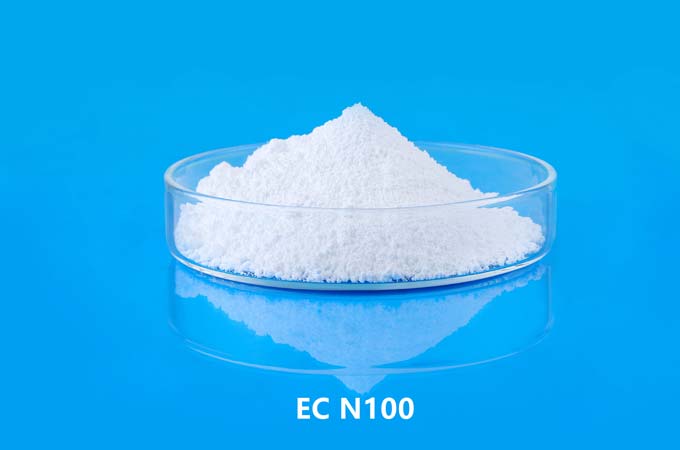
Ethyl cellulose (EC) is a nonionic cellulose ether obtained by partially or completely replacing the hydroxyl groups in the cellulose molecule with ethoxy groups. As an important chemical material, it is widely used in various fields, including medicine, food, coatings, inks, and building materials. Ethyl cellulose not only shares the common characteristics of cellulose derivatives, such as high safety, natural origin, and biocompatibility, but also possesses its own unique advantages.
1. High Safety and Non-Toxicity
Ethyl cellulose is derived from natural cellulose and modified through an ethylation reaction. It is essentially insoluble in water but soluble in a variety of organic solvents. It is non-toxic and non-irritating, maintaining excellent safety for both the human body and the environment. This property makes it a common ingredient in pharmaceutical excipients, food additives, and personal care products. For example, in pharmaceutical formulations, ethyl cellulose can be used as a sustained-release film material or adhesive without causing side effects.
2. Excellent Film-Forming Properties
Ethyl cellulose has excellent film-forming properties, resulting in transparent, uniform films with good mechanical strength. This property is valuable in a variety of industries:
Pharmaceuticals: As a tablet coating material, it can encapsulate drug particles and delay drug release, achieving controlled or sustained release.
Coatings and inks: It can form tough, abrasion-resistant coatings, improving the gloss and adhesion of paint films.
Food industry: As a coating agent, it extends the shelf life of food and reduces evaporation and oxidation.
3. Excellent Chemical Resistance
Ethyl cellulose exhibits strong resistance to acid, alkali, and salt solutions, is chemically stable, and is resistant to microbial degradation. This allows it to maintain stable performance even under harsh environmental conditions. For example, in oil drilling and electronic packaging, ethyl cellulose is used as an additive or protective material to protect against chemical corrosion.
4. Broad Solubility and Compatibility
Although insoluble in water, ethyl cellulose is soluble in a variety of organic solvents, such as alcohols, ketones, esters, and aromatic hydrocarbons. Its excellent solubility makes it compatible with a variety of resins, plasticizers, and other polymers, allowing it to be easily formulated into solutions or mixed systems with varying properties. This characteristic greatly expands its application range, such as in ink printing, adhesive manufacturing, and the preparation of controlled-release pharmaceutical tablets.
5. Excellent Thickening and Bindering Properties
Ethyl cellulose possesses excellent rheological properties, enabling it to thicken, suspend, and bind in organic systems. For example:
In the ink industry, as a thickener and binder, it improves ink viscosity and printability, ensuring uniform ink color.
In adhesives, ethyl cellulose enhances the adhesion of the adhesive, improving flexibility and durability.
In pharmaceutical formulations, as a binder, it effectively maintains particle structure, enhancing tablet hardness and stability.
6. Controlled and Sustained Release Properties
Due to its water insolubility, ethyl cellulose is often used in controlled-release pharmaceutical formulations. Ethyl cellulose coating drug particles effectively controls the rate of drug release in the digestive tract, preventing excessively high or low blood drug concentrations, improving efficacy, and minimizing side effects. For example, ethyl cellulose plays a key role in sustained-release tablets, micropellets, and oral solution systems.
7. Excellent Heat Resistance and Mechanical Properties
Ethyl cellulose has high thermal stability and does not easily decompose or discolor under heating. Once formed into a film, it possesses excellent mechanical strength and flexibility, remaining stable even at high temperatures. This makes it suitable for applications in plastic modification, architectural coatings, and sealants for high-temperature environments.
8. Transparency and Aesthetics
Ethyl cellulose films offer high transparency and do not affect the appearance of the covered material, making them advantageous for coatings, packaging films, and food wrap. For example, in surface coatings for candies and chocolates, ethyl cellulose enhances gloss while preventing deliquesce and spoilage.
9. Biocompatibility and Wide Applications
Because of its natural origin and excellent biocompatibility, ethyl cellulose is commonly used in the pharmaceutical and food industries:
Pharmaceuticals: Used as a tablet coating, sustained-release material, adhesive, and suspending agent.
Food: Used as a thickener, stabilizer, and film-forming agent, enhancing food texture and preservative properties.
Cosmetics and Daily Chemicals: Used as a film-forming agent and stabilizer in lotions, skin creams, and nail polishes, enhancing product texture and durability.
10. Environmental Protection and Sustainability
Ethyl cellulose is derived from renewable natural cellulose resources, meeting the requirements of green chemistry and sustainable development. Compared to fully synthetic polymers, it has a lower environmental impact and does not produce excessive amounts of hazardous substances during disposal.
The benefits of EC primarily include high safety, excellent film-forming properties, strong chemical resistance, good solubility and compatibility, superior thickening and bonding properties, outstanding controlled-release properties, excellent heat resistance and mechanical properties, transparent and aesthetically pleasing appearance, strong biocompatibility, and environmental sustainability. Precisely because of these advantages, it has become an irreplaceable and important material in industries such as pharmaceuticals, food, cosmetics, coatings, inks, and building materials. With the growing demand for green environmental protection and high-performance materials, the future application prospects of ethyl cellulose will be even broader.


 English
 日本語
日本語 français
 Deutsch
 Español
 العربية
 Türkçe
 italiano
 русский
 português
 Nederland