How HPMC Improves Water Retention and Workability in Cement Mortar
Hydroxypropyl Methylcellulose (HPMC) is one of the most widely used cellulose ether additives in cement-based mortar formulations. Its primary functions—enhancing water retention and improving workability—play a critical role in ensuring consistent performance during application and long-term durability after hardening. In modern construction, where higher efficiency, better quality, and reduced material waste are essential, HPMC has become an indispensable component of dry-mix mortars, tile adhesives, plastering mortars, and repair mortars.
1.1. Importance of Water Retention in Cement Mortar
Water retention refers to the ability of mortar to hold mixing water within the system during application, rather than losing it rapidly to evaporation or absorption by the substrate. Proper water retention is crucial because cement hydration depends on sufficient moisture. If water is lost too quickly, incomplete hydration occurs, leading to reduced strength, cracking, poor adhesion, and surface defects.
In practical construction scenarios, substrates such as concrete blocks, bricks, or porous walls can rapidly absorb water from fresh mortar. Environmental conditions like high temperature, wind, or low humidity can further accelerate moisture loss. Without an effective water-retaining agent, mortar performance becomes inconsistent and difficult to control.
1.2. Mechanism of HPMC in Improving Water Retention
HPMC significantly enhances water retention through its unique molecular structure. When dispersed in water, HPMC dissolves and forms a stable, viscous solution. This solution creates a three-dimensional polymer network within the mortar, binding free water and slowing its movement.
Key mechanisms include:
Water binding: The hydrophilic groups in HPMC molecules attract and hold water, preventing rapid migration.
Film-forming effect: HPMC forms a thin protective film around cement and aggregate particles, reducing water loss to substrates.
Controlled evaporation: By increasing viscosity, HPMC slows down evaporation from the mortar surface.
As a result, sufficient water remains available for cement hydration, even under challenging site conditions. This leads to more complete hydration, improved microstructure, and higher final strength.
1.3. Impact of HPMC on Mortar Workability
Workability describes how easily mortar can be mixed, spread, troweled, and shaped during application. Good workability improves construction efficiency, reduces labor fatigue, and ensures uniform application thickness.
HPMC improves mortar workability in several ways:
Enhanced consistency: HPMC provides a smooth, creamy texture, making mortar easier to handle and apply.
Improved lubrication: The polymer solution reduces friction between particles, allowing mortar to flow more evenly.
Extended open time: With better water retention, mortar remains workable for a longer period, giving workers more time for adjustments.
These effects are especially important for applications such as tile adhesives and plastering mortars, where smooth spreading and precise placement are required.
1.4. Synergy Between Water Retention and Workability
Water retention and workability are closely related properties, and HPMC enhances both simultaneously. By retaining water, HPMC prevents premature stiffening of mortar, which directly contributes to improved workability. At the same time, better workability ensures uniform distribution of water and cement particles, further supporting effective hydration.
This synergy leads to consistent performance across different batches and application conditions. Contractors benefit from predictable behavior, while manufacturers can formulate mortars with stable quality and reduced sensitivity to raw material variations.
1.5. Benefits for Cement Hydration and Strength Development
The presence of HPMC ensures that cement particles remain adequately hydrated throughout the setting and hardening process. Improved hydration results in:
Higher early and final strength
Reduced shrinkage and cracking
Better adhesion to substrates
Enhanced durability and resistance to environmental stress
By maintaining internal moisture, HPMC allows hydration products to form a dense and uniform matrix, which directly contributes to long-term mortar performance.
1.6. Practical Advantages in Construction Applications
In real-world construction, the use of HPMC offers several practical advantages:
Reduced rework: Improved workability and open time reduce application errors.
Material savings: Better water retention minimizes waste caused by dry or unworkable mortar.
Adaptability: Mortar performs reliably across different climates and substrate types.
Improved surface finish: Smooth application results in better aesthetic quality.
These benefits make HPMC particularly valuable in dry-mix mortar production, where consistency and ease of use are critical selling points.
1.7. Conclusion
HPMC plays a vital role in improving both water retention and workability in cement mortar. Through its water-binding capacity, viscosity control, and film-forming properties, it ensures sufficient moisture for cement hydration while providing a smooth, easy-to-apply mortar consistency. The combined effect leads to better strength development, improved durability, and enhanced construction efficiency.
The Effect of HPMC on Mortar Consistency and Anti-Sag Performance
Hydroxypropyl Methylcellulose (HPMC) is a critical functional additive in modern cement-based mortar systems. Beyond its well-known water-retention capability, HPMC has a profound influence on mortar consistency and anti-sag performance. These properties are especially important in vertical and overhead applications such as tile adhesives, plastering mortars, and repair mortars, where stability, ease of application, and resistance to slumping directly affect construction quality and efficiency.
2.1. Understanding Mortar Consistency and Anti-Sag Performance
Mortar consistency refers to the flow behavior, viscosity, and uniformity of fresh mortar during mixing and application. A well-controlled consistency ensures that mortar is neither too stiff nor too fluid, enabling smooth spreading and proper bonding.
Anti-sag performance, also known as slip resistance, describes the mortar's ability to stay in place after application, particularly on vertical surfaces. Poor anti-sag performance can cause tiles to slide, uneven thickness, material waste, and rework. Achieving the right balance between workability and stability is a major challenge in mortar formulation.
2.2. How HPMC Regulates Mortar Consistency
HPMC acts as a highly efficient rheology modifier in cement mortar. When added to a dry-mix formulation and dispersed in water, HPMC dissolves and forms a viscous polymer solution that interacts with cement particles and aggregates.
Key effects on consistency include:
Viscosity control: HPMC increases the viscosity of the mortar, preventing excessive flow while maintaining ease of application.
Uniform dispersion: The polymer helps distribute cement and fillers evenly, reducing segregation and bleeding.
Stable rheology: Mortar exhibits pseudoplastic behavior—flowing easily under shear during troweling, then quickly regaining body when at rest.
This controlled consistency allows mortar to feel smooth and creamy rather than sticky or watery, improving user experience during application.
2.3. Mechanism Behind HPMC's Anti-Sag Performance
Anti-sag performance is closely linked to the rheological structure created by HPMC. The polymer network formed in the fresh mortar increases internal cohesion and yield stress. Yield stress is the minimum force required to initiate flow; a higher yield stress helps mortar resist gravity-induced movement on vertical surfaces.
HPMC contributes to anti-sag performance through:
Three-dimensional polymer network: This network strengthens the internal structure of the mortar, enabling it to support its own weight.
Enhanced particle suspension: Cement and sand particles remain uniformly suspended, preventing downward movement.
Rapid structural recovery: After troweling or tile placement, mortar quickly regains viscosity, reducing slippage.
As a result, mortar stays where it is applied, even under the weight of tiles or thick layers.
2.4. Importance in Vertical and Overhead Applications
The anti-sag properties provided by HPMC are essential for demanding construction applications. In tile adhesives, strong anti-sag performance ensures accurate tile alignment and consistent joint spacing. This is particularly important for large-format tiles, which exert greater gravitational force.
In plastering and rendering mortars, good consistency and anti-sag behavior allow for thicker single-coat applications without slumping. This improves productivity by reducing the need for multiple layers and additional curing time.
Repair mortars also benefit from HPMC stabilizing effect, as it allows material to adhere securely to vertical or overhead surfaces without falling off during application.
2.5. Balancing Consistency and Workability
One of the key advantages of HPMC is its ability to balance high viscosity with good workability. Without HPMC, increasing viscosity often makes mortar difficult to spread. HPMC, however, provides shear-thinning behavior: under the pressure of troweling, the mortar flows easily, but once the force is removed, it becomes stable again.
This balance ensures:
Easy mixing and application
Smooth troweling and leveling
Strong resistance to sag and slip after placement
Such performance is difficult to achieve with traditional mineral additives alone, highlighting the value of HPMC in modern formulations.
2.6. Influence of HPMC Grade and Dosage
Different HPMC grades vary in viscosity, substitution level, and particle size, all of which influence mortar consistency and anti-sag performance. High-viscosity grades generally provide stronger anti-sag properties, while lower-viscosity grades focus more on workability.
Proper dosage is equally important. Insufficient HPMC may result in poor stability, while excessive amounts can lead to overly sticky mortar and reduced open time. Therefore, selecting the right HPMC grade and optimizing dosage is essential for achieving the desired performance balance.
2.7. Conclusion
HPMC plays a decisive role in controlling mortar consistency and enhancing anti-sag performance. By modifying rheology, increasing internal cohesion, and providing rapid structural recovery, HPMC ensures that mortar remains stable on vertical and overhead surfaces while still being easy to apply. These properties lead to improved construction accuracy, reduced material waste, and higher overall quality.
HPMC Contribution to Adhesion Strength and Durability of Mortar Systems
Hydroxypropyl Methylcellulose (HPMC) is a vital additive in cement-based mortar systems, widely recognized for its ability to enhance workability and water retention. Beyond these fresh-state properties, HPMC plays a crucial role in improving adhesion strength and long-term durability of hardened mortar. These performance characteristics are essential for ensuring reliable bonding, structural integrity, and service life in applications such as tile adhesives, plastering mortars, masonry mortars, and repair mortars.
3.1. Importance of Adhesion and Durability in Mortar Systems
Adhesion strength determines how effectively mortar bonds to substrates such as concrete, masonry, ceramic tiles, or insulation boards. Strong adhesion prevents debonding, cracking, and detachment under mechanical stress or environmental changes.
Durability refers to the mortar's ability to maintain its performance over time when exposed to moisture, temperature variations, freeze–thaw cycles, and chemical attack. Poor durability can lead to surface degradation, loss of strength, and costly repairs. Achieving both strong adhesion and long-term durability is a key objective in modern mortar formulation.
3.2. Role of HPMC in Enhancing Adhesion Strength
HPMC improves adhesion strength primarily by optimizing the fresh mortar microstructure and supporting complete cement hydration. Its water-retention capability ensures that sufficient moisture remains at the interface between mortar and substrate, allowing proper bonding to develop.
Key contributions include:
Improved wetting of substrates: HPMC enhances mortar flow and spreadability, enabling better contact with substrate surfaces and pores.
Reduced water loss: By preventing rapid water absorption into porous substrates, HPMC maintains a stable hydration environment at the bonding interface.
Uniform cement hydration: Adequate hydration promotes the formation of strong calcium silicate hydrate (C–S–H) gel, which is responsible for adhesion strength.
These effects result in higher initial and final bond strength, even under challenging site conditions.
3.3. Influence on Microstructure Development
The presence of HPMC significantly influences the microstructure of hardened mortar. By controlling water distribution and hydration rate, HPMC promotes a dense and uniform cement matrix. This refined microstructure reduces capillary porosity and enhances mechanical interlocking with substrates.
A denser microstructure offers several benefits:
Increased tensile and shear bond strength
Reduced permeability to water and harmful ions
Improved resistance to cracking and debonding
As a result, mortar systems containing HPMC exhibit more stable and reliable performance over their service life.
3.4. Contribution to Long-Term Durability
Durability is closely linked to the quality of cement hydration and internal structure. HPMC supports durability by ensuring controlled hydration and minimizing defects caused by premature drying.
Specific durability improvements include:
Crack reduction: Proper water retention reduces plastic shrinkage and early-age cracking.
Moisture resistance: Lower porosity limits water ingress, reducing the risk of freeze–thaw damage and efflorescence.
Thermal stability: A uniform matrix helps mortar withstand temperature fluctuations without loss of adhesion.
In exterior and wet-area applications, these durability enhancements are especially important for maintaining long-term performance.
3.5. Synergy with Other Mortar Additives
HPMC works synergistically with other functional additives such as redispersible polymer powder (RDP), accelerators, and fillers. While RDP directly improves flexibility and adhesion, HPMC ensures proper dispersion and hydration, maximizing the effectiveness of these components.
This synergy allows formulators to design mortar systems that combine strong adhesion, flexibility, and durability while maintaining good workability and application properties.
3.6. Practical Benefits in Construction Applications
From a practical perspective, the use of HPMC offers several advantages to contractors and end users:
More reliable bonding with reduced risk of tile slippage or detachment
Longer service life with fewer maintenance requirements
Improved performance consistency across different substrates and climates
These benefits contribute to higher construction quality and lower lifecycle costs.
3.7. Importance of Proper HPMC Selection
Different HPMC grades vary in viscosity and substitution level, affecting adhesion and durability performance. Selecting the appropriate grade and dosage is essential. Insufficient HPMC may lead to poor hydration and weak bonding, while excessive amounts can negatively impact strength development.
Optimized formulation ensures that HPMC delivers maximum adhesion and durability benefits without compromising other mortar properties.
3.8. Conclusion
HPMC makes a significant contribution to the adhesion strength and durability of mortar systems. By enhancing water retention, improving substrate wetting, and promoting a dense cement microstructure, HPMC ensures strong bonding and long-term stability. Its role extends beyond fresh-state performance, directly influencing the reliability and service life of hardened mortar.
Selecting the Right HPMC Grade for Different Mortar Formulations
Hydroxypropyl Methylcellulose (HPMC) is a key additive in cement-based mortar formulations, providing essential functions such as water retention, workability improvement, rheology control, and anti-sag performance. However, not all HPMC products perform the same. Different grades vary in viscosity, substitution level, particle size, and surface treatment, all of which influence mortar behavior. Selecting the right HPMC grade is therefore critical to achieving optimal performance for specific mortar applications.
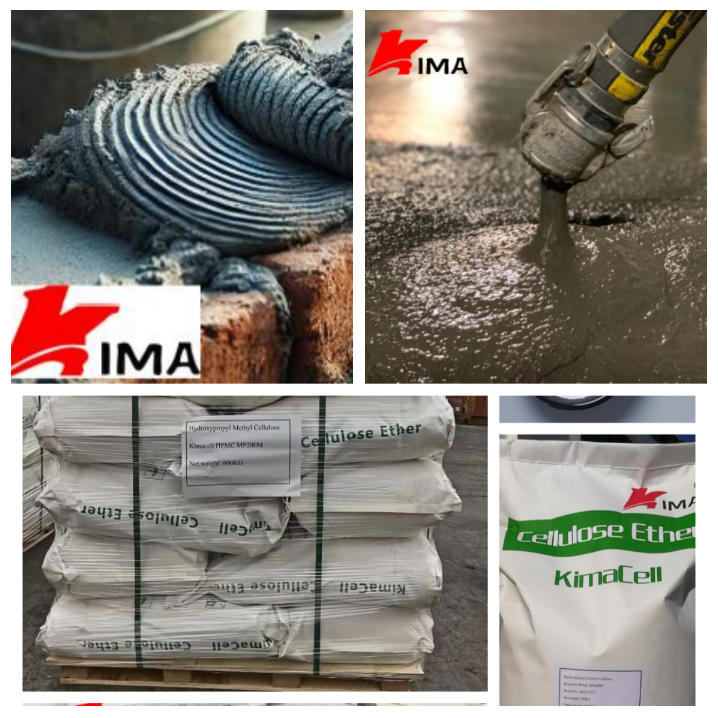
4.1. Why HPMC Grade Selection Matters
Mortar formulations are designed for diverse applications, including tile adhesives, plastering mortars, masonry mortars, self-leveling compounds, and repair mortars. Each application has unique performance requirements in terms of consistency, open time, adhesion, and sag resistance.
An unsuitable HPMC grade can result in poor workability, insufficient water retention, weak bonding, or excessive stickiness. Conversely, the correct HPMC grade ensures balanced performance, consistent quality, and reliable on-site application.
4.2. Key Parameters of HPMC Grades
Understanding the main technical parameters of HPMC is essential for proper selection:
Viscosity: Typically measured in mPa·s, viscosity is the most influential factor. Higher viscosity grades provide stronger water retention and anti-sag performance, while lower viscosity grades improve flow and ease of application.
Degree of substitution: This affects solubility, thermal gelation, and interaction with cement. Proper substitution ensures stable performance under different temperatures.
Particle size and surface treatment: These properties influence dissolution speed and mixing behavior, especially in dry-mix mortars.
Balancing these parameters allows formulators to tailor mortar properties to specific application needs.
4.3. HPMC Selection for Tile Adhesives
Tile adhesives require excellent water retention, strong adhesion, extended open time, and high anti-sag performance, particularly for vertical installations and large-format tiles.
For this application:
Medium to high viscosity HPMC grades are preferred to enhance slip resistance.
Good water retention ensures sufficient hydration and strong bonding at the tile–substrate interface.
Controlled rheology provides smooth troweling without tile slippage.
Selecting an HPMC grade specifically designed for tile adhesives helps achieve compliance with international performance standards.
4.4. HPMC for Plastering and Rendering Mortars
Plastering mortars demand smooth consistency, easy application, and good resistance to sagging, especially in thick layers.
Recommended characteristics include:
Medium viscosity grades that balance workability and stability.
Fast and uniform dissolution to prevent lumps during mixing.
Reliable water retention to reduce cracking and improve surface finish.
Using the correct HPMC grade allows for thicker single-coat applications and improved productivity.
4.5. HPMC in Masonry Mortars
Masonry mortars focus on workability, adhesion to bricks or blocks, and moderate water retention. Excessive viscosity can make masonry mortar difficult to spread and adjust.
For masonry applications:
Low to medium viscosity HPMC grades are commonly used.
Improved workability enhances brick placement and alignment.
Adequate water retention ensures consistent strength development.
This balanced approach ensures ease of use without compromising structural performance.
4.6. HPMC for Self-Leveling and Repair Mortars
Self-leveling compounds require high flowability and minimal viscosity increase, while repair mortars need good adhesion and stability on vertical surfaces.
Selection guidelines include:
Low viscosity HPMC grades for self-leveling mortars to maintain fluidity.
Specialized grades with controlled thickening for repair mortars to prevent sagging.
Precise dosage control to avoid negative effects on setting time and strength.
Tailoring the HPMC grade to these specific requirements is essential for achieving the desired performance.
4.7. Dosage Optimization and Compatibility
Selecting the right grade is only part of the process; dosage optimization is equally important. Typical HPMC dosages range from 0.1% to 0.5% by weight of dry mortar, depending on formulation and application.
Compatibility with other additives such as redispersible polymer powder, accelerators, or retarders should also be considered. Proper compatibility ensures stable performance and maximizes the benefits of each component.
4.8. Conclusion
Selecting the right HPMC grade is a decisive factor in the performance of cement-based mortar formulations. By understanding application requirements and key HPMC parameters—such as viscosity, substitution level, and dissolution behavior—formulators can tailor mortar properties for specific uses.


 English
 日本語
日本語 français
 Deutsch
 Español
 العربية
 Türkçe
 italiano
 русский
 português
 Nederland