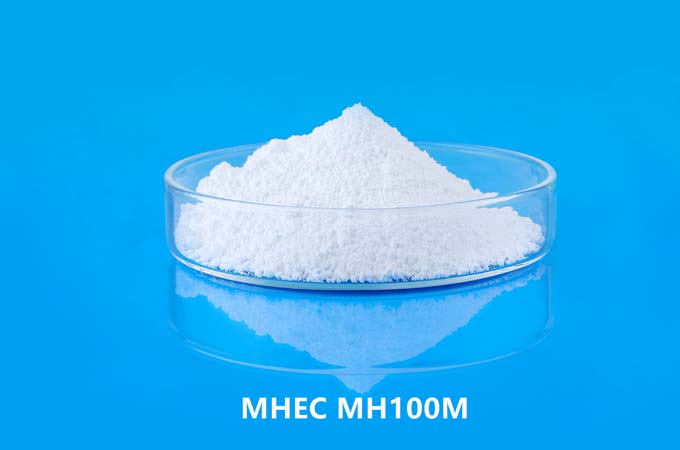
Methyl hydroxyethyl cellulose (MHEC), a nonionic cellulose ether, is a high-performance additive widely used in modern building materials. It combines excellent water retention, thickening, adhesion, and film-forming properties, significantly improving the workability and stability of systems such as mortars, coatings, putty powders, and tile adhesives. With the development of green buildings, energy-saving and environmentally friendly materials, and prefabricated construction, the application areas and technological trends of MHEC are continuously expanding and upgrading.

Main Functions and Performance Advantages of MHEC
MHEC's molecular structure contains methoxy and hydroxyethyl substituents, giving it the water-retention and thickening properties of HPMC and the rheological control characteristics of HEC. Its main functions include:
Excellent water retention: When applied in dry environments or on porous substrates, MHEC effectively reduces water loss, ensuring full hydration of cement or gypsum systems, thereby improving strength and adhesion.
Improved Workability: By adjusting the mortar's viscosity and fluidity, the material possesses excellent lubricity and ductility, ensuring smoother application and more even coating.
Enhanced Bonding and Anti-Slip Properties: When added to tile adhesive or putty powder, it significantly improves the material's adhesion to the base and finish, preventing tile slippage and hollowing.
Excellent Compatibility and Stability: MHEC can be used synergistically with a variety of inorganic cementitious materials, polymer emulsions, and additives, minimizing chemical reactions and delamination, ensuring system stability.
Typical Applications of MHEC in Building Materials
2.1. Tile Adhesive and Gypsum-Based Materials
MHEC primarily serves the functions of water retention, thickening, and anti-slip in tile adhesive. Especially in the installation of large-sized tiles and tiles with low water absorption, MHEC ensures sufficient application time and improves bond strength. In gypsum-based leveling materials, it effectively slows hydration, reduces shrinkage cracks, and enhances smooth application.
2.2. Dry-mix Mortar and Plaster Mortar
In premixed dry-mix mortar, MHEC provides stable water retention and bonding properties, ensuring consistent workability under varying climate conditions. Its thickening effect also reduces bleeding and delamination, improving application thickness and surface smoothness.
2.3. Exterior Insulation Systems (EIFS)
In exterior insulation systems, MHEC improves the bond strength and crack resistance of the insulation mortar, helping polystyrene or rock wool panels adhere more firmly to the substrate. It also improves the flexibility and weather resistance of the protective layer, enhancing the long-term stability of the system.
2.4. Putty Powder and Latex Paint
In putty powder, MHEC effectively improves the application feel, ensuring smooth, drag-free application and reducing dusting and cracking. In latex paint, it acts as a thickener and rheology modifier, enhancing paint flow, preventing sagging, and improving coating uniformity and gloss.

New Trends in MHEC Applications
3.1. The Rise of Green and Environmentally Friendly MHEC
With the growing adoption of sustainable development concepts, low-VOC, formaldehyde-free, and biodegradable MHEC products are becoming mainstream. Manufacturers are optimizing etherification and purification processes to reduce organic residues and enhance the environmental performance and safety of their products.
3.2. Functional Integration and Customization
Modern building material systems are becoming increasingly complex, and single-function additives are no longer sufficient. MHEC is being combined with additives such as starch ethers and RDP (redispersible polymer powder) to form "multifunctional composite systems," achieving comprehensive control effects such as water retention, thickening, retarding setting, and crack resistance. Furthermore, the development of customized MHEC products for different construction environments (such as high and low temperatures, and high humidity) is becoming a trend.
3.3. Efficient Dissolution and Easily Dispersible Technologies
Traditional MHEC has poor dispersibility in dry-mix mortar, prone to agglomeration and slow dissolution. Through surface modification and particle size control, the new generation of MHEC achieves rapid dissolution and uniform dispersion, significantly improving production efficiency and construction stability.
3.4. Potential Applications in Smart Building Materials
With the rise of smart buildings and self-healing materials, MHEC's water-retention and moisture-control properties are expected to be combined with new inorganic gelling agents and nanomaterials for use in cutting-edge fields such as self-humidity-regulating mortars and temperature-responsive coatings, providing more functional possibilities for future buildings.
As an indispensable cellulose ether additive in modern building systems, MHEC applications have expanded from traditional mortars to coatings, waterproofing, thermal insulation, and new prefabricated materials. In the future, with the advancement of green building material policies and the upgrading of construction standards, MHEC's technological innovation will focus on environmental protection, multifunctionality, and intelligentization. With its unique performance advantages and wide adaptability, MHEC will continue to play a vital role in the building materials field, helping the industry achieve high performance, low energy consumption, and sustainable development.


 English
 日本語
日本語 français
 Deutsch
 Español
 العربية
 Türkçe
 italiano
 русский
 português
 Nederland