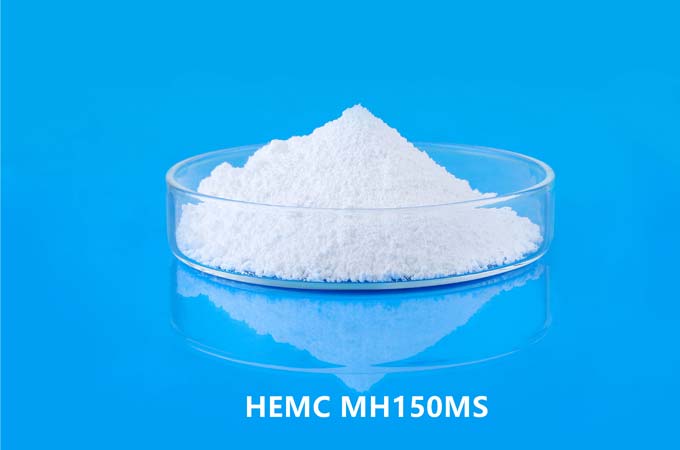
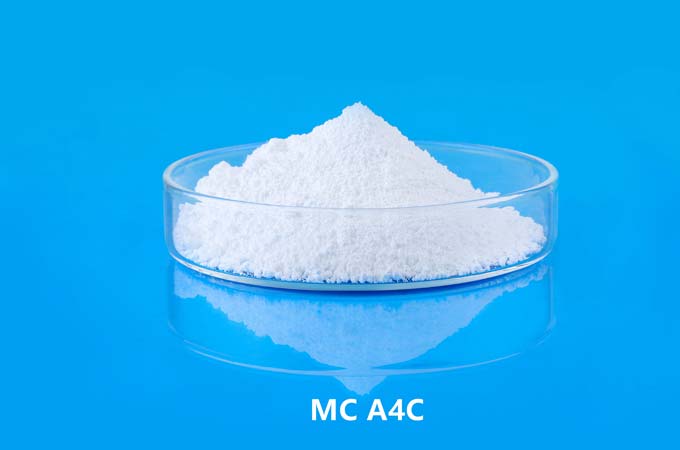
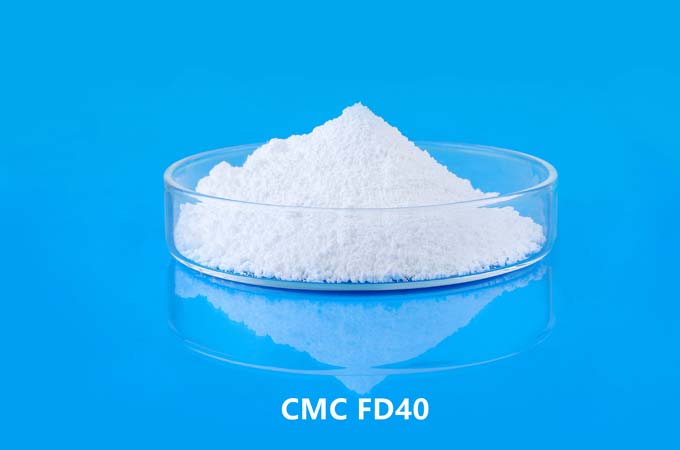
In modern building materials, self-leveling mortar is widely used in floor leveling, industrial floor and home decoration base treatment due to its advantages such as convenient construction, high surface flatness and fast hardening speed. In order to achieve excellent construction performance and terminal performance, the selection of various additives in self-leveling materials is crucial. Among them, HPMC (hydroxypropyl methylcellulose) as a key high-performance additive plays an irreplaceable role in self-leveling mortar.

Basic characteristics of HPMC
HPMC is a non-ionic cellulose ether, usually made from natural polymer cellulose, obtained by chemical modification reactions such as alkalization and etherification. It has good solubility, water retention, film-forming and thickening properties, and can form a stable colloidal solution in water. In building materials, HPMC does not participate in chemical reactions, but greatly improves the construction performance and mechanical properties of mortar through its physical effects.
The key role of HPMC in self-leveling
2.1. Improve fluidity and construction performance
High-performance self-leveling materials require excellent fluidity and spreadability. HPMC adjusts the viscosity and lubricity of the mortar system so that the slurry can spread naturally under the action of gravity to form a flat and smooth surface, while reducing water seepage and stratification to ensure stable flow of the slurry without segregation.
2.2. Enhance water retention and extend open time
HPMC has excellent water retention performance, which can effectively inhibit the rapid evaporation of water, maintain sufficient water in the mortar, and is conducive to the full hydration of cement, reduce the risk of shrinkage, and prevent cracking. At the same time, the appropriately extended open time also brings higher fault tolerance to the construction, which is convenient for adjustment and trimming.
2.3. Improve anti-sagging and stabilize thickness
In self-leveling construction, especially in vertical or corner areas, local sagging problems are prone to occur. HPMC improves the anti-sagging ability of the mortar by providing a suitable yield stress, ensures uniform coating thickness, and reduces construction defects caused by sagging or backflow.
2.4. Improve adhesion and strength development
Although HPMC does not directly participate in the hydration reaction of cement, its film-forming properties in the mortar help to enhance the surface hardness and density after drying. The flexible film formed by HPMC can also improve the adhesion between the mortar and the base layer, and improve the overall durability and crack resistance of the system.
2.5. Improve construction safety and stability
HPMC can effectively control the generation and aggregation of bubbles in self-leveling mortar, reduce surface blistering and pinholes, and improve the surface quality after construction. In addition, it also improves the stability and adaptability of the formula, and is suitable for construction in different temperature and humidity environments.
Choose the appropriate type and amount of HPMC
In the self-leveling system, parameters such as HPMC viscosity, substitution degree, particle size and dissolution rate will directly affect its effect. Generally speaking:
HPMC with low to medium viscosity (400-4000mPa·s) is more suitable for self-leveling materials, and can provide sufficient water retention and bonding effects without affecting fluidity;
The reasonable dosage is usually controlled at 0.1%~0.3% (based on dry material), and the specific dosage should be adjusted according to the mortar formula, cement type, additive system, etc.;
The use of instant or surface-treated HPMC can accelerate the dissolution rate, facilitate automated production, and improve production efficiency.

Synergistic effect of HPMC and other additives
In the self-leveling system, HPMC is often used with a variety of functional additives, such as redispersible latex powder (RDP), defoamer, retarder, water reducer, etc. HPMC and these additives often have good synergy. For example:
Combined with RDP can improve crack resistance and elasticity;
Used with defoamer can optimize the foam distribution in the slurry;
Combined with retarder can further control the setting time to meet the needs of large-scale construction.
Reasonable design of the combination of additives and optimization of the ratio according to different construction environments are the key to achieving high-performance self-leveling.
As one of the core additives of high-performance self-leveling mortar, HPMC plays an indispensable role in modern construction with its superior comprehensive performance such as water retention, thickening, and improved construction performance. By scientifically selecting the variety and use strategy of HPMC, the construction efficiency, surface quality and final performance of self-leveling materials can be greatly improved, providing a solid guarantee for high-standard building floor systems.


 English
 日本語
日本語 français
 Deutsch
 Español
 العربية
 Türkçe
 italiano
 русский
 português
 Nederland