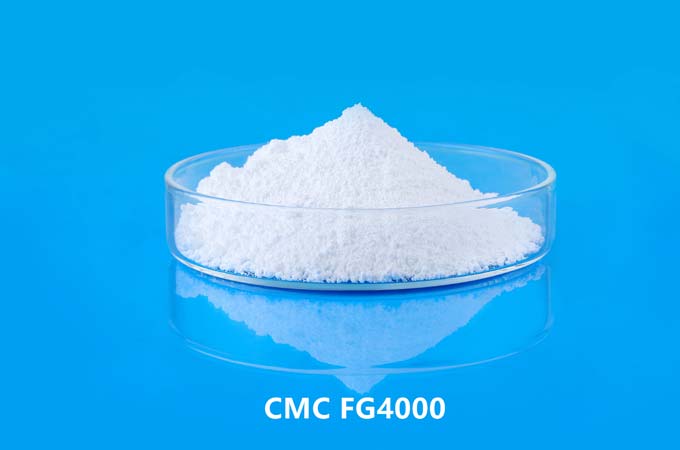
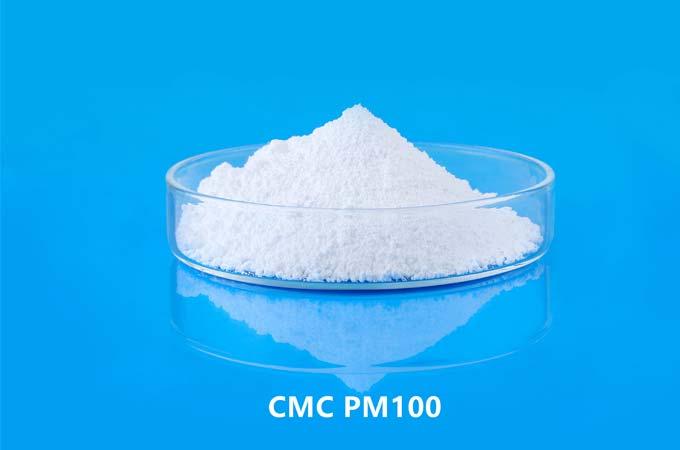
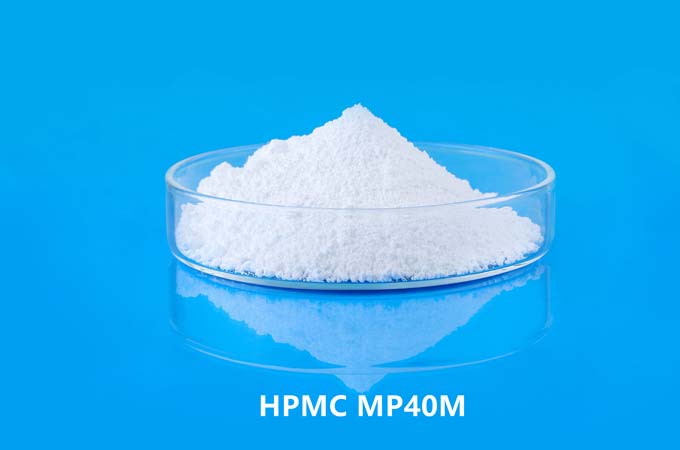
Carboxymethyl cellulose (CMC) is an anionic water-soluble polymer made from natural cellulose by etherification reaction. It is widely used in the papermaking industry due to its good thickening, dispersing, stabilizing and water-retaining properties. As a papermaking additive, CMC can significantly improve the suspension of pulp, the formability of paper and the printing adaptability, and improve product quality and production efficiency.

The main role of CMC in papermaking
1.1. Enhance the retention rate and uniform distribution of pulp
CMC has strong anionic properties and can form a stable bridging structure with the cationic retention aid in the pulp, helping fine fibers and fillers to be evenly dispersed and firmly combined in the wet paper sheet, improving the retention rate, reducing filler loss, thereby reducing production costs and improving the uniformity of paper.
1.2. Improve the dry and wet strength of paper
CMC can penetrate between fibers and form a film during the drying process, enhancing the bonding force between fibers and improving dry strength. At the same time, CMC can enhance the hydrogen bonding between fibers in a wet state, so that the wet strength is improved to a certain extent, especially in high-grade cultural paper and specialty paper.
1.3. Improve the surface sizing effect
In surface sizing, CMC is used in combination with starch, AKD, etc., which can significantly improve the viscosity and uniformity of the sizing solution, form a dense and uniform glue layer on the surface of the paper, improve the surface strength, water resistance and printing adaptability, and reduce printing problems such as hair loss and powder loss.
1.4. Control the water absorption and dimensional stability of paper
CMC has excellent film-forming and water-retaining properties, can effectively control the water absorption rate of paper, improve dimensional stability and folding resistance, thereby improving the applicability of paper in printing, copying and packaging.
1.5. Assisting white water circulation and environmental protection
CMC can improve the recovery rate of fine fibers in the white water of the paper machine, reduce the content of suspended solids in the water body, help to achieve closed-loop circulation of white water, and reduce environmental pollution and water treatment costs.
How to use CMC and where to add it
In papermaking, CMC can be added at the wet end or dry end.
Wet end addition: usually added before the mixing tank or pulp box, mainly to improve the suspension, uniformity and retention rate of pulp.
Dry end or surface sizing addition: mixed with starch or other sizing agents to improve surface strength and printing performance.
The addition amount is generally 0.05%-0.3% of the dry weight of pulp, which needs to be adjusted according to the paper type and production process. Excessive use may cause the viscosity of white water to increase and affect the dewatering efficiency of the paper machine.
Main factors affecting the effect
The effect of CMC is affected by many factors, mainly including:
Degree of substitution (DS): CMC for papermaking usually has a degree of substitution of 0.6-0.9. The higher the degree of substitution, the better the solubility and anionicity, but the lower the thickening ability.
Viscosity grade: Medium and high viscosity CMC is conducive to enhancing the suspension stability of pulp and the uniformity of the sizing layer.
pH value and water quality: CMC performs best under neutral to alkaline conditions, and hard water will weaken its effect.
Compatibility with other additives: It works better when used with cationic retention aids or sizing agents.

Economic and environmental benefits
The application of CMC can effectively improve pulp utilization, reduce the loss of fillers and fine fibers, and reduce production costs. At the same time, paper quality is improved, and printing performance and durability are improved. By improving white water recovery and reducing wastewater discharge, CMC also provides technical support for green and environmentally friendly papermaking.
As an important functional additive in the papermaking industry, CMC plays an irreplaceable role in improving paper quality, optimizing production processes and reducing costs with its excellent thickening, dispersing and film-forming properties. With the growing demand for environmentally friendly papermaking and high-performance paper products, the application prospects of CMC in the papermaking industry will be broader.


 English
 日本語
日本語 français
 Deutsch
 Español
 العربية
 Türkçe
 italiano
 русский
 português
 Nederland