Sodium carboxymethyl cellulose (CMC), as a stable, affordable, and safe natural polymer derivative, plays an important auxiliary role in the textile printing and dyeing industry. With its multiple properties including thickening, film-forming, suspension, and dispersion, CMC not only improves the workability of sizing systems but also significantly enhances printing and dyeing quality, thus becoming one of the most widely used hydrophilic polymers in textile chemical formulation systems.
1. The Role of CMC in Yarn and Fabric Sizing
1.1. Improving Yarn Strength and Abrasion Resistance
CMC has excellent film-forming properties, forming a uniform and flexible protective film on the yarn surface, reducing fiber fuzz, breakage, and friction damage during weaving, thereby improving weaving efficiency and fabric quality.
1.2. Excellent Viscosity Stability
CMC solutions exhibit strong viscosity retention and are not easily affected by temperature and electrolytes, making sizing operations more stable. It also enhances the permeability and coating properties of the sizing solution, making it suitable for sizing systems of cotton, polyester-cotton blends, and linen yarns.
1.3. Easy Desizing of CMC Film
Compared to traditional starch or PVA, CMC film is easier to remove in subsequent processes by desizing agents or washing with water, reducing energy consumption and chemical usage, improving desizing efficiency, and meeting green manufacturing requirements.
2. Advantages of CMC in Printing Pastes
2.1. Controlling Paste Viscosity and Thixotropy
CMC can provide suitable rheological properties at low addition levels, giving the pigment paste good flow and adhesion, avoiding bleeding, ink splattering, and edge smudging, and improving outline clarity and pattern integrity.
2.2. Enhancing Pigment Dispersion Stability
CMC has a certain dispersing and suspending ability, which can prevent pigment or auxiliary particle sedimentation, keeping the paste uniform during storage and use, avoiding problems such as screen clogging and color difference.
2.3. Improving Fabric Hand Feel and Finished Product Quality
After printing, CMC can form a delicate and soft film without affecting the softness of the fabric, while also providing a certain film-forming support to the printed layer, making the colors fuller and more resistant to abrasion.
3. The Auxiliary Role of CMC in Dyeing and Finishing Processes
3.1. Thickening and Retarding Effects in Dyeing Processes
In certain reactive or direct dye systems, CMC can act as a thickener to control the diffusion rate of the dye liquor, allowing for more uniform dye application and improving dye uniformity and depth.
3.2. Enhancing Wash Fastness of Finished Products
The film-forming properties of CMC help the dye to be more evenly fixed between fibers, moderately improving the integrity of the dyed layer and promoting improvements in wash fastness and rubbing fastness.
3.3. Softening and Smoothing Effects in Finishing Processes
When added in small amounts to finishing formulations, CMC can improve the smoothness and hand feel of fabrics, making the finished product more comfortable, especially suitable for cotton and blended fabrics.
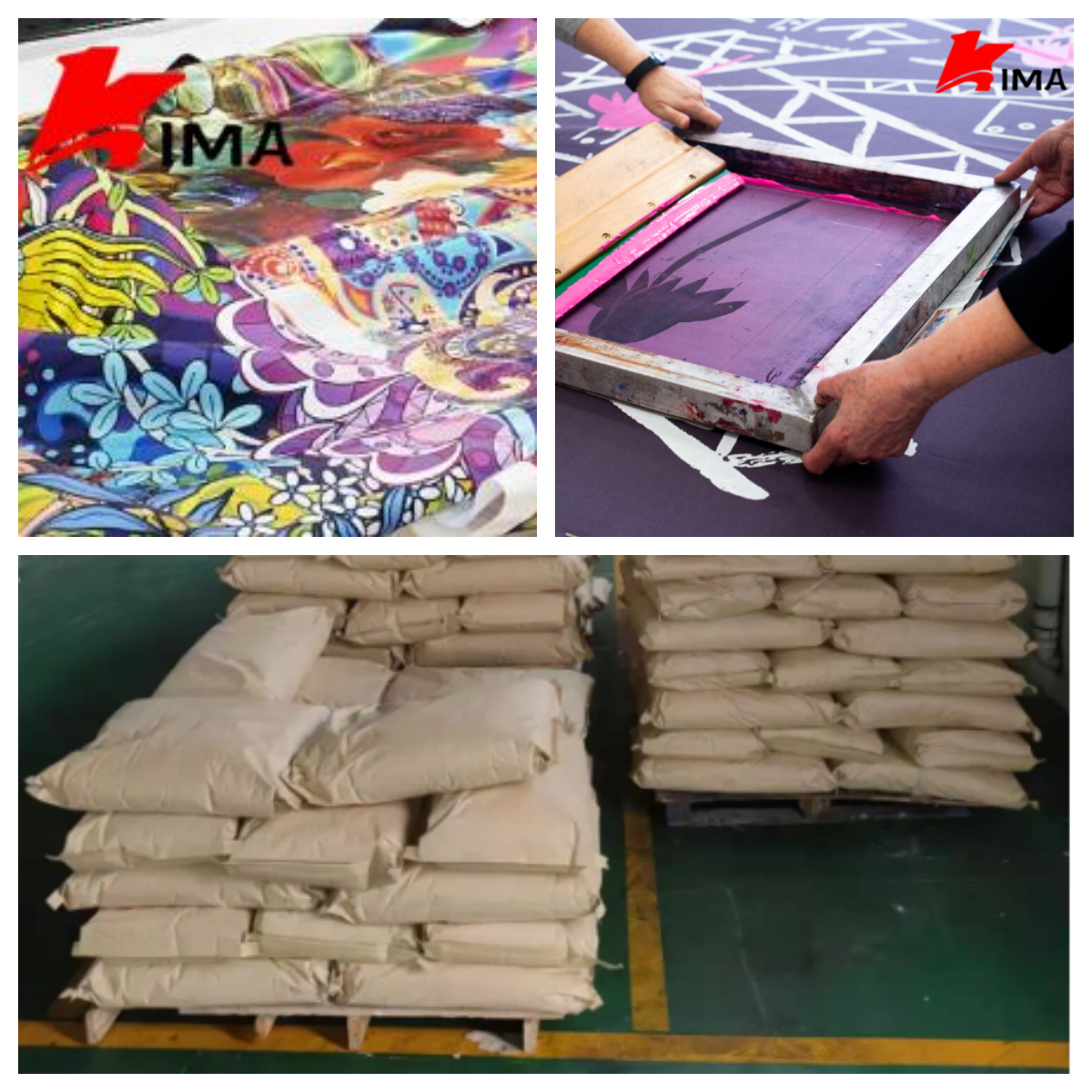
4. Comprehensive Advantages of CMC in Textile Printing and Dyeing
4.1. Green and Environmentally Friendly
CMC is derived from natural cellulose and is biodegradable. Compared with traditional petrochemical thickeners, it is more environmentally friendly and meets the requirements of green development in the textile industry.
4.2. Strong Process Compatibility
CMC exhibits excellent compatibility with various textile auxiliaries and can be widely applied to different materials such as cotton, polyester-cotton blends, linen, and Tencel.
4.3. Significant Cost Advantage
CMC is relatively economical, and its addition amount is low, which can reduce the overall formulation cost while ensuring performance.


 English
 日本語
日本語 français
 Deutsch
 Español
 العربية
 Türkçe
 italiano
 русский
 português
 Nederland