Rheological Modification and Workability Enhancement in Cementitious and Gypsum-Based Formulations
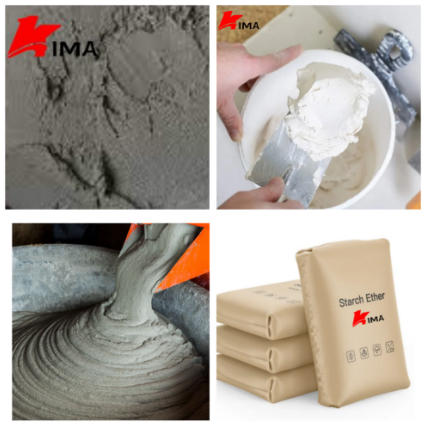
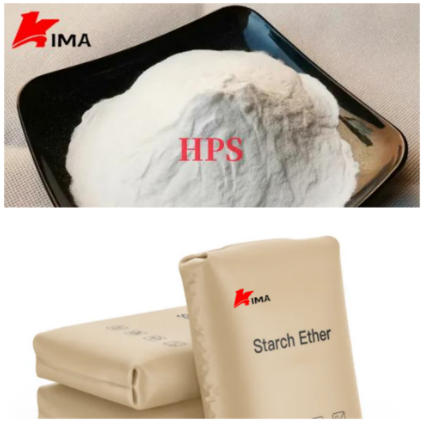
Hydroxypropyl starch ether (HPS) plays a valuable role as a rheology modifier in modern dry-mix construction materials, particularly cementitious and gypsum-based systems such as skim coats, plasters, and putties. Due to its surface-active molecular structure and water interaction capability, HPS can effectively regulate slurry viscosity, prevent segregation, and improve the uniformity of paste flow during mixing and application. These rheological improvements translate directly to enhanced workability, smoother troweling behavior, and better substrate coverage in both manual and spray-applied systems.
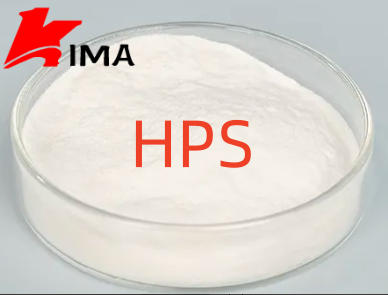
One of the key advantages of HPS is its ability to deliver a softer, creamier consistency compared with cellulose ether-only formulations. This enhances hand-feel, reduces trowel resistance, and allows for easier shaping and smoothing during finishing operations. At low dosages, HPS boosts water retention to delay early dehydration, which benefits hydration reactions and bonding strength development in cementitious systems while also minimizing dusting and cracking in gypsum-based materials. HPS further promotes better build on vertical surfaces, contributing to anti-sag and leveling performance, especially in thin-layer coatings.
The incorporation of hydroxypropyl starch ether provides formulation flexibility and performance value, enabling producers to fine-tune rheology and workability to meet application-specific requirements across a wide range of construction product categories.
Water Retention, Open Time Control, and Anti-Sag Performance for Improved On-Site Handling
Hydroxypropyl starch ether (HPS) contributes significantly to water management and on-site handling characteristics in construction dry-mix systems. By moderating water absorption and evaporation, HPS helps retain moisture within cementitious and gypsum matrices during the crucial early stages of hydration or setting. This prevents premature drying, reduces the risk of surface powdering, and supports more consistent strength development. Enhanced water retention also provides contractors with more forgiveness during application, especially under high-temperature, low-humidity, or windy working conditions where open time can otherwise become critically short.
In addition to hydration benefits, HPS extends open time by slowing water migration from the wet mixture to the substrate. This allows tile adhesives, plasters, skim coats, and putties to remain workable for longer periods, easing adjustments, re-troweling, and finishing. Longer open time is particularly valued in warm climates and large-area finishing jobs, where productivity and aesthetic uniformity depend on controlled drying kinetics.
From a mechanical perspective, HPS helps increase paste cohesion, internal structure, and thixotropic behavior, improving build thickness on vertical surfaces and reducing sag. This supports higher layer stability and cleaner application, especially in thin-coat systems. Together, these performance attributes improve handling efficiency, reduce defect rates, and enhance overall workmanship quality at the construction site.
Compatibility with Additives, Fillers, and Polymer Binders in Dry-Mix Mortar Systems
Hydroxypropyl starch ether (HPS) demonstrates favorable compatibility with a broad range of functional components commonly used in dry-mix mortar systems, including mineral fillers, polymer binders, and performance-enhancing additives. When combined with cellulose ethers such as HPMC, HPS can contribute complementary rheological effects—delivering smoother paste consistency, improved open time, and better troweling feel, while allowing formulators to optimize cost-performance ratios. With redispersible polymer powders (RDP), HPS enhances wet adhesion and cohesion by moderating water distribution and promoting more uniform polymer film formation during curing.
In filler-rich systems containing calcium carbonate, talc, mica, or silica sand, HPS helps stabilize particle dispersion and prevents segregation under low-water conditions. This results in greater mix homogeneity and reduced bleeding, which is particularly valuable for spray-applied plasters and thick-layer coatings. Compatibility with gypsum and cement binders is also well established, with HPS supporting hydration, minimizing surface defects, and reducing dusting.
HPS works synergistically with functional additives such as defoamers, retarders, and water repellents by ensuring more balanced rheology and avoiding adverse interactions that could compromise setting time or adhesion. These attributes enable formulators to design mortar products with fine-tuned performance across various application categories, while maintaining processing stability and end-use consistency.
Application-Specific Optimization for Tile Adhesives, EIFS, Self-Leveling Compounds, and Interior Finishing Materials
Hydroxypropyl starch ether (HPS) plays a critical role in tailoring construction formulations to meet the specific demands of different product categories, from tile adhesives to interior finishing materials. In tile adhesives, HPS enhances water retention and open time, allowing longer adjustment periods and ensuring strong adhesion on both horizontal and vertical substrates. Its thixotropic behavior prevents sagging, facilitates smooth troweling, and supports consistent bed thickness, improving installation quality.
For Exterior Insulation and Finish Systems (EIFS), HPS contributes to superior workability and cohesive strength in thin-layer base coats. By controlling water migration and maintaining plasticity, it reduces cracking risk during curing and improves compatibility with reinforcing meshes. In self-leveling compounds, HPS improves flow uniformity, minimizes surface voids, and maintains controlled viscosity to prevent segregation while enabling rapid leveling on large surfaces.
In interior finishing materials such as plasters and skim coats, HPS provides smoother application, improved spreadability, and reduced shrinkage. Its ability to work synergistically with other polymers and fillers allows formulators to optimize texture, surface finish, and mechanical properties according to project requirements. Overall, HPS offers versatility, enabling precise formulation adjustments to balance rheology, adhesion, and durability across a wide range of construction applications.


 English
 日本語
日本語 français
 Deutsch
 Español
 العربية
 Türkçe
 italiano
 русский
 português
 Nederland